Iodine Deficiency in India: How Pink Salt Popularity Is Causing a Health Comeback
📌 Key Points
What it is: Iodine deficiency in India is when the body doesn’t get enough iodine, the mineral the thyroid needs to regulate energy and metabolism.
Why it still happens: Switching to pink or rock salt (often low in iodine), improper salt storage, and low intake of iodine-rich foods all play a part.
Honest note: Pink and rock salts aren’t “bad” — they’re just not reliable iodine sources. This is general information, not a diagnosis. If you have thyroid symptoms, see a doctor and get tested rather than self-treating.
Simple fix: keep using iodized salt for daily cooking, and enjoy specialty salts as extras, not replacements.
Iodine deficiency in India is one of those quiet nutrition gaps that most of us never think about — until fatigue, weight changes or a sluggish thyroid make us start asking why. Iodine is a mineral the body can’t make on its own, yet it runs the thyroid, which controls energy, metabolism and so much more. And despite decades of salt iodisation, it’s still more common here than people realise.
I started paying attention to this when I switched to fancy pink and rock salts for “health” reasons, then learned they often contain very little iodine. That small change matters more than it sounds. Here’s what iodine deficiency in India actually looks like, why it still happens, and the simple, honest ways to prevent it — without fear-mongering.
Table of Contents
What is iodine deficiency in India?
Iodine deficiency in India is when the body regularly gets less iodine than the thyroid needs to work properly. Iodine is an essential mineral the body can’t produce, so it has to come from food and salt.
The thyroid uses iodine to make the hormones that regulate metabolism, energy, body temperature and more. When iodine runs low, the thyroid can’t keep up, which is where symptoms like fatigue, weight changes and a swollen neck (goitre) can begin.
India ran one of the world’s largest salt-iodisation programmes, which dramatically reduced the problem. But it hasn’t disappeared — pockets of deficiency remain, and newer habits like switching to non-iodised speciality salts are quietly bringing some of it back.
Why does iodine deficiency still happen despite iodised salt?
The main reasons are switching to pink or rock salt that’s low in iodine, storing salt poorly, cooking iodine out, and eating few iodine-rich foods. Iodised salt works, but only if you actually use it and store it right.
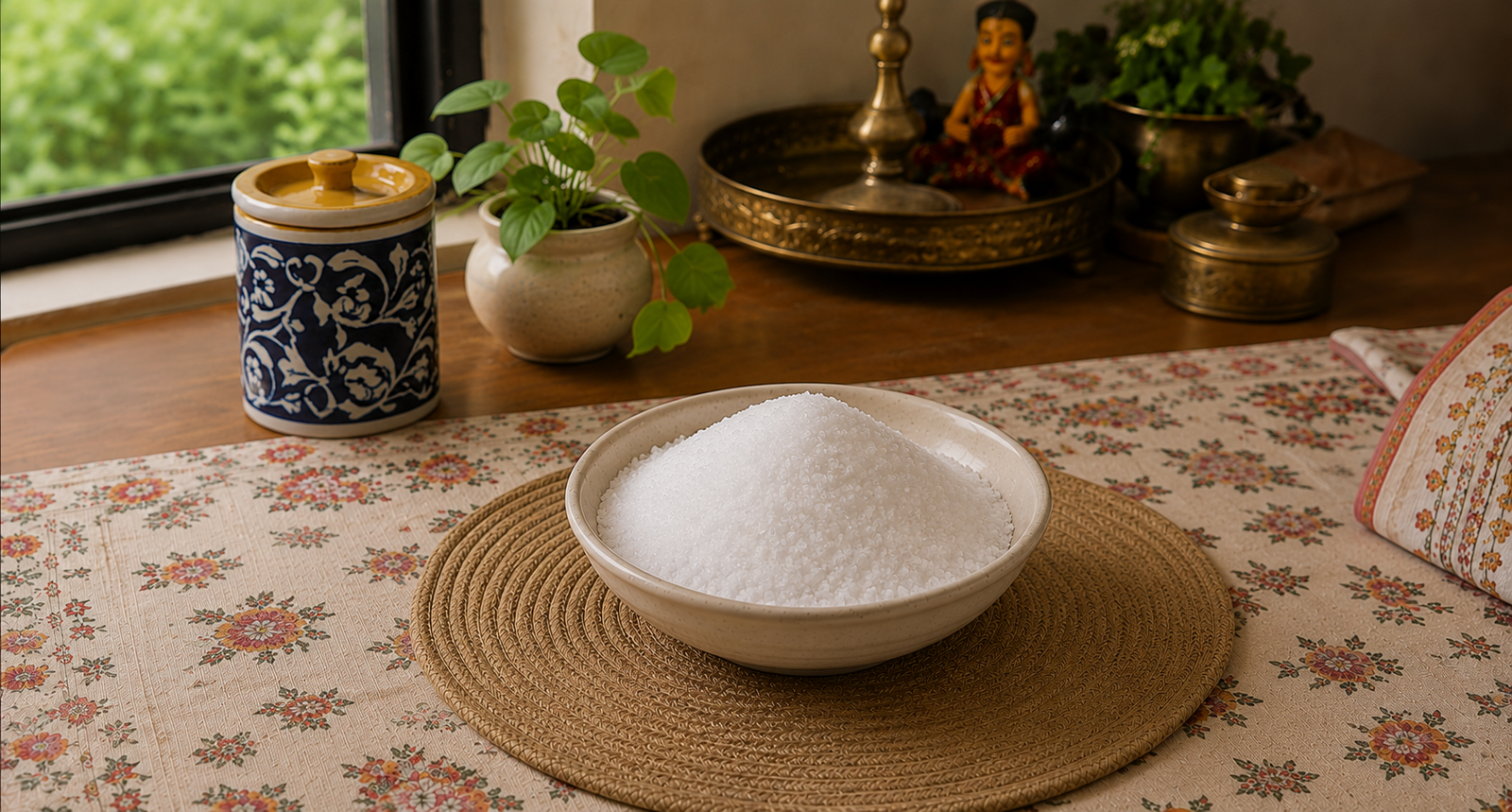
The biggest modern cause is the wellness trend of replacing iodised table salt with pink Himalayan or sendha (rock) salt. These are lovely salts, but most contain little to no added iodine. If they become your only salt, your main iodine source disappears without you noticing.
Other factors add up too: iodine evaporates from salt if it’s stored open, near heat or in damp conditions, and adding salt at the very end of cooking preserves more iodine than boiling it for a long time. Diets low in dairy, eggs and seafood — common in many vegetarian households — also mean fewer natural iodine sources.
What are the signs of iodine deficiency?
Common signs include persistent fatigue, unexplained weight gain, feeling cold, dry skin, hair thinning, and in more advanced cases a swollen neck (goitre). These overlap with many conditions, so they’re a reason to get tested, not to self-diagnose.
Because iodine drives the thyroid, low levels tend to slow everything down — energy, metabolism, mood and concentration. Some people notice brain fog or low mood; others notice their periods change or their hair thins. In pregnancy, adequate iodine is especially important for the baby’s development.
I want to be clear and honest here: these symptoms have many possible causes, and this post can’t diagnose anything. If several of these sound familiar, the right step is a doctor and a simple blood test, not a supplement bought online.
Are pink salt and rock salt bad for you?
No — pink and rock salts aren’t bad, they’re just not reliable sources of iodine, so they shouldn’t be your only salt. This is the honest, balanced take.
Pink Himalayan salt and sendha namak have their own trace minerals and are perfectly fine to cook and eat with. The issue is only that they usually lack the added iodine that iodised salt provides. Problems arise when someone swaps entirely to these for “health,” unknowingly cutting out their main iodine source.
The simple solution is balance: use iodised salt as your everyday cooking salt, and enjoy pink or rock salt as a finishing salt or an occasional alternative. You don’t have to give up the salts you like — you just don’t make them your only one.
How do you prevent iodine deficiency through food?
Keep using iodised salt for daily cooking, and include natural iodine sources like dairy, eggs, and seafood if you eat them. A few small habits cover most people’s needs.
Good natural sources of iodine include milk and curd (dahi), eggs, and fish and seafood for those who eat them. Vegetarians can lean on dairy and eggs, and small amounts of certain seaweeds, though seaweed iodine can be very concentrated, so a little goes a long way. Iodised salt remains the simplest, most reliable everyday source.
Store your salt sensibly — in a closed container, away from heat and moisture — and add a good part of it toward the end of cooking to preserve the iodine. These small tweaks, plus a varied diet, prevent deficiency for most people without any supplements.
When should you see a doctor?
If you have ongoing fatigue, weight changes, neck swelling or other thyroid-type symptoms, see a doctor and ask about a thyroid test rather than self-treating. Iodine is a case where more is not better.
Too much iodine can be as harmful as too little and can itself upset the thyroid, so supplements should only be taken on medical advice. A doctor can test your thyroid function and iodine status and guide you properly, especially if you’re pregnant, planning a pregnancy, or already managing a thyroid condition.
Think of this post as a nudge to be aware and to use iodised salt sensibly — not as a reason to start supplementing on your own. Food first, testing when needed, supplements only if a doctor advises.
Eat Well With these too 3 Ingredient Chicken , Chicken Skewers and Gluten Free High Protein Oats Chilla
Frequently Asked Questions
Why is iodine deficiency in India still common?
Despite iodised salt, deficiency persists because many people have switched to pink or rock salt that’s low in iodine, store salt poorly so the iodine evaporates, or eat few natural iodine sources like dairy, eggs and seafood. Using iodised salt for daily cooking is the simplest way to stay covered.
Does pink Himalayan salt have iodine?
Most pink Himalayan and rock salts contain little to no added iodine. They’re fine to cook with and have their own trace minerals, but they shouldn’t be your only salt. Keep iodised salt as your everyday cooking salt and enjoy pink or rock salt as a finishing or occasional one.
What are the signs of iodine deficiency?
Common signs include persistent fatigue, unexplained weight gain, feeling cold, dry skin, hair thinning and, in advanced cases, a swollen neck. These overlap with many conditions, so they’re a reason to get a thyroid test from a doctor rather than to self-diagnose.
Which foods are naturally rich in iodine?
Milk and curd, eggs, and fish and seafood are good natural sources. Vegetarians can rely on dairy and eggs, plus small amounts of certain seaweeds, though seaweed is very concentrated so use it sparingly. Iodised salt remains the simplest everyday source for most people.
Should I take an iodine supplement?
Only if a doctor advises it. Too much iodine can harm the thyroid just as too little can, so supplements aren’t something to start on your own. If you have thyroid symptoms, get tested and let a doctor guide you, especially during pregnancy or if you manage a thyroid condition.
🌿 Love gut-friendly recipes? Add Caloriematterss as your Google Preferred Source so my low-FODMAP, high-protein recipes show up more often for you. Set Caloriematterss as a preferred source →