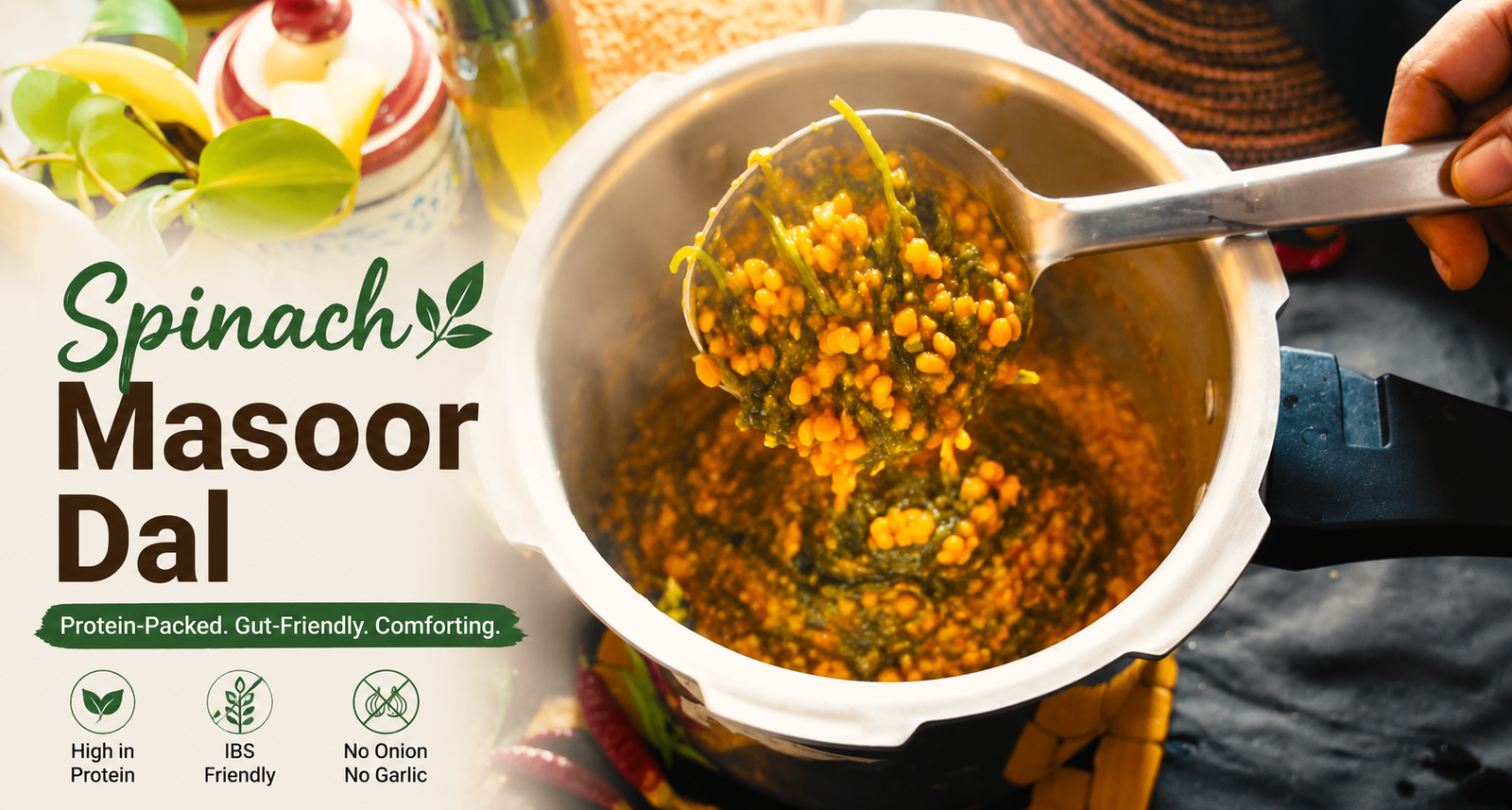
Spinach Masoor Dal Recipe — High Protein, Gut Friendly, One Pot
📌 Quick Guide
What it is: Red lentils cooked with fresh spinach, tomato, onion, garlic, ginger and whole spices in one pot
Why it works for IBS: Masoor dal is the lightest lentil for digestion — easier on the gut than chana or rajma
Cook time: 25–30 minutes
IBS-friendly: Yes — in moderate portions, masoor dal is low FODMAP at ½ cup cooked serving
Calories: ~180 kcal per serving | Protein: ~12g per serving
The Dal I Make When My Gut Needs a Reset
This spinach masoor dal recipe is what I come back to every single time.
There are weeks when I’ve eaten badly — too much outside food, too many triggers, too many compromises. And by the end of those weeks, my gut tells me clearly. Not dramatically. Just that low-grade discomfort that means things are not okay inside.
Not because it’s exciting. Because it works. Masoor dal — red lentils — is the lightest, most digestible lentil you can eat. It doesn’t need hours of soaking. It doesn’t sit heavy. It cooks fast, absorbs spices well, and pairs with spinach in a way that makes the whole thing feel like actual nourishment rather than just food.
I was diagnosed with IBS in 2023. Since then I’ve learned which foods my gut trusts. This spinach masoor dal recipe is on that short list. I make it at least once a week — sometimes twice when things are rough. It’s become my reset meal the way plain khichdi is for some people. But with more protein, more iron, and honestly more flavour.
Table of Contents
Why This Spinach Masoor Dal Recipe Works For Your Gut
Most people with IBS avoid dal entirely because they’ve had bad experiences with chana dal, rajma, or whole moong. Those are high in oligosaccharides — fermentable carbohydrates that cause gas and bloating.
Masoor dal is different.
Red lentils are split and hulled — meaning the outer skin that contains most of the problematic fibres is already removed. What’s left is a soft, easily digestible legume that cooks quickly and doesn’t ferment aggressively in the gut the way whole legumes do. At a ½ cup cooked serving, masoor dal is considered low FODMAP by Monash University.
Spinach adds iron, folate, and soluble fibre — the kind that feeds good gut bacteria without causing gas. It also wilts completely into the dal, so there’s no tough texture to digest.
Ginger in the tadka is not just flavour — it’s genuinely anti-spasmodic. It reduces gut cramping and supports gastric emptying. This is why ginger has been used in Indian digestive cooking for centuries and why it belongs in this spinach masoor dal recipe specifically.
Turmeric adds curcumin — an anti-inflammatory compound that supports gut lining repair. Combined with the fat from ghee, curcumin becomes bioavailable — the fat helps your body actually absorb it.
Every ingredient in this dal is earning its place.
Ingredients (Serves 2–3)
Serves 2–3 | Prep: 15 min | Cook: 25–30 min
- ½ cup masoor dal (red lentils), washed and soaked 30 minutes
- 1 bunch spinach (palak), washed and roughly chopped
- 3 small onions, sliced
- 5 cloves garlic, made into paste
- 2 small tomatoes, chopped
- 2 green chillies, chopped
- 1 small cinnamon stick
- ½ tsp cumin seeds
- ½ tsp turmeric powder
- Salt to taste
- 2 tbsp olive oil or ghee
- Water as required
- Lemon juice and coriander to garnish (optional)
Equipment: Pressure cooker or deep pan, spatula.
IBS note: Garlic and onion are high FODMAP. If you’re in an active flare, reduce onion to 1 small and use garlic-infused oil instead of garlic paste. On stable days, the full recipe in one serving portion is generally fine for most people with IBS.
How to Make Spinach Masoor Dal
🔸Step 1: Soak the Dal
Wash masoor dal thoroughly until the water runs clear. Soak for 30 minutes minimum. Soaking reduces cooking time and makes the lentils easier to digest — don’t skip this step.h and soak masoor dal for 30 minutes. Drain before cooking.
🔸 Step 2: Make the Tadka
Heat oil or ghee in a pressure cooker or deep pan on medium flame. Add cinnamon stick and cumin seeds — let them crackle for 30 seconds. Add sliced onion and sauté until golden — about 4–5 minutes. Add garlic paste and green chilies. Sauté another 2 minutes until the raw garlic smell disappears.
Add chopped tomatoes. Cook until they soften and the oil starts to separate — about 3–4 minutes.
🔸 Step 3: Cook the Dal
Drain the soaked masoor dal and add it to the tadka. Add turmeric powder and salt. Add water — enough to cover the dal by about 2 inches. In a pressure cooker : cook for 2–3 whistles on medium flame. In a pan: cook covered on low-medium for 20–25 minutes until dal is completely soft.
🔸 Step 4: Add Spinach
Once dal is cooked and soft, stir in the chopped spinach. Simmer on low for 5–6 minutes until spinach wilts completely into the dal. Adjust consistency with water if needed — some people like it thick, some like it more soupy.
🔸 Step 5: Garnish & Serve
Squeeze lemon juice over the top, add chopped coriander if using. Serve hot with steamed rice, roti, or eat it as a warm soup on its own.
Nutrition Per Serving
| Per Serving | |
|---|---|
| Calories | ~180 kcal |
| Protein | ~12g |

Spinach Masoor Dal Recipe — High Protein, Gut Friendly
Equipment
- 1 Pressure Cooker
- 1 Spatula
Ingredients
- 1 Bunch Spinach Palak (Spinach) – 1 bunch, chopped
- 2 cups Red Lentils Masoor Dal (Red Lentils) – 2 cups
- 5 Cloves Garlic made into a paste
- 1 Small Cinnamon Stick
- 2 Green Chilies chopped
- 3 Small Onions sliced
- 2 Small Tomatoes chopped
- 2 tbsp Olive Oil
- ½ tsp Turmeric Powder
- Slat As Per Test
- Water As required
- Lemon juice and coriander to garnish
Instructions
- Wash and soak masoor dal for 30 minutes. Drain before cooking.
- Heat oil in pressure cooker. Add cinnamon and cumin — let crackle. Add onion, sauté until golden. Add garlic paste and green chilli, sauté 2 minutes. Add tomato, cook until soft.
- Add drained dal, turmeric, salt, and water. Pressure cook 2–3 whistles or simmer in pan 20–25 minutes until soft.
- Stir in chopped spinach. Simmer 5–6 minutes until wilted.
- Finish with lemon juice and coriander. Serve hot.
Notes
- This dal is gentle on the stomach and great for those managing IBS.
- You can substitute moong dal with split masoor dal.
- Avoid chili or garam masala to keep it IBS-safe.
- Enjoy with plain rice or soft roti.
- Soak dal 30 mins.
- Heat oil, add cumin, ginger, chili.
- Add dal, turmeric, salt, water. Cook till soft.
- Add spinach, simmer 5 mins.
- Garnish + serve.
Why Masoor Dal Specifically — Not Moong, Not Chana
People ask me this a lot. There are so many dals — why always masoor for gut health?
Moong dal is also gut-friendly but has less iron and a blander flavour. Good for very sensitive days. Not as nutritionally complete as masoor.
Chana dal is high in oligosaccharides — fermentable fibres that cause significant gas for most IBS sufferers. Not a regular option for me.
Toor dal is moderate — manageable for some, not for others. Hit or miss.
Masoor dal hits the right balance. Enough protein (12g per serving), good iron content, easy to digest, cooks fast, tastes good. It’s the dal I keep stocked at all times. For this spinach masoor dal recipe specifically, the red lentils also break down into a smooth, almost creamy texture that coats the spinach perfectly.
If you’re new to eating dal with IBS, start with masoor. It’s the safest entry point
What to Eat This With
Steamed rice — the classic combination. Rice + masoor dal is a complete protein meal Roti or phulka — lighter than rice if you’re eating this at dinner On its own as soup — add a bit more water, squeeze extra lemon, eat from a bowl. Surprisingly satisfying With plain curd on the side — the probiotic from curd + the prebiotic fibre from dal = good gut combination
Variations
Extra protein version: Add ½ cup cooked yellow moong dal along with the masoor. Double lentil dal — richer flavour and higher protein per serving.
Tomato-heavy version: Double the tomatoes and skip the cinnamon. More tangy, less warm-spiced. Good in summer.
Ghee tadka version: Use ghee instead of olive oil. The fat from ghee makes the curcumin from turmeric more bioavailable — better anti-inflammatory effect. Also tastes richer.
Pressure cooker shortcut: Skip the soaking if you’re short on time — just add 5 extra minutes of cooking in the pressure cooker. Texture will be slightly different but still good.
IBS Notes From Me
This is genuinely my most-made recipe. Not because it’s the most exciting thing I cook — but because it’s reliable. I know exactly how my gut will feel after eating it. That predictability is something you genuinely appreciate when you have IBS.
The cinnamon stick in the tadka is something my mother always added. It adds warmth and depth to the flavour — and cinnamon also has mild anti-spasmodic properties that support digestion. Small thing. Worth keeping.
If onion and garlic are strong triggers for you on bad days — make the FODMAP-reduced version: 1 small onion, garlic-infused oil instead of paste. The dal still tastes good and is significantly easier on the gut.
On good days — the full recipe. One bowl. That’s my reset.
from frozen in Step 4 and simmer for 7–8 minutes instead of 5–6. The texture is slightly softer than fresh but the flavour and nutrition are almost identical. One thing to check: squeeze excess water from thawed frozen spinach before adding or the dal will become too thin.
Related Topic :-6-Ingredient Homemade Protein Powder with Oats & Seeds for Gut, Skin & Weight Loss
Frequently Asked Questions
Is spinach masoor dal recipe safe for IBS?
Yes. Masoor dal is one of the more IBS-friendly lentils because it is split and hulled, making it easier to digest than many whole lentils. The ingredients most likely to trigger symptoms are onion and garlic, so during flare-ups you can reduce the onion and use garlic-infused oil instead while keeping the rest of the recipe the same.
Why does this spinach masoor dal recipe use cinnamon?
Using a cinnamon stick in dal is a traditional Bengali and North Indian cooking technique. It adds gentle warmth and subtle sweetness that balance the tomatoes while giving the dish more depth. The flavour remains mild, and you can remove the stick before serving or leave it out if preferred.
Can I make this spinach masoor dal recipe without a pressure cooker?
Yes. Cook the dal in a covered saucepan with a little extra water over low to medium heat for about 20 to 25 minutes, stirring occasionally. Soaking the lentils for around 30 minutes beforehand helps reduce cooking time and ensures they soften evenly.
How much protein does masoor dal actually have?
Around half a cup of dry masoor dal provides approximately 12 grams of protein per cooked serving when prepared with spinach. Combined with rice, it forms a complete protein source, making it a nourishing and satisfying vegetarian meal.
Can I use frozen spinach instead of fresh?
Yes. Frozen spinach works well and can be added directly without thawing. Simmer it a little longer than fresh spinach, about 7 to 8 minutes. If using thawed spinach, squeeze out excess moisture first to prevent the dal from becoming too thin.
🌿 Love gut-friendly recipes? Add Caloriematterss as your Google Preferred Source so my low-FODMAP, high-protein recipes show up more often for you. Set Caloriematterss as a preferred source →