Oats and Seed Protein Powder: A Homemade 6-Ingredient Blend
📌 Key Points
What it is: A homemade oats and seed protein powder made from roasted oats, flax, pumpkin, chia, thistle and musk melon seeds — dairy-free, gluten-free and free from additives.
Why it works: Oats and seeds give plant protein, fiber and healthy fats, so a couple of spoonfuls add nourishment to smoothies and bowls without artificial fillers.
Honest IBS note: This is gentler on my gut than shop-bought powders, but seeds are high in fiber and fat — start with a small amount, and note that some seeds are higher-FODMAP in large servings. Two teaspoons is a sensible portion.
Protein: ~10–12g per 2–3 tsp serving (18–22g with curd added).
Oats and seed protein powder is what I make now instead of buying tubs of the store-bought stuff. Most commercial powders left me bloated and sluggish, with a long ingredient list of sweeteners, fillers and things I couldn’t pronounce. So I started roasting and blending my own — just oats and seeds, nothing artificial. It’s simple, gut-friendly, and I actually know what’s in it.
This is a clean, dairy-free, gluten-free blend I mix up every couple of weeks as part of my prep routine. It gives a gentle plant-protein boost to smoothies, oats and curd bowls without upsetting my stomach. Here’s the recipe, how I use it, and honest notes on where it helps.
Table of Contents
What is oats and seed protein powder?
Oats and seed protein powder is a homemade, plant-based protein blend made by dry-roasting oats and a mix of seeds, then grinding them into a fine powder. It’s a clean alternative to processed protein tubs, with no sweeteners, whey or fillers.
The appeal is simplicity. Store-bought powders often come with a long list of additives, and for a sensitive gut that can mean bloating and discomfort. This blend is just whole ingredients you can see and name — oats for a soft fiber base, and seeds for protein, healthy fats and minerals.
I want to be honest about scope: it’s a nourishing food, not a medical supplement, and it won’t “detox” anything — your body handles that itself. What it does is add gentle plant protein and fiber to your day, in a form that’s kinder on the stomach than many commercial powders.
What’s inside the blend?
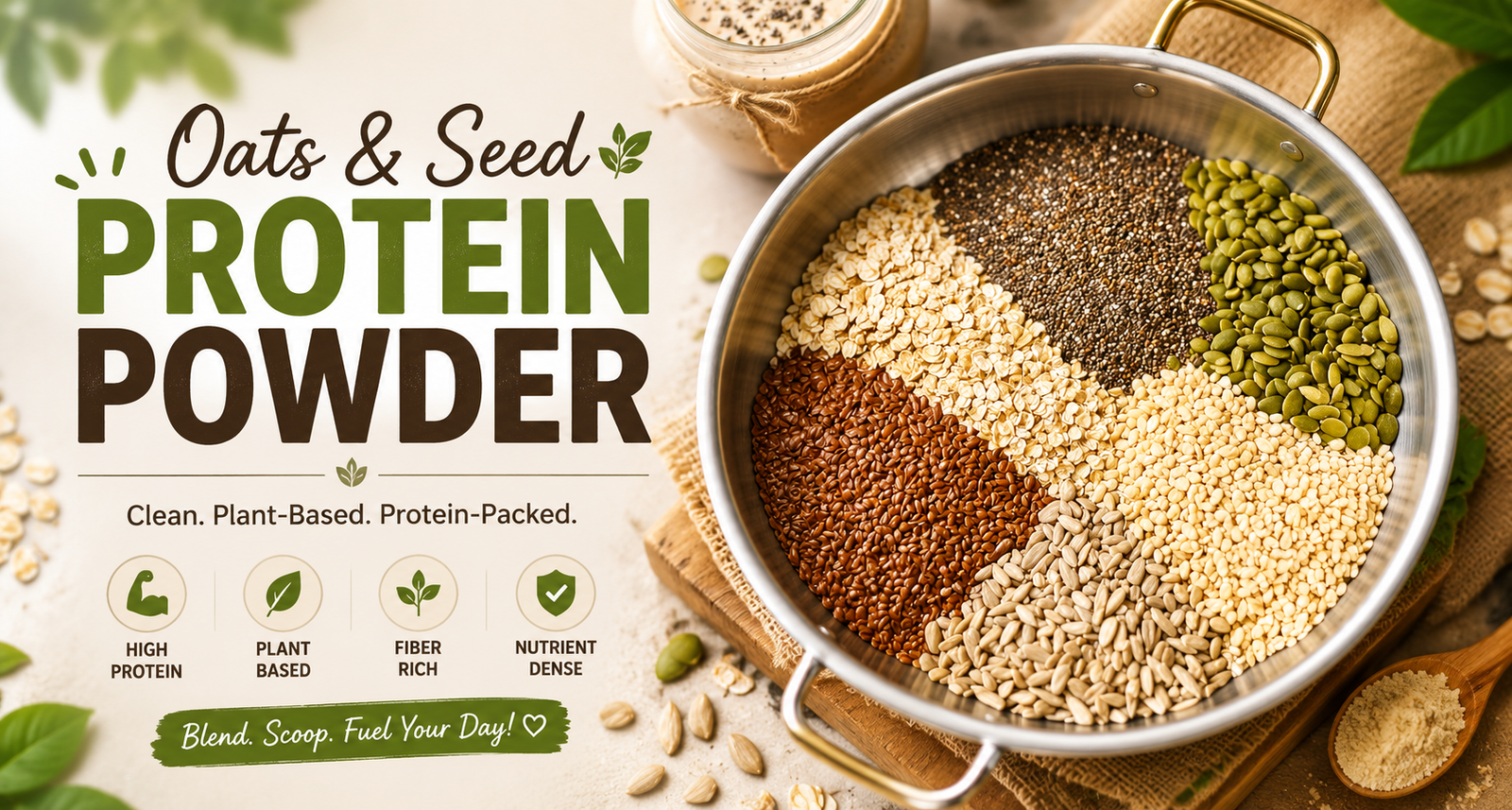
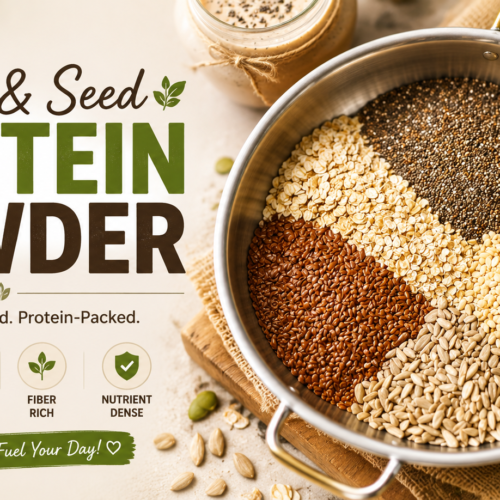
Six core ingredients, each adding something useful: oats, flax, pumpkin seeds, chia, thistle seeds and musk melon seeds. Here’s what each brings, in plain nutrition terms.
- Toasted oats (jai): a soft, high-fiber base with soluble fiber that supports digestion and keeps you full. In Ayurvedic tradition, oats are seen as grounding and Vata-balancing.
- Flax seeds (alsi): rich in fiber, lignans and plant omega-3 (ALA), which support regularity and add a nutty note.
- Pumpkin seeds (kaddu ke beej): a good source of magnesium, zinc and clean plant protein.
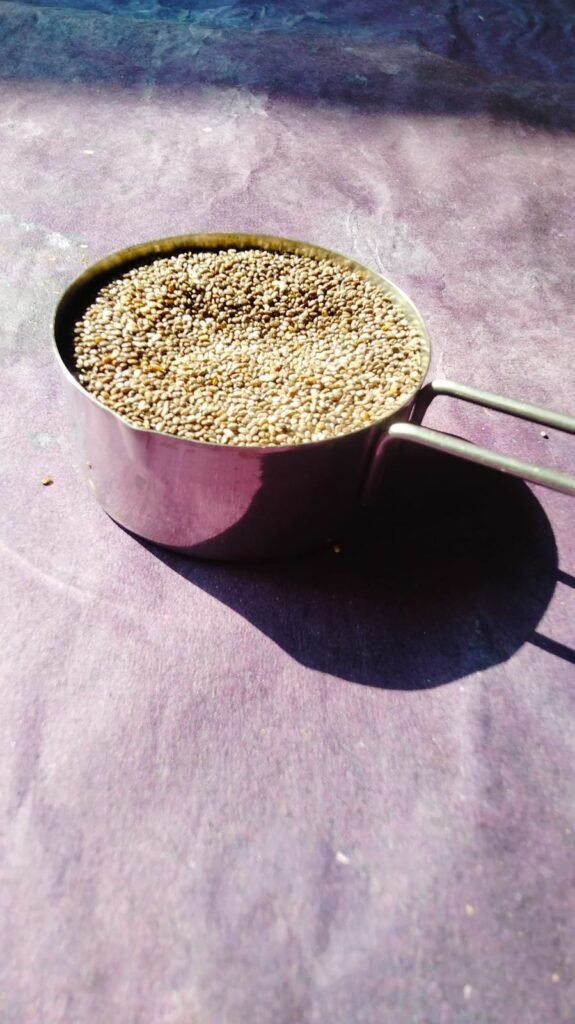
- Chia seeds (chia): form a soothing gel when soaked, add plant omega-3, calcium and fiber that supports regular bowel movements.
- White thistle seeds: traditionally used in Ayurveda; add crunch, fiber and minerals to the blend.
- Musk melon seeds (kharbuja ke beej): cooling in Ayurvedic tradition, and a source of zinc, iron and healthy fats.
Together they give a balanced spread of protein, fiber and healthy fats. I’ve kept the traditional Ayurvedic dosha framing where it’s part of the recipe’s heritage, but treat those as tradition rather than medical claims.
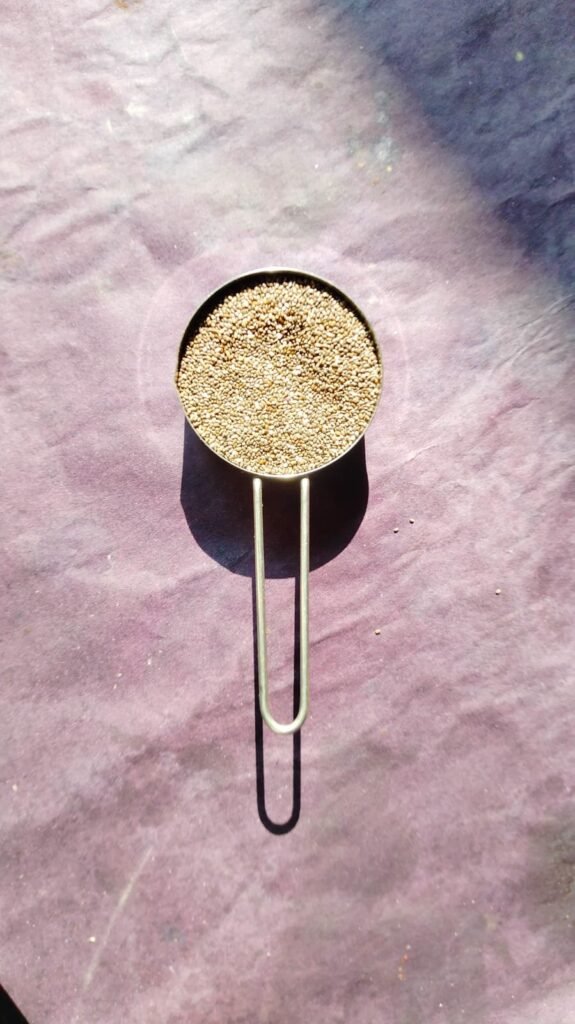
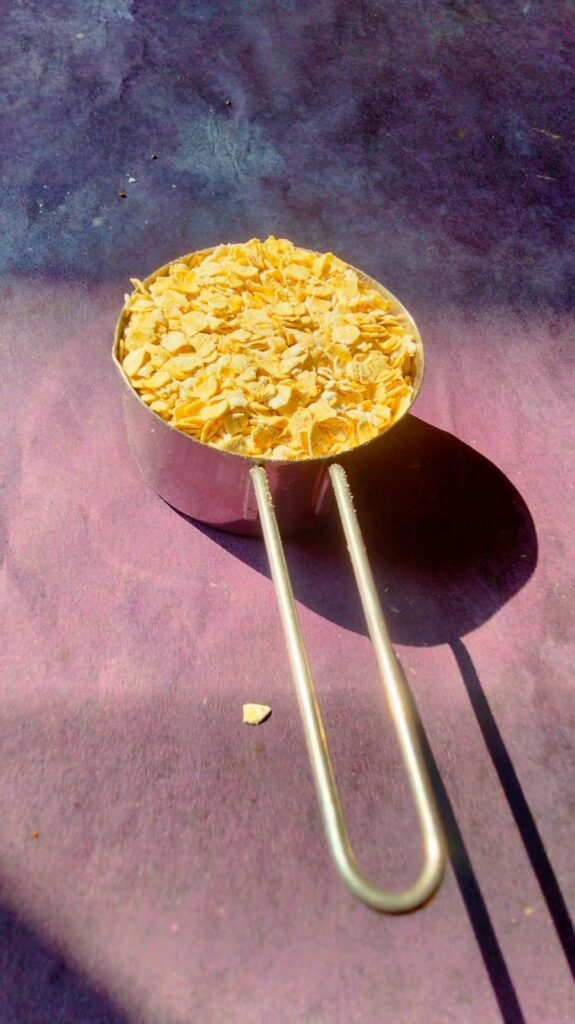
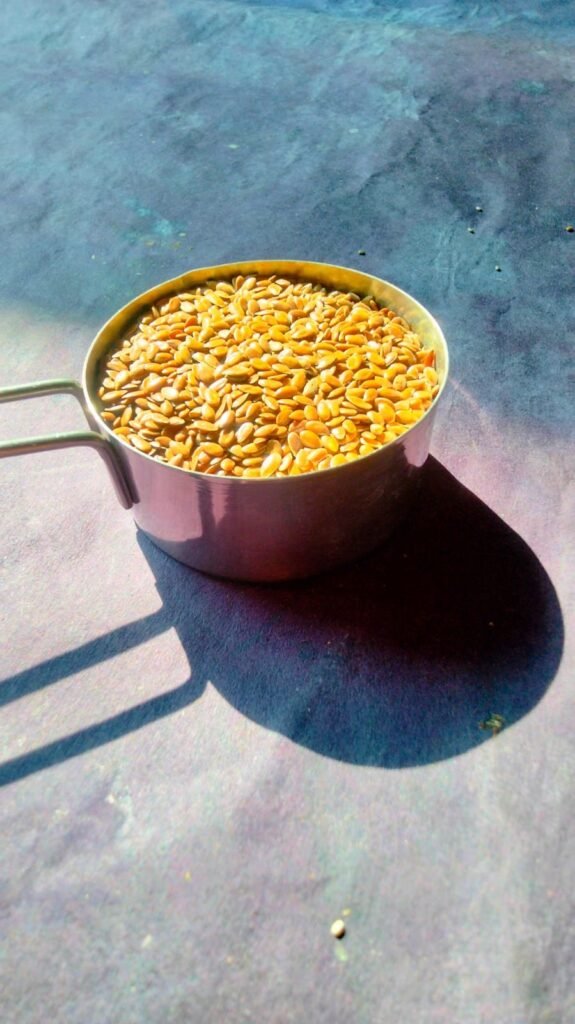
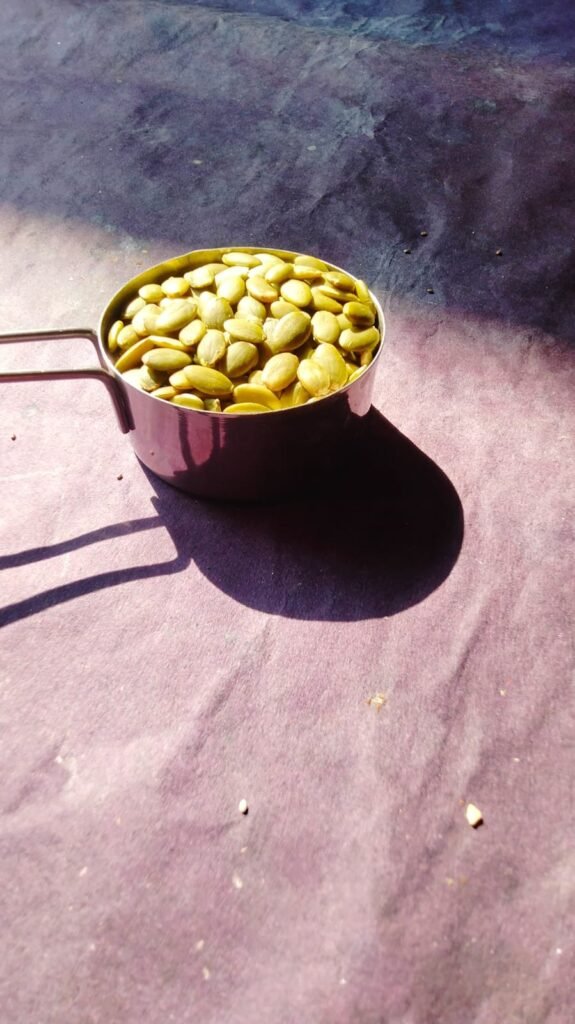
How do you make oats and seed protein powder at home?
Dry-roast each ingredient separately until aromatic, cool them fully, then blend with pink salt and optional cocoa into a fine or slightly coarse powder. It takes about 15 minutes and lasts a couple of weeks.
The key is roasting each item on its own, because they toast at different speeds and seeds burn fast. Stir constantly on a low flame until each smells nutty and turns a shade golden, then let everything cool completely before blending — blending them warm makes the powder clump.
Once blended, store it in a clean, dry glass jar and always use a dry spoon, since any moisture shortens its life. In humid weather, tucking a bay leaf or a couple of cloves into the jar helps keep it fresh.
My daily gut-friendly protein smoothie
Blend 2 heaped teaspoons of the powder with a banana, curd, water and ice for a filling, cooling shake. This is how I use it most mornings.
Blend 2 heaped tsp of the protein powder with 1 ripe banana (kela), 1 cup curd (dahi) — or coconut/almond curd if dairy doesn’t suit you — ½ cup water and a few ice cubes. Sip it slowly. It’s filling and cooling, and leaves my stomach feeling light rather than heavy.
Optional add-ins: a pinch of cinnamon (dalchini) if you feel sluggish, some soaked raisins (kishmish) for gentle bowel support, or a little ginger (adrak) powder. Adding curd also lifts the total protein of the shake to roughly 18–22g.
Oats and Seed Protein Powder

Equipment
- 1 pan
- 1 Spatula
- 1 bottle
Ingredients
- 1 cup rolled oats / jai 90g / 3.2 oz
- 1 cup flax seeds / alsi 150g / 5.3 oz
- 1 cup pumpkin seeds / kaddu ke beej 130g / 4.6 oz
- 1 cup chia seeds / chia 160g / 5.6 oz
- ½ cup white thistle seeds 70g / 2.5 oz
- ½ cup musk melon seeds / kharbuja ke beej 65g / 2.3 oz
- 1 tsp pink Himalayan salt / sendha namak
- 2 tsp raw cocoa powder / cocoa optional
Instructions
- Dry-roast the rolled oats (jai) on a low flame, stirring constantly, until aromatic and lightly golden. Set aside to cool.
- Dry-roast each type of seed separately — flax (alsi), pumpkin (kaddu ke beej), chia, thistle and musk melon (kharbuja ke beej) — on low heat until they smell nutty. Seeds burn fast, so watch closely. Cool completely.
- Once everything is fully cooled, add all the roasted oats and seeds to a blender with the pink salt (sendha namak) and cocoa, if using.
- Blend to a fine or slightly coarse powder, whichever texture you prefer.
- Transfer to a clean, dry glass jar. Always use a dry spoon.
- Store in a cool, dry cabinet — never the fridge. Use within 2–3 weeks. In humid weather, add a bay leaf or a couple of cloves to the jar to keep it fresh.
Video
Notes
- Serving size 2 tsp gives roughly 10–12g plant protein; blend with curd for 18–22g total.
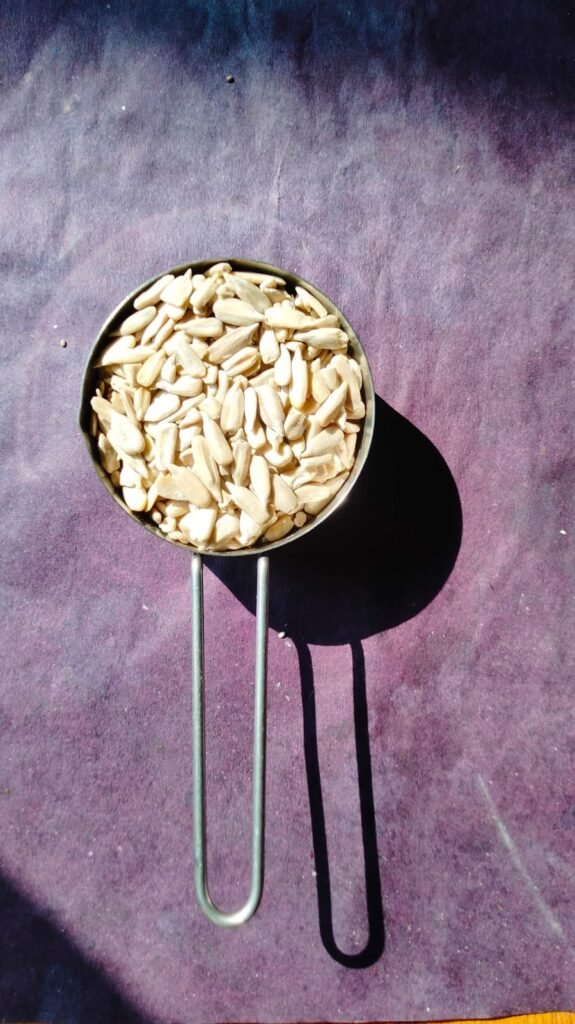
- Swap thistle seeds for sunflower seeds, and musk melon for watermelon or cucumber seeds, if needed.
- For a sensitive gut, start with a small amount — seeds are high in fiber and some are higher-FODMAP in larger servings.
How else can you use the blend?
Stir it into porridge, curd bowls, dosa batter, energy bars, or even khichdi for a protein boost. It’s versatile beyond smoothies.
A few ways I use it: stirred into oats or a curd bowl, mixed into warm almond milk at bedtime, added to dosa or pancake batter, blended into homemade date-and-peanut-butter energy bars, or spooned into soups and khichdi for extra protein. A little goes a long way, so start with a spoon or two.
Because it’s fiber- and fat-dense, keep the portion sensible — two teaspoons is plenty for most uses, especially if you have a sensitive gut.
Substitutions and storage
Swap thistle seeds for sunflower seeds, musk melon for watermelon seeds, and store the powder cool, dry and never refrigerated. Easy tweaks keep it flexible and fresh.
If you don’t have white thistle seeds, use sunflower seeds; for musk melon seeds, watermelon or cucumber seeds work. Skip the cocoa or use carob if you prefer, and add dry dates or a little jaggery (gud) if you like it sweeter.
For storage: keep it in a cool, dry cabinet, never the fridge (moisture ruins the texture), always use a dry spoon, and add a bay leaf or a couple of cloves in humid areas. It’s best used within 2–3 weeks of roasting for the freshest flavour and nutrients.
Try these Teas Anti Inflammatory Drink Blue Pea Tea
Frequently Asked Questions
What is oats and seed protein powder?
It’s a homemade, plant-based protein blend made by dry-roasting oats and seeds like flax, pumpkin, chia, thistle and musk melon, then grinding them into a powder. It’s free from dairy, gluten, whey and artificial fillers, giving you a clean source of plant protein, fiber and healthy fats.
How much protein is in a serving?
A 2–3 teaspoon serving gives roughly 10–12g of plant protein, along with fiber, omega-3s, magnesium, zinc and iron. Blending it with curd in a smoothie lifts the total to around 18–22g per meal, which makes it a satisfying, gut-friendly way to add protein.
How do I use oats and seed protein powder?
Blend a couple of teaspoons into a smoothie with banana and curd, or stir it into porridge, curd bowls, dosa batter, energy bars, soups or khichdi. It’s versatile, so start with a small amount and build up. Two teaspoons is a sensible portion, especially for a sensitive gut.
Is this blend suitable for dietary restrictions?
Yes — it’s naturally dairy-free, gluten-free (use certified gluten-free oats), soy-free and free from artificial additives, which suits vegans and those with lactose intolerance. If you have a sensitive gut, introduce it in small amounts, as seeds are high in fiber and some are higher-FODMAP in large servings.
How long does the powder last, and how do I store it?
It keeps for 2–3 weeks at room temperature in a clean, dry glass jar. Never refrigerate it, as moisture ruins the texture, and always use a dry spoon. In humid areas, add a bay leaf or a couple of cloves to the jar to help keep it fresh. Roast a fresh batch every few weeks for the best flavour.
🌿 Love gut-friendly recipes? Add Caloriematterss as your Google Preferred Source so my low-FODMAP, high-protein recipes show up more often for you. Set Caloriematterss as a preferred source →