7 Best Dals for IBS — Which Indian Lentils Are Safe for Your Gut?
Quick Guide
What this is: A ranked guide to the 7 best dals for IBS based on FODMAP level and digestibility
Safest pick: Yellow split moong dal-lowest FODMAP, lightest texture, easiest to digest
Key rule: Always soak, always pressure cook fully, always add hing and ginger
Avoid on flare days: Unsoaked dal, whole dal with skin, chana in large portions
IBS-friendly: Yes-when prepared correctly dal is one of the best high-protein foods for IBS
Why Did Dal Trigger My IBS-And How Did I Fix It ?
Dal was the first food I cut out after my IBS diagnosis in 2023. Not because a doctor told me to. I cut it out because I kept ending up bloated and cramping an hour after eating it and I could not figure out why ? It took three months of testing to understand what was actually happening . I was eating unsoaked, under-spiced lentils in portions my gut could not handle. The moment I changed the preparation, everything changed. Then i created this list of ” Best Dals for IBS”.
My dietitian helped me understand that lentils contain fermentable carbohydrates called oligosaccharides. These are high FODMAP compounds that ferment in the gut and produce gas. But soaking and pressure cooking break these compounds down significantly -which is why the same dal that destroyed me when unsoaked became a daily staple once I started preparing it correctly. This post is about Best Dals for IBS, the list I built from those three months. Seven dals ranked by gut safety, with exactly how I cook each one.
What Makes a Dal Safe for IBS?
Not all lentils behave the same way in your digestive system. Before getting into the best dals for IBS, here is what actually determines whether a dal will work for you.
Does Soaking Really Reduce FODMAP in Dal?
Yes- and this is the single most important step. Soaking lentils in water for 2 to 3 hours breaks down a significant portion of the fermentable carbohydrates before cooking. The soaking water absorbs these compounds which is why you must always discard it and rinse thoroughly before cooking. Never cook in soaking water.
Does Pressure Cooking Make Dal Easier to Digest?
Yes -completely soft lentils are far easier on the gut than firm or undercooked ones. Pressure cooking achieves softness that stovetop cooking often cannot. For IBS, undercooked dal is one of the most common triggers. The dal should have no bite at all- it should almost dissolve when pressed between two fingers.
Which Spices Help with Dal Digestion?
Three spices make a genuine difference: hing (asafoetida), ginger, and cumin. Hing in particular targets the gas-producing fermentation that happens with lentils in the gut. It has been used in Indian cooking for exactly this reason for centuries. Adding a small pinch of hing to every dal you cook is one of the most effective changes you can make for IBS.
I always ghee as instructed by my Dictation .
7 Best Dals for IBS I Eat
This list of Best Dals for IBS is helps me short out which dals I can eat and how I can eat. I am sure it will helps you too.

1. Yellow Split Moong Dal
Yes-by a significant margin. Yellow split moong is moong dal with the outer skin removed and the lentil split in half. That outer skin contains most of the fermentable fibers. Without it, moong dal has one of the lowest FODMAP profiles of any lentil available.
This is in number one of Best Dals for IBS list .It also has the lightest texture- it almost dissolves when cooked properly. This is why moong dal khichdi is the traditional Indian food given to people recovering from illness. It is not just comfort food. It is genuinely easy on the digestive system in a way that other lentils are not.
I eat yellow split moong dal three to four times a week. As khichdi with rice, as plain dal with roti, as a light soup. It has never triggered my IBS in a normal serving size. How to cook it: Soak 2 to 3 hours. Pressure cook with water, turmeric, ginger, and a pinch of Hing for 3 to 4 whistles. Temper with cumin and curry leaves. Skip onion and garlic on sensitive days.
2. Red Masoor Dal — Is Red Masoor Dal Good for IBS?
Generally yes, in the right portion and with correct preparation. Red masoor cooks faster than almost any other lentil-20 minutes without soaking, 10 minutes with-and has a mild earthy flavour that works well with most Indian spicing. in the list of Best Dals for IBS ,this is my best dal so far .
Red masoor is the skinned and split version of whole brown masoor. Removing the skin lowers the FODMAP content significantly, similar to what happens with moong. It is high in iron and protein which makes it particularly good for people managing IBS alongside low energy or hair loss.
For IBS-D (diarrhoea dominant), masoor can occasionally be an issue in large portions. I keep my serving to half a cup cooked. For IBS-C (constipation dominant) it is generally better tolerated.
How to cook it: Soak for at least 1 hour. Pressure cook until completely soft with no bite. Mash slightly for easier digestion. Use ginger, turmeric, cumin. You can see how I cook it in my spinach masoor dal recipe.
3. Toor Dal or Yellow pigeon pea
Yes, but it needs more careful preparation than moong or masoor. Toor dal is the backbone of South Indian cooking and is higher in protein than both. It also has a richer earthier flavour.
The issue with toor dal for IBS is that it is higher in FODMAPs than the first two on this list. A long soak of 4 to 6 hours or overnight is essential. Thorough pressure cooking is essential. Skimming the foam that rises during stovetop boiling also helps -that foam contains a portion of the gas-causing compounds. I have toor dal once or twice a week. On flare days I skip it entirely and go back to moong.
How to cook it: Soak overnight if possible. Pressure cook for 5 to 6 whistles. Skim foam if boiling. Use hing generously.
4. Split Urad Dal Without Skin
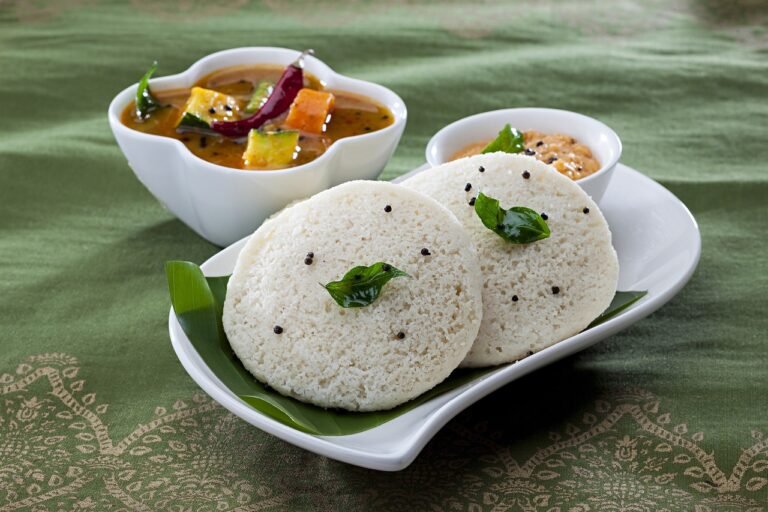
Very small amounts only. Whole urad dal with skin is one of the hardest lentils to digest for IBS. Split urad without skin is more manageable but still not something to eat as a standalone dal in regular portions. The safest use is as part of a blend -I mix one part split urad to three parts yellow moong occasionally. I also use it in dosa batter where fermentation further breaks down the complex carbohydrates. Fermented preparations like dosa and idly are significantly easier to digest than plain cooked urad.
How to cook it: Small amounts only as part of a blend or in fermented preparations. Never as a main dal on its own.

5. Chana Dal
In small portions yes. Chana dal is higher in FODMAPs than the others on this list which means strict portion control is necessary. A quarter cup cooked is the starting point. More than that and most IBS sufferers will experience gas and bloating.
Chana dal has a nutty satisfying flavour and a firm texture that holds well in curries. Ajwain (carom seeds) added during cooking is particularly effective at reducing its gas-producing effect. I am a Bengali so in the list of Best Dals for IBS , this is also my favourite .I used this dal for both my veg and nonveg recipes .
How to cook it: Soak 4 to 6 hours. Pressure cook thoroughly. Add ajwain, hing, and ginger generously. Keep portions to quarter cup cooked. Do not have it on consecutive days.

6. Sprouted Green Moong-Is Sprouted Moong Good for IBS?
Yes, when cooked-never raw. Whole green moong with skin is higher in FODMAPs than split yellow moong. But sprouting breaks down the outer skin compounds and reduces fermentable carbohydrates significantly. The key word is cooked. Raw sprouts are not IBS-friendly and can cause significant symptoms. Pressure cooked sprouted moong is one of the most nutrient-dense gut-friendly preparations in Indian cooking. It is high in B vitamins, plant protein, and fiber that has been made digestible through the sprouting process.
How to cook it: Sprout for 24 to 36 hours. Pressure cook until completely soft. Use coconut, ginger, cumin, curry leaves. Skip this on flare days and use split moong instead.

7. Kulthi Dal or Horse gram
Only on stable days and only once a week. Horse gram is the most therapeutic dal on this list but also the most intense. It is warming, slightly bitter, and behaves very differently from other lentils in the digestive system. For IBS-C specifically, kulthi can be helpful in small portions. For IBS-D, approach with real caution. This dal should never be eaten during an active flare.
How to cook it: Soak overnight. Pressure cook for 8 to 10 whistles-it needs significantly longer than other dals. Season simply with cumin and ginger. No heavy spicing.
What Are the Cooking Tips for Best Dals for IBS ?
| Habit | Why It Helps for IBS |
| Soak all dals before cooking | Breaks down fermentable carbs significantly |
| Always discard soaking water | Gas-causing compounds leach into it |
| Pressure cook until completely soft | Undercooked dal is the most common IBS trigger |
| Add hing to tempering | Directly reduces gas formation in the gut |
| Use ginger | Anti-inflammatory, supports digestion |
| Skip onion and garlic on flare days | Both are high FODMAP |
| Start with half a cup cooked | Portion size is the single biggest factor |
| Do not mix three or more dals when symptomatic | Higher combined FODMAP load |
Which Dal Should You Start With If You Have IBS?
Start with yellow split moong. Make a simple khichdi- moong dal, rice, turmeric, ginger, cumin, hing, water. Nothing else. One small bowl. See how your gut responds. If that goes well for a week, try red masoor. Then toor dal. Build tolerance gradually rather than testing multiple new dals at once.
The worst thing you can do is give up on dal entirely because one bad experience with unsoaked chana dal caused a reaction. That is not the dal causing the problem-that is the preparation. You can see exactly how I structure a full IBS-friendly meal around these dals in my IBS friendly Indian dinner guide.
For a high protein version using three dals together, see my high protein dal recipe with lentil fritters-two meals from one cooking session. Follow this list of Best Dals for IBS , your life will changed trust me on this .
With this Best Dals for IBS You May Try These Recipes- spinach masoor dal recipe , IBS friendly Indian dinner , high protein dal recipe
Frequently Asked Questions
Which dal is the best for IBS?
Yellow split moong dal is generally considered the most IBS-friendly dal because it is easy to digest, naturally low in FODMAPs, and has a soft texture when fully cooked. Soaking it for a few hours and pressure cooking it until very soft makes it even gentler on the digestive system.
Can you eat dal every day with IBS?
Yes. Many people with IBS tolerate moderate portions of well-prepared dals such as yellow moong or red masoor every day. Soaking, thorough cooking, and sensible serving sizes are usually more important than how often you eat dal.
Why does dal cause bloating even after cooking?
Common reasons include not soaking the dal long enough, undercooking it, eating a large portion, or preparing it with ingredients such as onion and garlic that may trigger IBS symptoms. Cooking the dal until completely soft and using digestive spices like hing can make it easier to tolerate.
Is moong dal khichdi good for IBS?
Yes. Moong dal khichdi combines yellow split moong dal with white rice to create a soft, nourishing meal that is easy to digest. Light seasoning with cumin, turmeric, ginger, and a little ghee makes it one of the most comforting meals during an IBS flare.
Which dal should be avoided with IBS?
Whole urad dal, whole chickpeas, and kidney beans are generally more difficult to digest because of their higher fermentable fibre content. During an active IBS flare, many people find it helpful to stick with simple yellow split moong dal until symptoms settle.
🌿 Love gut-friendly recipes? Add Caloriematterss as your Google Preferred Source so my low-FODMAP, high-protein recipes show up more often for you. Set Caloriematterss as a preferred source →