Ashwagandha Benefits for Women: What the Research Actually Supports (and What It Doesn’t)
📝 Quick Guide
What it is: Ashwagandha (Withania somnifera) is an adaptogenic herb used in Ayurveda for centuries and now studied in modern trials, mostly for stress, sleep and general wellbeing.
What the research actually supports: The most consistent evidence in women is for reduced stress and better sleep, largely through lowering cortisol. Effects on hormones, thyroid and fertility are far less certain and need medical guidance.
Honest, important note: This is a food-and-wellness blog, not medical advice, and I’m not a doctor. Ashwagandha is biologically active — it can affect thyroid function and interact with several medications, and pregnant women are advised not to take it. Always talk to your own doctor before starting, especially with a thyroid condition, on medication, or trying to conceive.
Ashwagandha benefits for women get talked about everywhere right now, and honestly, a lot of what’s written is overblown. So I want to do something different with this post: tell you what the research genuinely supports, what’s still uncertain, and where you need to be careful — because ashwagandha is an active herb, not a harmless “wellness” powder, and the women most likely to reach for it (dealing with stress, poor sleep, hormonal ups and downs) are exactly the ones who deserve honest information.
A quick word on who I am, so you know where this comes from. I write a food and gut-health blog and I live with IBS. I’m not a doctor, and this isn’t medical advice. What I can do is summarise the actual evidence fairly, share it in plain language, and be upfront about the limits. For anything specific to your body — especially a thyroid condition, medication, or trying to conceive — your doctor is the right person, not a blog.
Let’s go through it properly.
Table of Contents
What is ashwagandha, and why is it called an adaptogen?
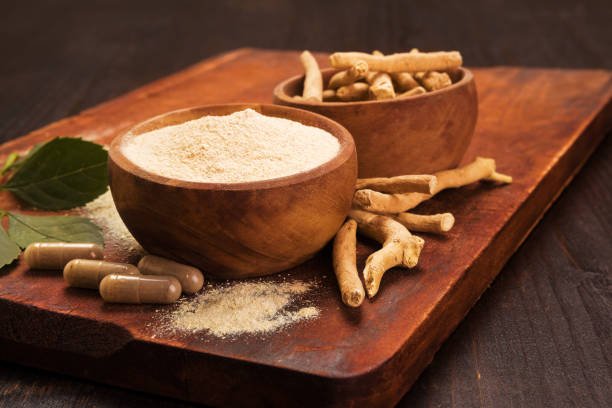
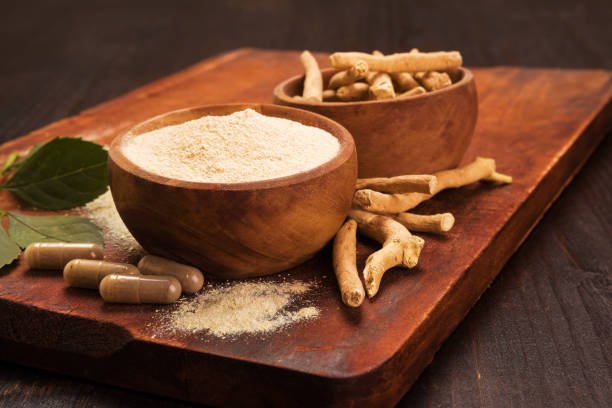
Ashwagandha (Withania somnifera), sometimes called Indian ginseng, is a shrub whose root has been used in Ayurveda for a very long time. It’s classed as an “adaptogen,” a term for plants thought to help the body cope with stress. The active compounds are called withanolides.
I’ll be careful with that word “adaptogen,” because it gets used to imply the herb does almost anything. What the modern research mostly points to is narrower and more specific than the marketing suggests — and that’s actually good news, because the narrow claims are the ones that hold up.
What are the best-supported ashwagandha benefits for women?
Here’s where the evidence is genuinely reasonable, according to the US National Institutes of Health Office of Dietary Supplements (ODS), which reviews the trial data.
Stress and anxiety-like symptoms. Several randomised, placebo-controlled trials over the last decade suggest certain standardised ashwagandha extracts may reduce stress and anxiety symptoms over a few weeks. This is the most consistent finding, and it’s thought to work mainly by lowering cortisol through the body’s stress (HPA) axis. For women carrying a heavy mental load, this is the benefit most likely to be real.
Sleep. A smaller number of studies suggest some extracts may modestly improve sleep, particularly in people who are stressed or have trouble sleeping. The effect is gentle, not a sleeping-pill replacement, but it’s a plausible, evidence-backed use.
General sense of wellbeing. Because stress and sleep touch everything else, women in trials often report feeling generally better — calmer, more rested. That’s a knock-on effect of the two above rather than a separate magic property, but it’s real to the people experiencing it.
Notice what I’m not saying here. I’m not saying it cures anything. The honest headline is: the strongest case for ashwagandha in women is stress, sleep and how you feel day to day — and even there, results vary by person and by product.
What about hormones, periods and PCOS?
This is where most posts overreach, so I’ll be careful. The idea is that by lowering cortisol, ashwagandha might indirectly ease stress-related hormonal disruption. That’s a plausible mechanism, and some women do report smoother cycles when their stress is better managed. But “may help indirectly via stress” is a very different claim from “balances your hormones” or “fixes PCOS,” and the strong versions aren’t supported by solid evidence.
So if you have PCOS, irregular periods, or another hormonal condition, please treat ashwagandha as, at most, a possible stress-support adjunct to discuss with your doctor — not a treatment. The real management of these conditions is medical, and I’d be doing you a disservice to suggest a herb replaces that.

What about thyroid and fertility?
I’m going to be especially straight here, because this is where the old version of this post was genuinely misleading, and where the risk to you is highest.
Thyroid. Ashwagandha can actually change thyroid hormone levels. Small studies have shown it can lower TSH and raise T3 and T4, and there are case reports of it causing thyrotoxicosis (overactive thyroid symptoms) in women. That cuts both ways: it means the herb is active on the thyroid, and it means if you have a thyroid condition or take thyroid medication like levothyroxine, you should not self-experiment — this needs a doctor’s oversight, because it can interact. This is a safety point, not a benefit.
Fertility. Evidence here is thin. There’s some research on ashwagandha and sexual wellbeing in women, but claims about improving egg quality, FSH or ovulation aren’t well established, and if you’re actively trying to conceive, the safe move is to talk to your doctor first — not to start an active herb on your own.
I know this is less exciting than “boosts fertility naturally.” But it’s the truth, and the truth is what keeps you safe.
Who should NOT take ashwagandha ?
This section matters more than any benefit, and most articles bury it. Based on NIH ODS and other safety reviews, be cautious or avoid it if you are:
- Pregnant. Some experts specifically advise against ashwagandha in pregnancy, and high-quality safety data in pregnancy is lacking. Don’t take it if you’re pregnant or think you might be.
- Breastfeeding. Evidence is lacking, so caution is sensible — check with your doctor.
- On thyroid medication, or you have a thyroid condition — because it can affect thyroid hormones and interact.
- On other medications — it may interact with sedatives, blood-pressure medicines, diabetes medicines, immunosuppressants and anticonvulsants.
- Living with liver disease — there are rare reports of liver effects, and it should be avoided in advanced liver disease.
- Due for surgery soon, or you have a hormone-sensitive condition.
If any of these is you, this isn’t a “maybe.” It’s a “talk to your doctor first,” full stop.
What are the side effects and how long is it safe to take?
In trials, ashwagandha has generally been well tolerated for up to about three months, with mild side effects like stomach upset, loose stools, nausea and drowsiness being the most common. What isn’t well established is its safety over many months or years — the long-term data simply isn’t there. So if you do use it, short, defined periods with your doctor’s awareness make more sense than taking it indefinitely.
How do people usually take it?
I’ll describe this factually rather than prescribe it, because dosing should be individual and medical. Ashwagandha commonly comes as a root powder (churna), capsules, or standardised extracts, and trials have typically used standardised extracts rather than loose powder. Traditionally the powder is taken with warm milk at night. I’m deliberately not giving you a milligram figure to follow, because the right amount — and whether it’s right for you at all — depends on your health, your medications and your doctor’s input.
My honest take as a food blogger, not a doctor
Here’s where I land. Ashwagandha has a reasonable evidence base for one thing above all: helping stressed, poorly-sleeping women feel a bit calmer and more rested. That’s genuinely useful, and if that’s what you’re after and your doctor is fine with it, it’s a reasonable thing to try for a defined period.
What it is not is a hormone-balancer, a thyroid fix, a fertility booster or a cure for PCOS — and I’d gently steer you away from any post (including the older version of this one) that told you otherwise. For the food-and-lifestyle side of stress and gut health, that’s my actual home turf, and it’s where I’d point you first.
If stress and gut symptoms are what brought you here, you might find my Indian spices for digestion and my summer drinks for IBS more directly useful — both are food-first and something I can speak to from experience.
Sources referenced (add as linked citations when publishing): US National Institutes of Health, Office of Dietary Supplements — Ashwagandha fact sheet; NIH National Center for Complementary and Integrative Health (NCCIH); and published randomised controlled trials on ashwagandha for stress and sleep. Link each where mentioned above.
Seeds for Women’s Health , A Simple 3-Ingredient Remedy for Digestion , Gond Katira Summer Cooler
Frequently Asked Questions
What are the main ashwagandha benefits for women?
The best-supported benefits are reduced stress and improved sleep, largely by lowering cortisol, along with a general sense of feeling calmer. Effects on hormones, thyroid and fertility are much less certain and should be discussed with a doctor rather than assumed.
Can ashwagandha balance hormones or help with PCOS?
There is a plausible indirect route, since lowering stress may ease some stress-related hormonal disruption, but strong claims about balancing hormones or treating PCOS are not well supported. If you have a hormonal condition, treat it as a possible stress-support adjunct to discuss with your doctor, not a treatment.
Is ashwagandha safe during pregnancy?
No. Some experts specifically advise against ashwagandha in pregnancy, and good safety data is lacking. It is best avoided if you are pregnant or trying to conceive, and you should check with your doctor.
Can I take ashwagandha with thyroid medication?
Be very cautious. Ashwagandha can affect thyroid hormone levels and may interact with thyroid medication, so this is something to manage with your doctor rather than start on your own.
How long can you safely take ashwagandha?
Trials suggest it is generally well tolerated for up to about three months, with mild side effects like stomach upset or drowsiness. Its long-term safety over many months or years is not well established, so shorter, defined periods with medical awareness are more sensible.
🌿 Love gut-friendly recipes? Add Caloriematterss as your Google Preferred Source so my low-FODMAP, high-protein recipes show up more often for you. Set Caloriematterss as a preferred source →
⚕️ Medical Disclaimer
I live with IBS and share what suits my own body — I’m not a doctor or dietitian, and this is for general information, not medical advice. What’s gentle for my gut may not suit yours. Please check with a qualified doctor or dietitian before changing your diet or trying any remedy, especially if you’re pregnant, on medication, or managing a health condition. .