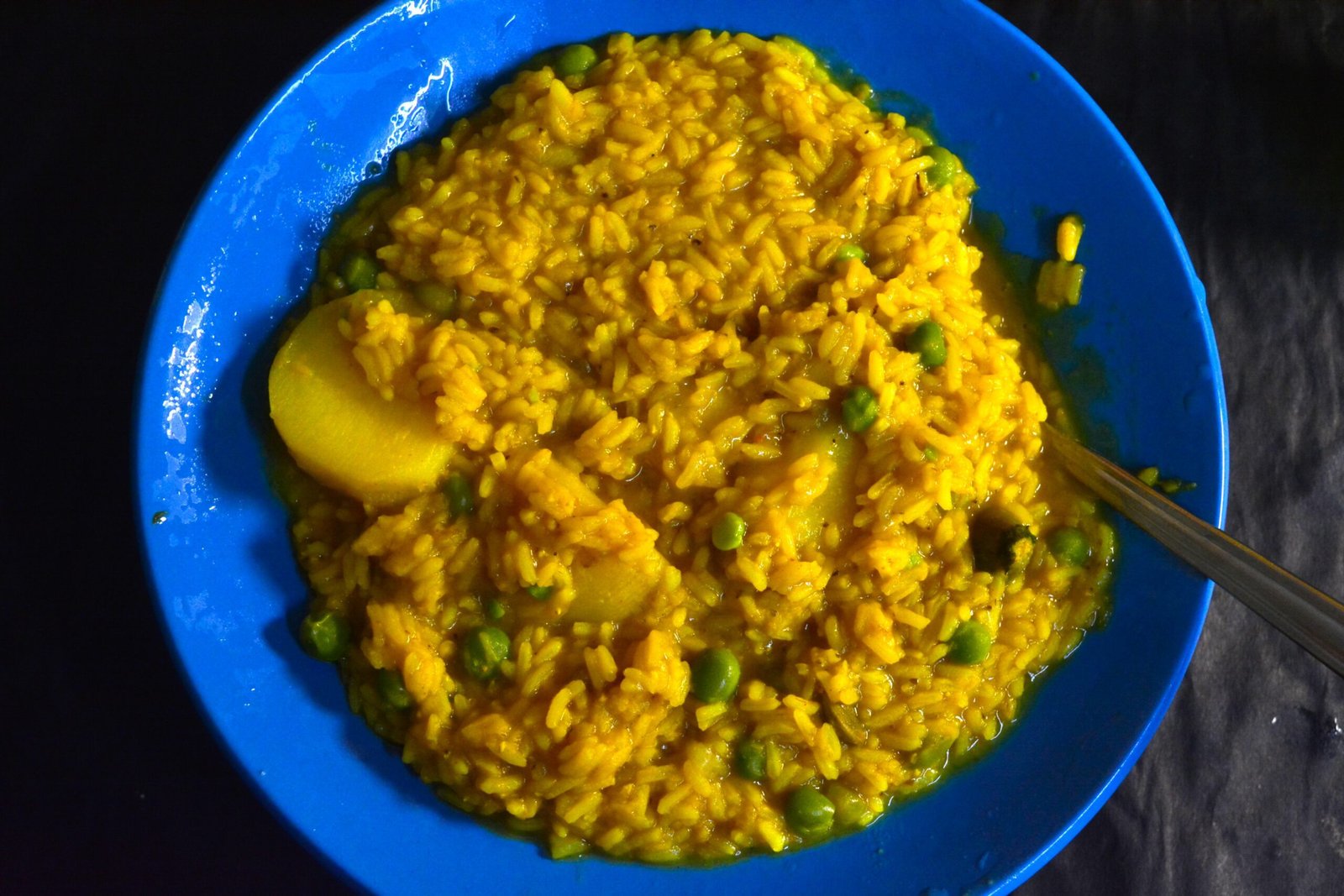
High Protein Indian Breakfast — Masoor Dal Khichdi and Egg Omelette
📌 Quick Guide
What it is: Masoor dal khichdi cooked with potato and whole spices + a simple egg omelette. Two things, one plate, done in 30 minutes.
Why it works: Dal + rice + egg = complete protein, complex carbs, sustained energy — no mid-morning crash
Cook time: 30 minutes
IBS-friendly: Yes — masoor dal is the lightest lentil, khichdi is one of the most gut-safe meals in Indian cooking
Calories: ~380 kcal per serving | Protein: ~22g per serving
Breakfast Has to Work Hard When You Have IBS
Most mornings I don’t have the luxury of eating whatever I want and hoping for the best. IBS means breakfast is a decision — not just what sounds good, but what I know my gut will handle without making the rest of the day difficult.
For a long time breakfast was my worst meal. Too light and I’d be hungry by 10am, reaching for whatever was in front of me. Too heavy and I’d spend the morning uncomfortable. High carb and my blood sugar would crash before lunch. Wrong ingredients and I’d know about it within the hour.
This high protein Indian breakfast is what I settled on — and I’ve been making it on rotation ever since.
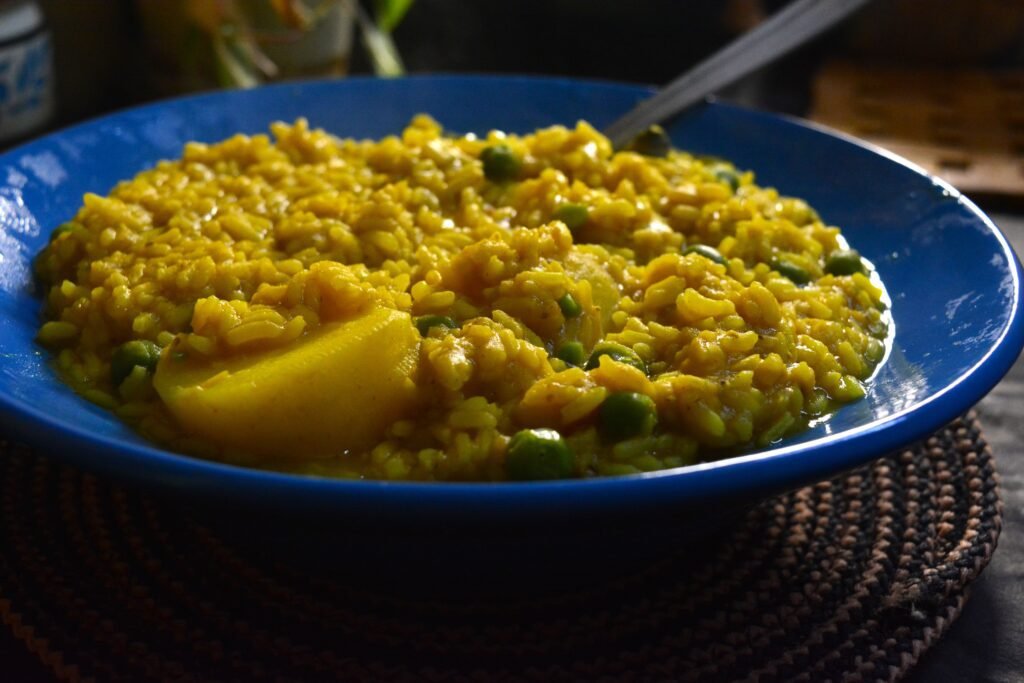
Masoor dal khichdi with a two-egg omelette. Not exciting on paper. But 22g protein, complex carbs from rice and lentils, and a meal that my gut trusts completely. On rainy mornings when I don’t want to think, on busy days when I need something fast, on recovery days after a bad IBS week — this is the breakfast I come back to.
The khichdi takes 3 whistles in a pressure cooker. The omelette takes 5 minutes. Everything is on the plate in 30 minutes. That’s the whole pitch
Table of Contents
Why This Is One of the Best High Protein Indian Breakfasts for IBS
The combination of masoor dal and eggs is genuinely smart from a nutrition standpoint — not just a random pairing.
Masoor dal gives you plant protein and complex carbohydrates together. The fibre in the dal slows the digestion of the rice, which means no blood sugar spike and no crash. The lentils also provide iron, B vitamins, and folate — nutrients that are commonly low in people with IBS who restrict their diet significantly.
Eggs add complete animal protein — all 9 essential amino acids in two eggs. The fat in egg yolk supports fat-soluble nutrient absorption and keeps you satiated. For IBS specifically, eggs are one of the safest protein sources — virtually no fermentable carbohydrates, easy to digest, and rarely a trigger.
Together — dal + rice + eggs — this high protein Indian breakfast gives you a complete protein profile, stable blood sugar, and a gut-friendly meal that doesn’t compromise on being actually filling.
The potato in the khichdi adds resistant starch — a prebiotic fibre that feeds beneficial gut bacteria. Resistant starch is different from regular starch — it passes through the small intestine undigested and reaches the colon where good bacteria use it as fuel. This is genuinely good for IBS gut microbiome support.
Ingredients
Serves 1–2 | Prep: 10 min | Cook: 20 min
For the Masoor Dal Khichdi:
- ½ cup masoor dal (red lentils), washed
- ½ cup rice (any variety)
- 1 medium onion, sliced
- ½ tbsp ginger garlic paste (homemade preferred)
- 1 tsp cumin seeds
- 1 bay leaf
- 2–3 cardamom pods, slightly crushed (optional)
- 1 green chilli, slit
- 1 tbsp olive oil or mustard oil
- 1 tsp turmeric powder
- Salt to taste
- 1 large potato, peeled and halved
- 2 cups hot water
For the Egg Omelette:
- 2 eggs
- ½ small onion, finely chopped
- ½ green chilli, finely chopped
- Salt to taste
- A little oil for cooking
Equipment: Pressure cooker, non-stick pan, spatula.
IBS note: Onion and garlic paste are in this recipe. On stable days this is fine in one serving. On flare days — reduce onion to half and use garlic-infused oil instead of ginger garlic paste. The khichdi base without the aromatics is still good and significantly easier on the gut.
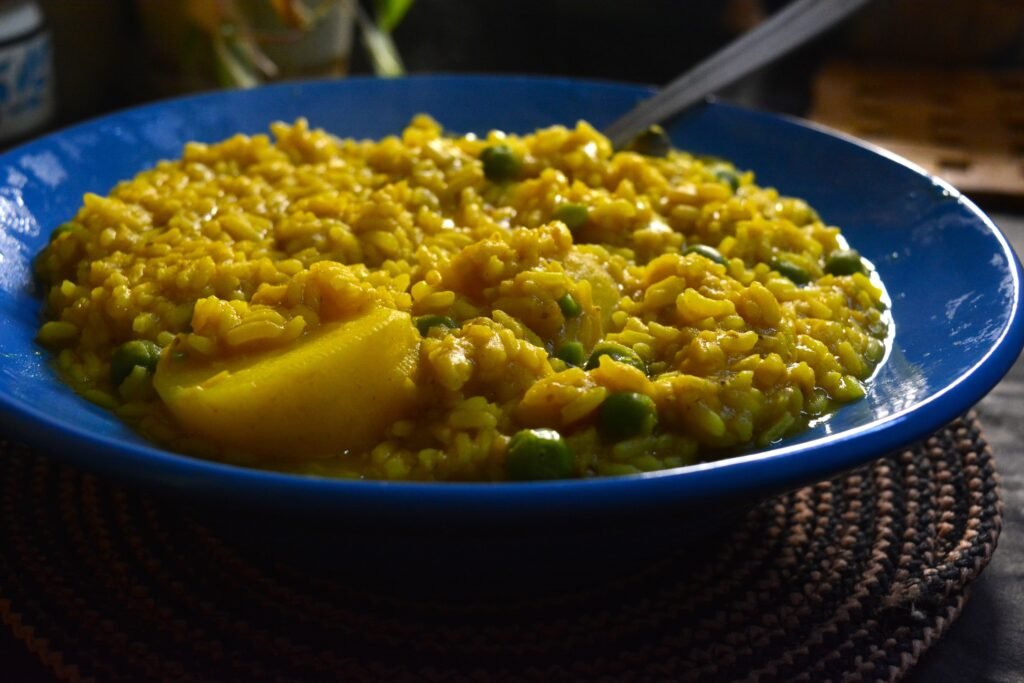
How to make this High Protein Indian Breakfast ?
Step 1 — Wash and Prep
Rinse masoor dal and rice together until the water runs clear. Set aside to drain.
Peel and halve the potato. Slice the onion for the khichdi and finely chop the smaller portion for the omelette. Slit the green chilli for the khichdi, finely chop half for the omelette. Have your ginger garlic paste ready.
Step 2 — Make the Tadka
Heat 1 tablespoon oil in the pressure cooker on medium flame. Add cumin seeds, slit green chilli, bay leaf, and crushed cardamom if using. Let them sizzle for 30–45 seconds until fragrant.
Add sliced onion and ginger garlic paste. Add a pinch of salt and the turmeric powder. Sauté on medium flame for about 2 minutes until onion turns soft and translucent.
Step 3 — Add Dal, Rice and Potato
Add the drained dal and rice directly into the cooker without water first. Add the potato halves. Stir everything together for about 1 minute so each grain gets coated with the spiced oil.
Pour in 2 cups of hot water — hot water speeds up cooking and gives you a more even texture. Secure the lid and pressure cook for 3 whistles on medium flame. Let the pressure release naturally — don’t force it.
Step 4 — Make the Omelette
While the cooker is doing its work — crack 2 eggs into a bowl. Add finely chopped onion, green chilli, and a pinch of salt. Beat well until slightly frothy.
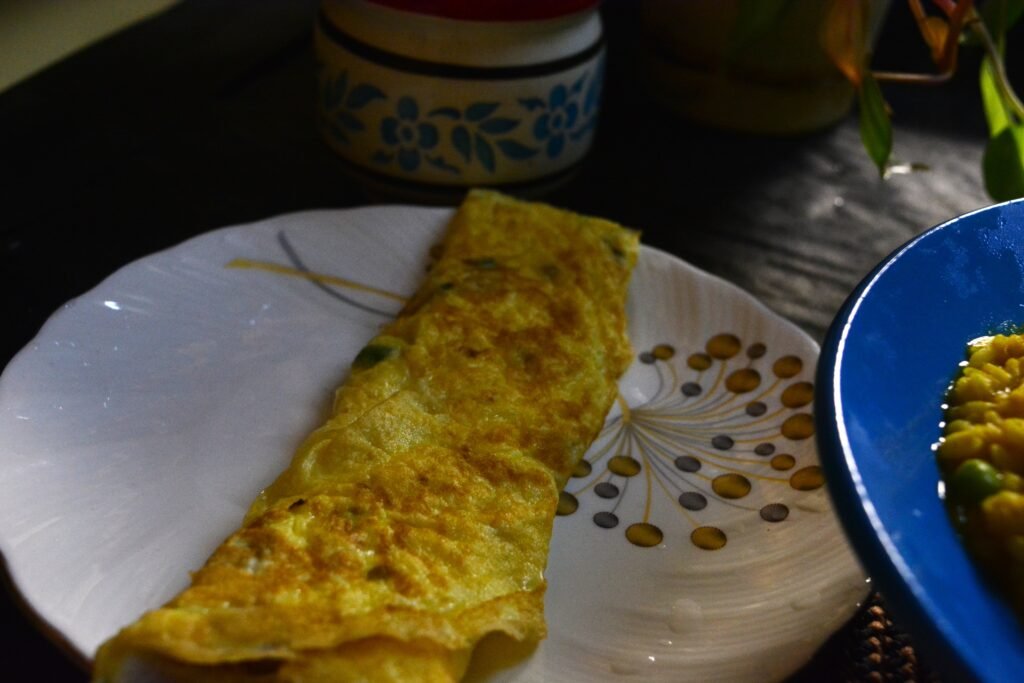
Heat a non-stick pan with a small amount of oil on medium flame. Pour the egg mixture in. Let it set — don’t touch it for the first 60 seconds. When the edges start to lift and the surface looks mostly set, flip carefully. Cook the other side for 30–45 seconds. You want it fully set but not rubbery.
Step 5 — Plate and Eat
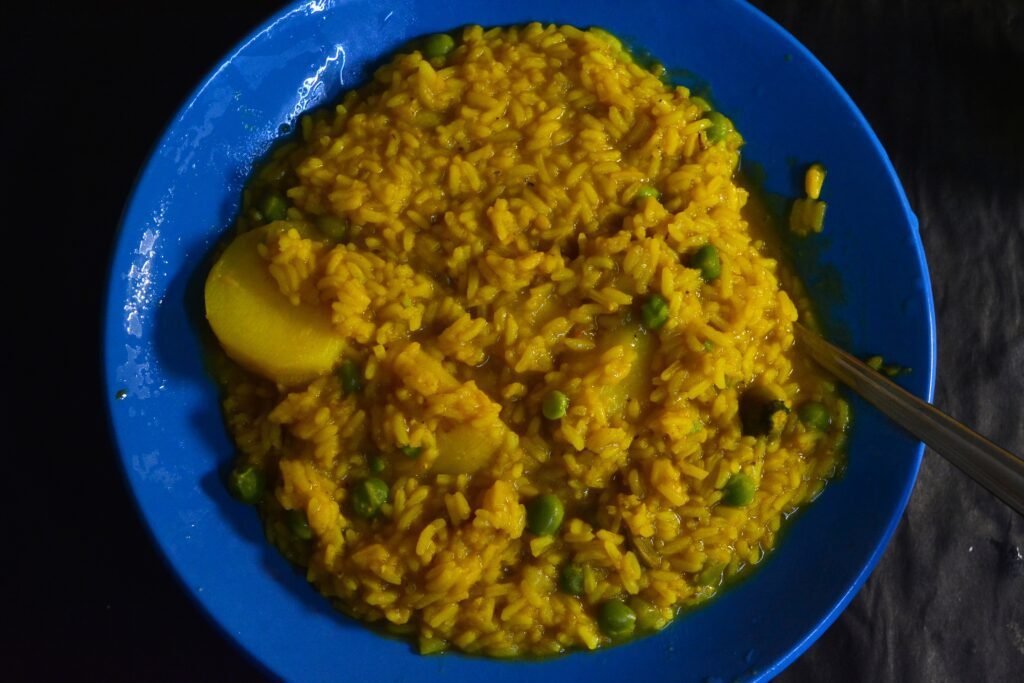
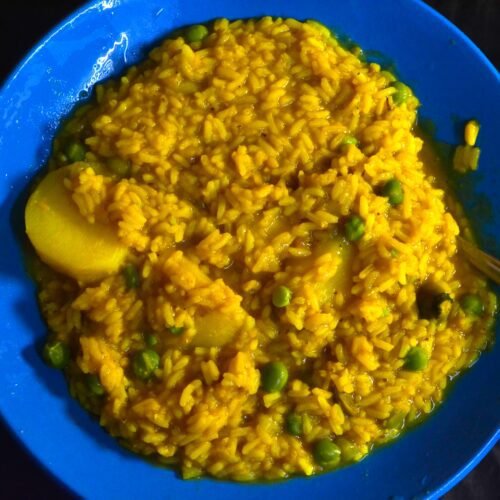
Open the cooker after pressure releases. The khichdi should be soft, slightly mushy, and fragrant. Serve a generous portion on one side of the plate. Place the omelette alongside — whole or sliced into strips. Eat immediately while hot.
Nutrition Per Serving
| Per Serving | |
|---|---|
| Calories | ~380 kcal |
| Protein | ~22g |
Why Khichdi Specifically for IBS Breakfast
Khichdi is probably the most gut-safe meal in Indian cooking. It’s been used as a recovery food in Ayurveda for centuries — not by accident. The combination of dal and rice cooked together to a soft consistency is easy for the gut to process even when digestion is compromised.
For a high protein Indian breakfast specifically, masoor dal khichdi works better than moong dal khichdi because masoor has more protein per serving and a slightly richer flavour. The potato adds bulk, resistant starch, and potassium — which supports gut muscle function.
The whole spices — cumin, cardamom, bay leaf — are not just flavour. Cumin supports bile secretion and fat digestion. Cardamom reduces bloating and gas. Bay leaf has mild anti-spasmodic properties. These are traditional digestive spices used in Indian cooking for exactly the reason IBS sufferers need — gut motility support.
This is what a genuinely good high protein Indian breakfast looks like when you understand why each ingredient is there.
Variations
No egg version: Replace the omelette with a side of hung curd (100g) and a tablespoon of roasted pumpkin seeds. Still hits 18–20g protein, completely vegetarian, IBS-friendly.
Extra protein: Add one more egg to the omelette or stir a tablespoon of hemp seeds into the khichdi before pressure cooking. Undetectable in flavour, adds 4–5g protein.
Lighter version: Skip the potato and reduce rice to ¼ cup. More dal-forward, lower carb, easier on the gut if you’re sensitive to resistant starch on bad days.
Monsoon version: This is genuinely a rainy-day breakfast. When it’s raining and cold, add an extra cup of water to make the khichdi more soupy. Eat it like a dal soup with the omelette on the side. Warm, filling, deeply comforting.
If don’t like i can skip the omellet and add this high protein Fritters 5 Powerful Steps Of High Protein Dal Recipe
You may like -IBS Notes From Me
I have IBS and this is one of my weekly breakfasts — not because I feel like I have to eat it, but because it’s genuinely satisfying and I know exactly how I’ll feel for the next few hours after eating it. Predictability matters more than I can explain when you have a digestive condition.
The khichdi is the safe part — masoor dal at half a cup, cooked soft, with rice and potato. My gut handles this without complaint even on not-great days.
The omelette is the protein anchor. Two eggs, plain, cooked through. No cheese, no cream, no elaborate filling. Just egg, onion, chilli, salt. That simplicity is intentional — the fewer variables, the more predictable the gut response.
On days when my gut is particularly unsettled — I skip the omelette and just have the khichdi with a side of plain curd. That drops the protein but keeps the meal completely safe.
You can Eat this to Spinach Masoor Dal Recipe -5 Minute Powerful Dish
High Protein Indian Breakfast — Masoor Dal Khichdi

Equipment
- 1 Pressure Cooker
- 1 Non Sticky Pan with Lid
- 1 Spatula
Ingredients
Masoor Dal Khichdi
- ½ cup masoor dal washed
- ½ cup rice
- 1 medium onion sliced
- ½ tbsp ginger garlic paste
- 1 tsp cumin seeds
- 1 bay leaf
- 2 –3 cardamom pods crushed (optional)
- 1 green chilli slit
- 1 tbsp olive oil or mustard oil
- 1 tsp turmeric powder
- Salt to taste
- 1 large potato peeled and halved
- 2 cups hot water
Egg Omelette:
- 2 eggs
- ½ small onion finely chopped
- ½ green chilli finely chopped
- Salt to taste
- Olive Oil for cooking
Instructions
- Wash dal and rice until water runs clear. Prep vegetables.
- Heat oil in pressure cooker. Add cumin, green chilli, bay leaf, cardamom — sizzle 30 seconds. Add onion, ginger garlic paste, turmeric, salt — sauté 2 minutes.
- Add dal, rice, potato. Stir 1 minute. Add 2 cups hot water. Pressure cook 3 whistles. Let pressure release naturally.
- Beat 2 eggs with chopped onion, chilli, salt. Cook in non-stick pan — set, flip, cook through.
- Serve khichdi and omelette together hot.
Notes
- Hot water in the khichdi speeds up cooking and improves texture — don’t use cold.
- For IBS flare days: reduce onion, use garlic-infused oil, skip chilli.
- Potato adds resistant starch — good prebiotic for gut bacteria.
- Khichdi thickens as it cools — add a splash of water when reheating.
- Keeps in fridge 2 days. Omelette best made fresh.
Indian Drinks To Burn Belly Fat While Sleeping
You may like this 7 Powerful IBS-Friendly Indian Dinner Recipes
Frequently Asked Questions
Is this high protein Indian breakfast actually good for IBS?
Yes. This breakfast combines simple ingredients such as masoor dal, rice, potato, and eggs, which are generally well tolerated by many people with IBS. It provides a balanced mix of protein and complex carbohydrates without relying on heavily processed foods. Since IBS triggers vary, adjust the ingredients according to your own tolerance.
How much protein does this breakfast actually have?
Each serving provides approximately 22 grams of protein. Masoor dal contributes around 9 grams, while two eggs add about 12 grams. Compared with traditional breakfasts like poha, upma, or plain paratha, this meal offers significantly more protein to help keep you full for longer.
Can I get enough protein from vegetarian Indian breakfasts?
Yes. Protein-rich vegetarian breakfasts can include moong dal chilla, besan cheela, paneer paratha, tofu bhurji, sprouts, oats with Greek yogurt, or hung curd. Combining legumes, dairy, and soy-based foods makes it easy to build a satisfying high-protein breakfast without meat or eggs.
Can I make the khichdi without a pressure cooker?
Yes. Cook the khichdi in a covered saucepan with a little extra water over low to medium heat for about 25 to 30 minutes, stirring occasionally. Soaking the dal beforehand helps reduce cooking time, and while the texture may be slightly less creamy, the flavour remains the same.
Can I skip the potato?
Yes. The potato adds bulk, texture, and complex carbohydrates, but the recipe still works well without it. If you’d like to maintain the same serving size, simply add a little extra dal instead.
What can I replace the egg omelets with for a vegetarian version?
Hung curd is one of the best vegetarian replacements, providing around 15 to 18 grams of protein per 100g. Paneer bhurji is another excellent choice, while small portions of roasted chana can also add protein if they suit your digestion.
🌿 Love gut-friendly recipes? Add Caloriematterss as your Google Preferred Source so my low-FODMAP, high-protein recipes show up more often for you. Set Caloriematterss as a preferred source →

One Comment