7 Reasons This Tomato Pachadi Curry with Aloo & Cauliflower Went Viral
📌 Quick Guide Of Tomato Pachadi Curry
What it is: A South Indian tomato pachadi loosened into a light curry with potato (aloo) and cauliflower (gobhi), built on a roasted spice-and-peanut paste.
Why it works: Dry-roasting urad dal, coriander, cumin, fenugreek and peanuts gives the base a deep, nutty backbone, and the tomato brings the tang. The vegetables make it a proper meal rather than a relish.
Honest FODMAP note: This is the traditional version and it does contain onion and garlic, so it is not low-FODMAP or IBS-friendly as written. If you’re sensitive, see the no-onion-no-garlic swap below — it works beautifully.
Per serving: ~120 kcal | Protein: ~5g
Tomato pachadi curry is the dish I make when I want something tangy and comforting without much fuss. The classic pachadi is a bright, sour South Indian chutney — punchy, a little nutty from the roasted peanuts, meant to be spooned alongside rice or dosa. Somewhere along the way I started loosening it with a splash of water, folding in soft potato and cauliflower, and turning it into a curry you can eat as a full plate. It’s been on repeat ever since.
The heart of it is the roasted paste: urad dal, coriander seeds, cumin, fenugreek, peanuts and dry red chilli, all dry-roasted until they smell toasty, then blended with cooked tomato. That roast is the whole personality of the dish. Get it right and everything else is easy.
One honest note up front. This is the traditional version, and it has onion and garlic in it — that’s how I cook it, and it’s what gives it that familiar savoury base. If you’re sensitive to them, I’ve included a swap further down that genuinely works, so don’t scroll away.
Table of Contents
What is tomato pachadi curry?
Tomato pachadi curry is a South Indian tomato chutney (pachadi) turned into a light, spoonable curry by adding soft potato and cauliflower. The pachadi gives the tang; the vegetables turn it into a meal.
Traditional pachadi is a tangy relish of tomatoes, roasted lentils, peanuts and spices, usually served with rice, idli or dosa. It’s sour, savoury and full of character. In this version I take that same roasted base and thin it into a curry, then fold in boiled aloo (potato) and cauliflower (gobhi) so it becomes lunch or dinner rather than a side.
The result sits somewhere between a chutney and a curry — thicker than a sambar, softer than a chutney, and very easy to eat with plain rice.
How do you make the roasted spice paste?
Dry-roast the lentils, seeds, peanuts and red chilli until fragrant, then grind them with the cooked tomato into a smooth paste. The roasting is what gives the curry its depth.
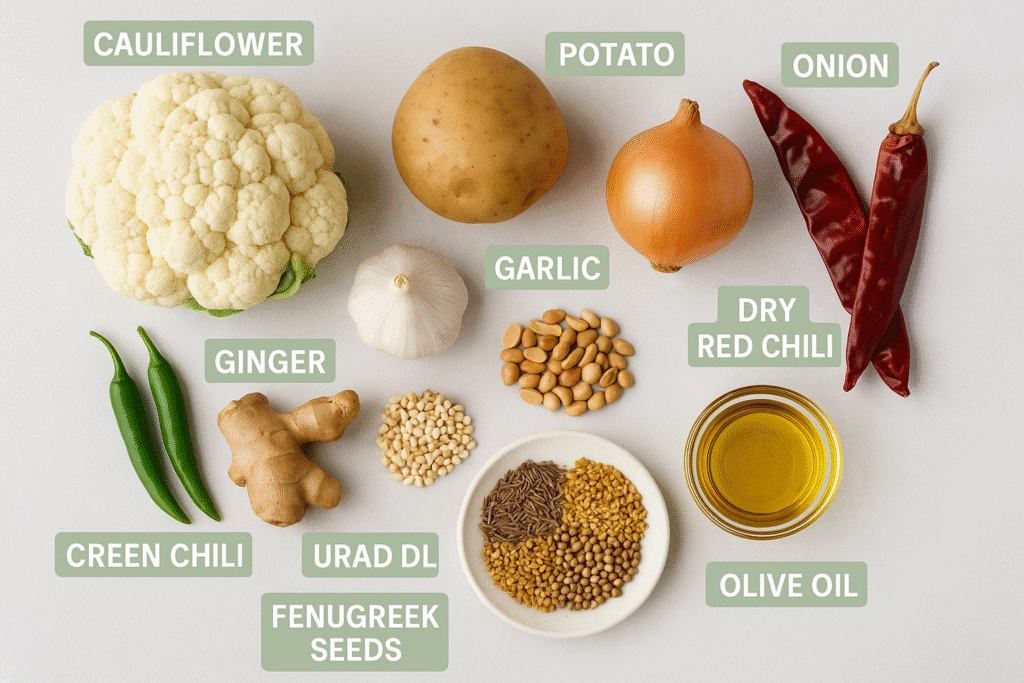
In a dry pan over low heat, roast urad dal, coriander seeds (dhania), cumin (jeera), fenugreek seeds (methi), raw peanuts (moongphali) and a couple of dry red chillies until they turn a shade darker and smell toasty. Keep the heat gentle so nothing catches — especially the fenugreek, which turns bitter if it goes too far. Set aside to cool.
Separately, cook the chopped tomatoes (tamatar) with the onion, garlic, ginger (adrak) and salt until soft and pulpy. Let everything cool, then blend the roasted spices and the cooked tomato mixture together into a smooth paste.
Take your time with the roast. It’s the difference between a flat tomato curry and one with real backbone.
How do you bring the curry together?
Fry the boiled potato and cauliflower briefly, stir in the tomato-spice paste, add water to loosen, and simmer until everything melds. It’s quick once the paste is ready.
Boil the diced potato and cauliflower florets in salted water for about five minutes, just until part-cooked, then drain. Heat a little olive oil in a pan, add the drained vegetables and fry for a couple of minutes so they pick up some colour. Pour in the tomato-spice paste, add turmeric (haldi) and a little red chilli powder for colour, and stir.
Add water to reach the consistency you like, cover, and simmer until the vegetables are fully soft and have drunk up the tangy paste. Taste for salt, garnish with fresh coriander, and it’s done. No pressure cooker, no deep frying, no long masala bhuna.
How do you make tomato pachadi curry without onion and garlic?
Leave out the onion and garlic entirely, and add a pinch of hing (asafoetida) to the tempering instead. The roasted spice paste already does most of the flavour work, so the swap holds up well.
This matters for anyone with IBS or a sensitive gut, because onion and garlic are both high in fructans and are two of the most common triggers there are. I want to be clear: the recipe below is the traditional version and it contains both. But it adapts easily.
To make the gentler version:
- Skip the onion and the garlic pod completely.
- Add a good pinch of hing (asafoetida) when you cook the tomatoes — it gives that faint savoury, allium-like note without the trigger.
- Keep the ginger, and lean a little harder on the roasted urad dal, coriander, cumin, fenugreek and peanuts, since that paste is where the real depth comes from anyway.
Honestly, you don’t miss them much. The roasted base is strong enough to carry the dish. One thing worth flagging even in the gentler version: tomato is moderate-FODMAP in larger amounts, so keep the portion sensible if you’re testing your tolerance.
What do you serve with it, and how long does it keep?
Serve it with rice, dosa, idli or roti, and eat it fresh — it keeps about a day in the fridge. The flavour is at its best the day it’s made.
My usual is plain rice with a little ghee, sometimes a papadum on the side. It’s also lovely with dosa or idli in proper South Indian fashion. A spoon of curd (dahi) alongside cools the tang nicely — use lactose-free or hung curd (strained yogurt) if dairy doesn’t suit you.
Tomato-based curries like this don’t keep well. It’ll survive a day in the fridge, but the bright tang softens and it loses its edge, so I make only what I’ll eat. It’s quick enough that cooking it fresh is no hardship.
Is it vegan and gluten-free?
Naturally, yes — as long as you temper it in oil rather than ghee. The curry is built entirely from vegetables, lentils, peanuts and spices, with no dairy in the dish itself. Use olive or coconut oil and it’s fully plant-based, and there’s no wheat anywhere, so it’s gluten-free too.
If you’d like more like this, here’s my no onion no garlic dal and my high-protein dal recipe, both of which sit well alongside.
Before lunch Blood Sugar Salad Bowl (High-Fiber, High-Protein Bowl)
You can eat with this No Onion No Garlic Dal No-Oil Pickled Onion Recipe (Gentle On A Sensitive Gut)
Tomato Pachadi Curry with Aloo & Cauliflower
Equipment
- 1 Stainless Steel Wok with Lid
- 1 Spatula
- 1 Mixer Grinder
Ingredients
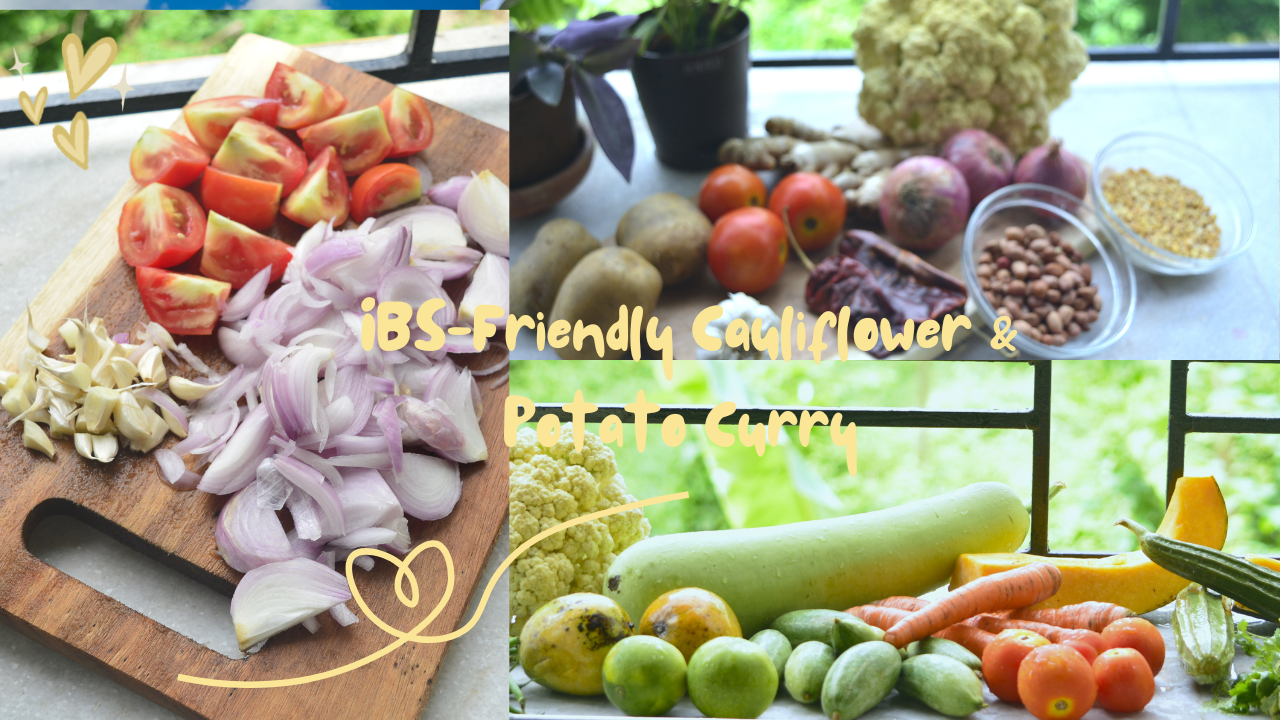
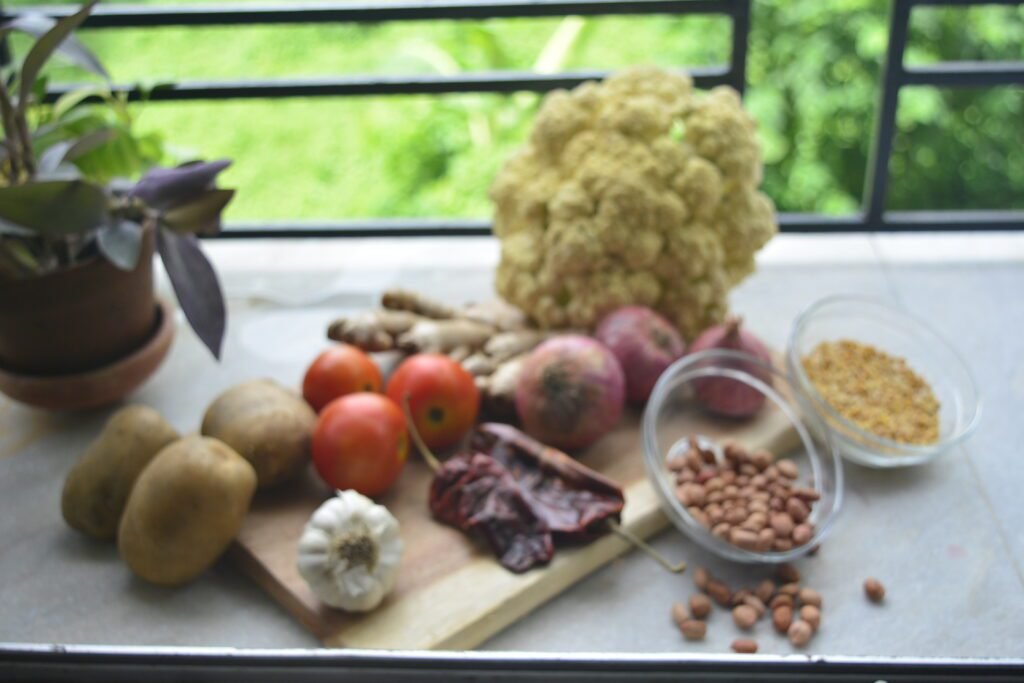
- Group 1: For the Pachadi
- 2 large tomatoes
- 1 tbsp urad dal
- 1 tsp coriander seeds
- 2 dry red chilies
- 1 whole garlic pod
- 3 small onions sliced
- 1 inch ginger chopped
- 2 tsp olive oil
- 2 tsp raw peanuts
- 1 tsp cumin seeds
- 1 tsp fenugreek seeds
- Salt to taste
- Group 2: For the Curry
- 1 cup cauliflower florets boiled
- 1 medium potato boiled and chopped
- 1/4 tsp turmeric
- 1 tsp red chili powder for color
Instructions
- Heat the pan. Add urad dal, coriander seeds, cumin, fenugreek, peanuts, and red chilies. Sauté until its change color
- Add chopped tomatoes, garlic pod, onions, ginger, and salt. Cook until soft.
- Let it cool and blend into a smooth paste.
- In another pan, heat oil and pour in the blended pachadi.
- Add turmeric and red chili powder. Mix well.
- Add boiled cauliflower and potato. Mix gently.
- Simmer for 5–7 minutes. Adjust salt if needed.
- Garnish and serve hot with dosa or rice.
Video
Notes
– For extra gut support, serve with steamed rice and jeera water.
– Store in the fridge for 1 day. Best eaten fresh.
Frequently Asked Questions
What is tomato pachadi curry?
Tomato pachadi curry is a tangy South Indian tomato chutney turned into a light curry with vegetables. The base is tomatoes, roasted lentils, peanuts and spices blended smooth, then simmered with soft potato and cauliflower. It balances sour, savoury and mild heat, and pairs well with rice, dosa or roti.
Can I make this curry without onion and garlic?
Yes. Leave both out and add a good pinch of hing (asafoetida) when cooking the tomatoes. The roasted urad dal, coriander, cumin, fenugreek and peanuts already give the paste deep flavour, so the dish holds up well without them.
Is tomato pachadi curry suitable for IBS?
Not as written. This traditional version contains onion and garlic, which are high in fructans and two of the most common IBS triggers. Made with the no-onion-no-garlic swap it is much gentler, though tomato is moderate-FODMAP in larger amounts, so keep portions sensible.
How can I make this dish vegan?
It is naturally vegan as long as you temper it in oil rather than ghee. The curry is built entirely from vegetables, lentils, peanuts and spices, with no dairy. Use olive or coconut oil and it is fully plant-based.
What can I serve with tomato pachadi curry?
Serve it with steamed rice, dosa, idli or roti. A little ghee over rice, or a papadum on the side, works well, and a spoon of curd cools the tang. Use lactose-free or hung curd (strained yogurt) if dairy does not suit you.
🌿 Love gut-friendly recipes? Add Caloriematterss as your Google Preferred Source so my low-FODMAP, high-protein recipes show up more often for you. Set Caloriematterss as a preferred source →