High-Protein Idli: A Rice-Free, Gut-Friendly Version I Make for Busy Mornings
📝 Quick Guide
What it is: A soft, fermented High Protein idli recipe ,made mostly from moong and urad dal instead of rice, with a little millet — so it’s higher in protein and lighter on my gut than the classic version.
Why it works: Swapping most of the rice for dal ups the protein and keeps me full longer, and fermentation makes it easier to digest. It’s my go-to when I want a filling breakfast that doesn’t leave me hungry an hour later.
Honest IBS/low-FODMAP note: Moong is gentle and low-FODMAP. Urad and chana dal are higher-FODMAP, but fermentation lowers that and the amounts here are modest — still, if lentils are a strong trigger, keep the portion small and skip the chana. This is a nourishing breakfast, not a weight-loss or medical food.
Per 2 idlis: ~120 kcal | Protein: ~7g
High protein idli recipe is what I searched for myself when I got tired of regular idlis leaving me hungry an hour later. Classic idli is light and lovely, but it’s mostly rice — high in carbs, low in protein — so for me it never held as a proper breakfast. This rice-free version fixed that. It’s made mainly from moong and urad dal with a little millet, so it’s higher in protein, keeps me full for hours, and sits gently on my gut.
Let me be honest about what this is and isn’t, because the older version of this post oversold it. This is a genuinely nourishing, higher-protein breakfast. It is not a weight-loss food, a PCOS treatment, or something that “reverses insulin resistance” or “boosts metabolism” — a recipe can’t do those things, and I’d rather give you a good idli than a false promise. Eaten as a filling, gut-friendly breakfast, though, it earns its place in my week.
I make it rice-free and no onion, no garlic, which suits my IBS, and I ferment it the normal way so it comes out soft and fluffy.
Why make idli high in protein?
Regular idli leans heavily on rice, which is why a couple of them can leave you peckish soon after. By swapping most of the rice for moong and urad dal (and a little millet or quinoa), you get more protein and more staying power from the same soft, steamed breakfast. For me, that’s the difference between an idli breakfast that lasts until lunch and one that has me snacking by 10am.
Moong in particular is the reason this works for my gut — it’s the gentlest of the dals and low-FODMAP in normal amounts. The protein comes without the heaviness of a fried or paneer-loaded breakfast.
What goes into this high protein idli recipe?
The core batter is moong dal, urad dal and a little millet or quinoa, with a small amount of chana dal for extra protein and texture. Ginger and a pinch of asafoetida (hing) season it, and grated carrot or spinach adds fiber. The full quantities are in the recipe card below.
One honest correction from the old version: I’ve dropped the psyllium husk it used to list. Psyllium is a bulking laxative, not an idli ingredient, and it shouldn’t be casually added to a breakfast batter. If you want a little extra fiber, a spoon of ground flax stirred in is a gentler, food-level way to do it — but it’s optional, and it’s for fiber, not “hormone balance.”
Is this idli okay for IBS?
Mostly yes, with honesty. Moong is gentle and low-FODMAP. Urad and chana dal are higher-FODMAP, but two things help: fermentation breaks down some of those compounds, and the amounts here are modest. For me, a normal serving sits fine. If lentils are a strong trigger for you, keep the portion small, skip the chana dal, and lean the batter more heavily on moong.
As always with IBS, this is about your own tolerance. Start with two idlis and see how you feel before making it a regular breakfast.
How do I serve high protein idli?
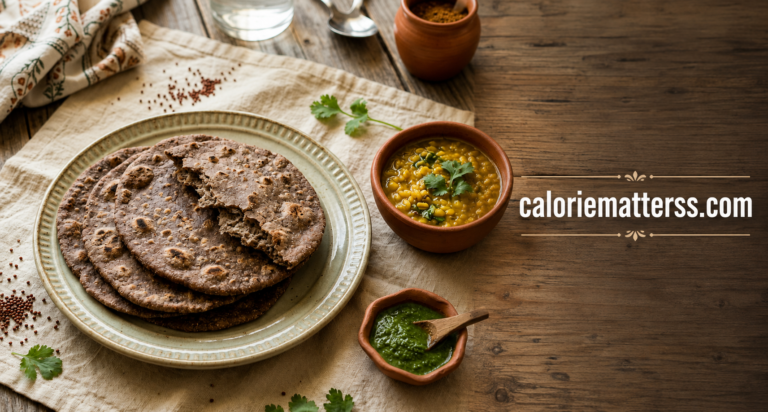
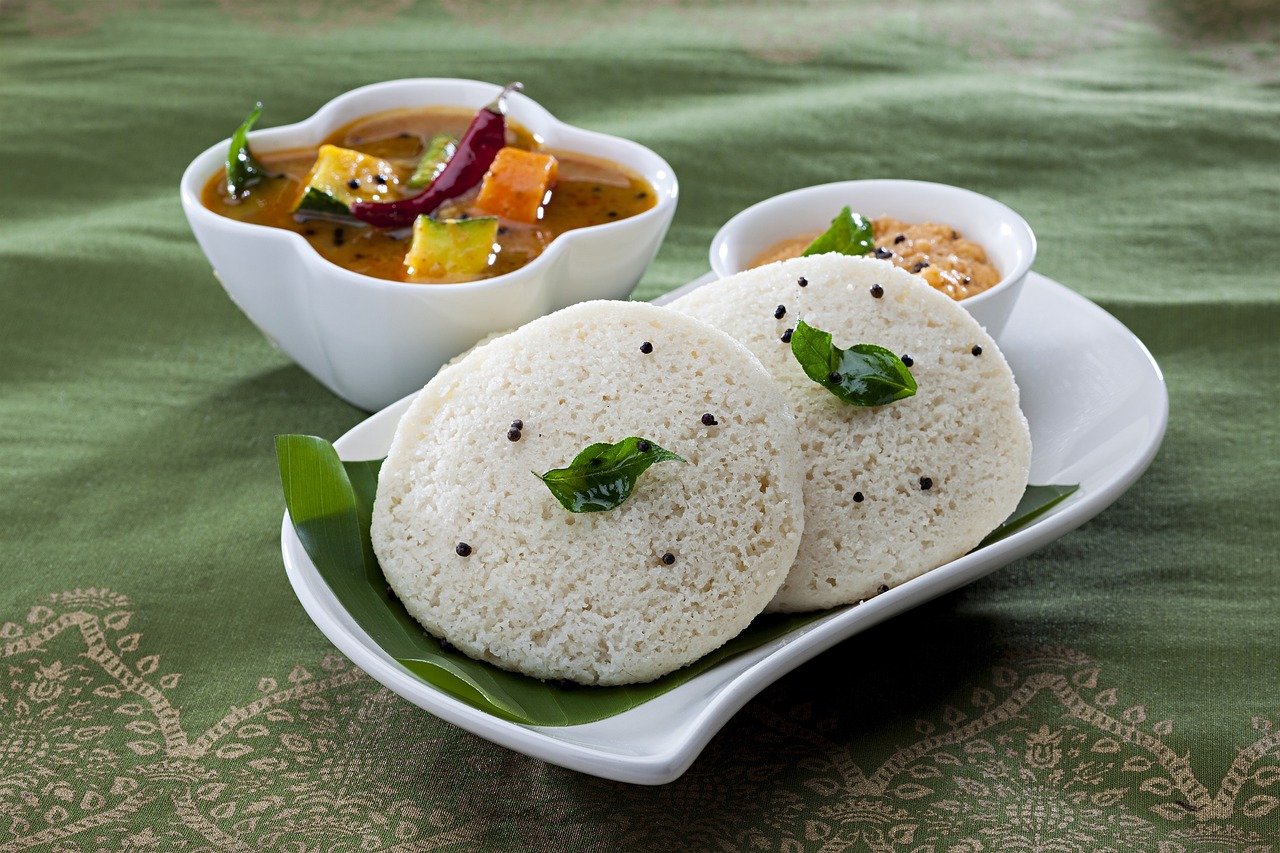
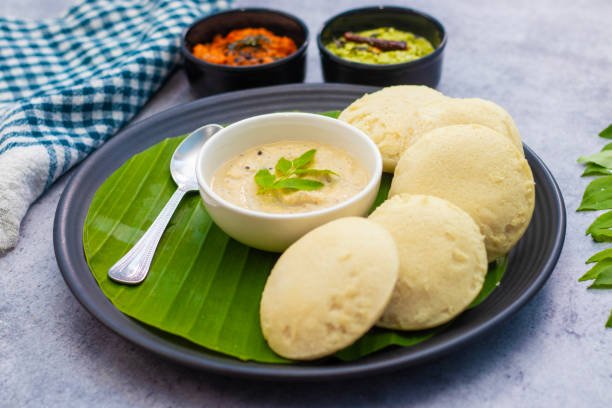
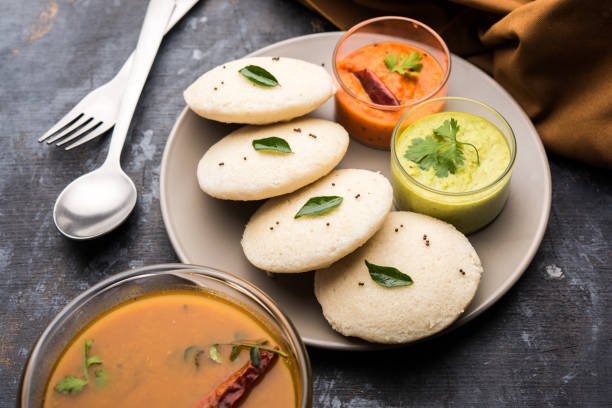
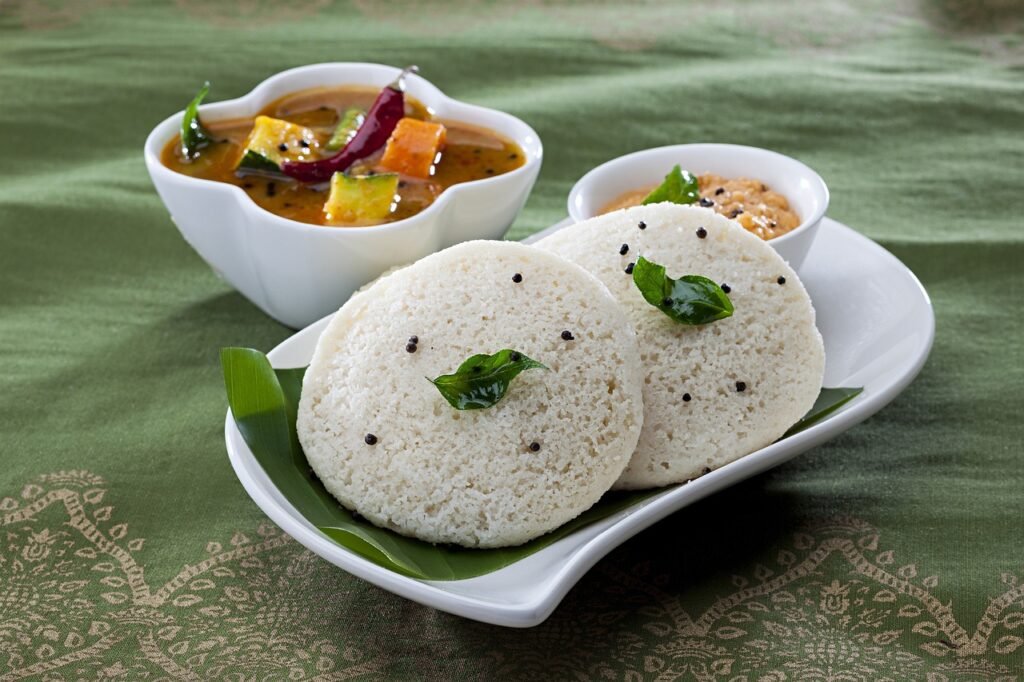
I keep the sides gentle. A coconut-mint chutney is my usual, or a simple coriander chutney. I go easy on sambar because the standard version is onion-and-garlic heavy — if I want it, I make a quick no-onion-no-garlic version tempered with hing and jeera. A little cumin ghee on the side is lovely too.
Two idlis with a fresh chutney is a full, satisfying breakfast for me that genuinely lasts, which was the whole reason I started making these.
Can I make the batter ahead?
Yes, and I usually do. The fermented batter keeps in the fridge for up to three days, so I’ll grind a batch and steam fresh idlis across a couple of mornings. Cooked idlis are best eaten the day they’re made, but leftovers reheat fine with a quick steam or a sprinkle of water in the microwave. Batch-friendly is exactly why this works on a busy week.
Final thoughts
This high protein idli recipe is one of my most reliable breakfasts — soft, filling, higher in protein than the classic, and gentle enough for my gut. Make it for what it genuinely is: a nourishing, satisfying start to the day. Skip the hype about metabolism and fat-burning, keep your portions to your own comfort, and enjoy an idli that actually holds you till lunch.
If you’d like more like this, here are my IBS-friendly Indian breakfast ideas and my probiotic coconut curd, which makes a lovely side.
A High Protein Idli Recipe
Ingredients
- 1/2 cup (100 g) moong dal (yellow split, dhuli moong)
- 1/4 cup (50 g) urad dal (split black gram)
- 1/4 cup (45 g) millet or quinoa
- 2 tbsp (30 ml) chana dal (optional — skip if lentils strongly trigger you)
- 1/2 cup (75 g) grated carrot or chopped spinach (palak), optional
- 1 tsp (5 ml) grated ginger (adrak)
- 1/4 tsp (1.25 ml) asafoetida (hing)
- 1/2 tsp (2.5 ml) rock salt (sendha namak), or to taste
- 1 tbsp (15 ml) ground flaxseed (alsi), optional, for extra fiber
- Water, as needed
- A little oil or ghee, for greasing the moulds
Instructions
- Rinse and soak the moong dal, urad dal, millet (or quinoa) and chana dal together for 4–5 hours or overnight.
- Grind to a thick, smooth batter using minimal water. Stir in the hing and rock salt.
- Cover and ferment in a warm spot for 6–8 hours (or overnight), until the batter rises and looks airy with small bubbles.
- Gently fold in the grated ginger, carrot or spinach, and ground flax if using. Don’t overmix — you want to keep the air in.
- Grease the idli moulds lightly. Pour in the batter, filling each about three-quarters full.
- Steam for 10–12 minutes, until a toothpick comes out clean. Rest 2 minutes before unmoulding.
- Serve hot with coconut-mint chutney or an onion-free coriander chutney.
Nutrition (per serving, 2 idlis): ~120 kcal | Protein ~7g | Fiber ~4g | Fat ~2g | Carbs ~18g (Calculated from the dals, millet and veg across 5 servings; gluten-free and oil-free apart from greasing. Protein is a genuine ~7g per 2 idlis — higher than classic rice idli, without the “9–11g” overstatement the old version made.)
Topic’s Worth Reading – Gut Healing Superfoods , Iodine Deficiency in India
Frequently Asked Questions
How do you make idli high in protein?
Swap most of the rice for protein-rich dals. This version uses moong and urad dal with a little millet or quinoa and optional chana dal, which raises the protein while keeping the idlis soft. Fermentation also improves digestibility.
Is this idli really rice-free and gluten-free?
Yes. It is made from dals and millet or quinoa with no rice and no wheat, so it is naturally gluten-free. That is part of why it is lighter and higher in protein than a classic rice-and-urad idli.
Is high-protein idli good for IBS?
Moong dal is gentle and low-FODMAP, and fermentation helps with the higher-FODMAP urad and chana. In modest portions it suits me, but if lentils are a strong trigger, keep the serving small and skip the chana dal. Start with two and see how you feel.
Can I make the batter without dairy or oil?
Yes. There is no dairy in the batter and it is steamed, not fried, so it is oil-free apart from lightly greasing the moulds. A pinch of hing and ginger gives flavour without needing oil.
How long should I ferment the batter?
Around 6 to 8 hours in a warm place (roughly 30°C), until the batter doubles, turns airy and shows small bubbles. In cooler weather it takes longer; inside an oven with the light on works well.
🌿 Love gut-friendly recipes? Add Caloriematterss as your Google Preferred Source so my low-FODMAP, high-protein recipes show up more often for you. Set Caloriematterss as a preferred source →