High Protein Shami Kabab – Chicken, Chickpeas & Ghee (IBS-Friendly & Freezer-Ready)
📌Quick Guide
What it is: Boiled chicken and soaked chickpeas smashed with whole spices, shaped into kababs with semolina, and fried in ghee
Why it works: No maida, no deep frying, no raw onion in the mix — whole spices are boiled in and removed, chickpeas bind without breadcrumbs
IBS-friendly: Yes — boiled chicken is one of the easiest proteins to digest, soaked chickpeas in small quantity cause far less bloating than unsoaked
Cook time: 40 minutes (plus overnight chickpea soak)
Calories: ~210 kcal | Protein: ~26g (per 3 kababs)
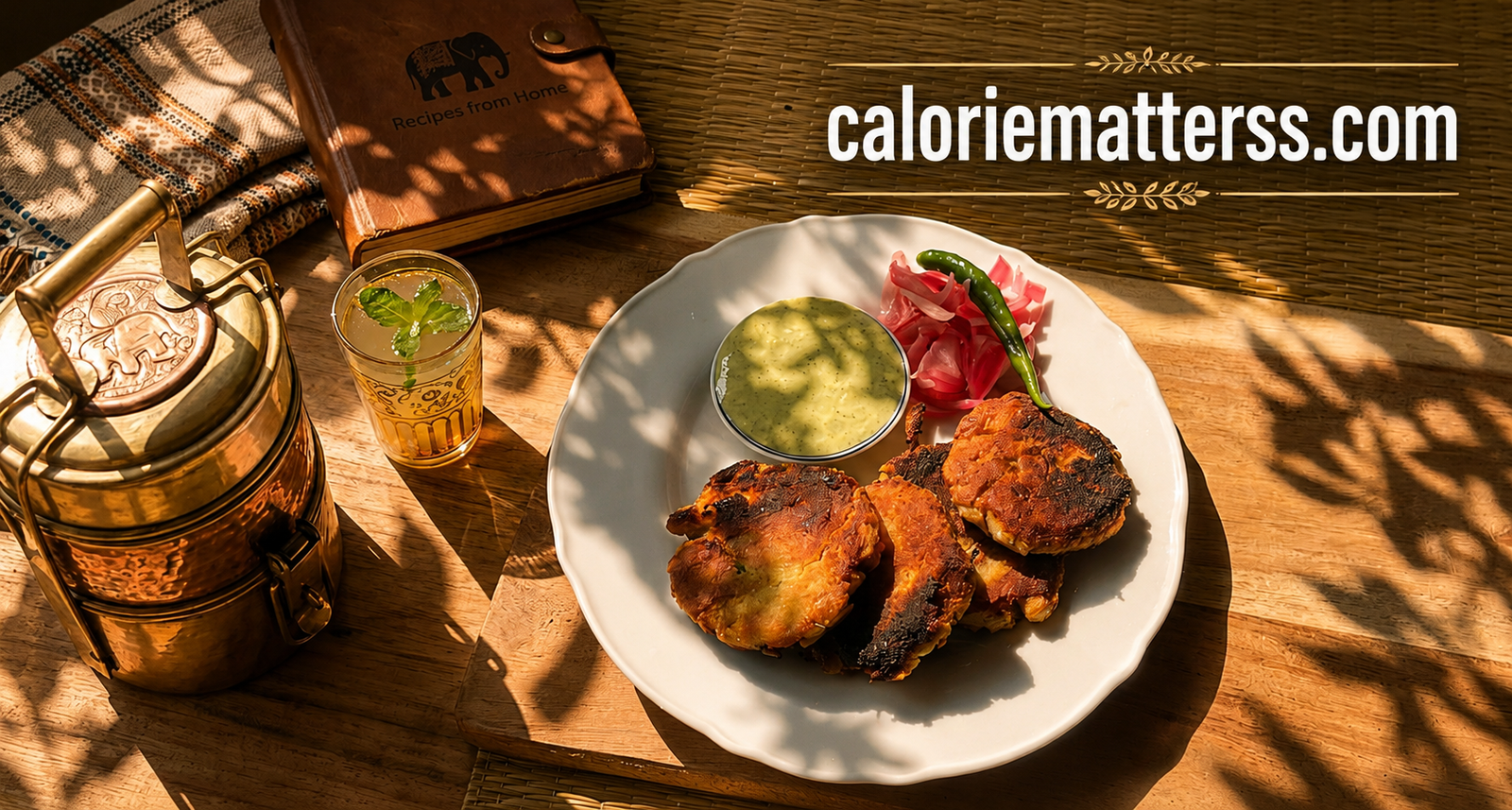
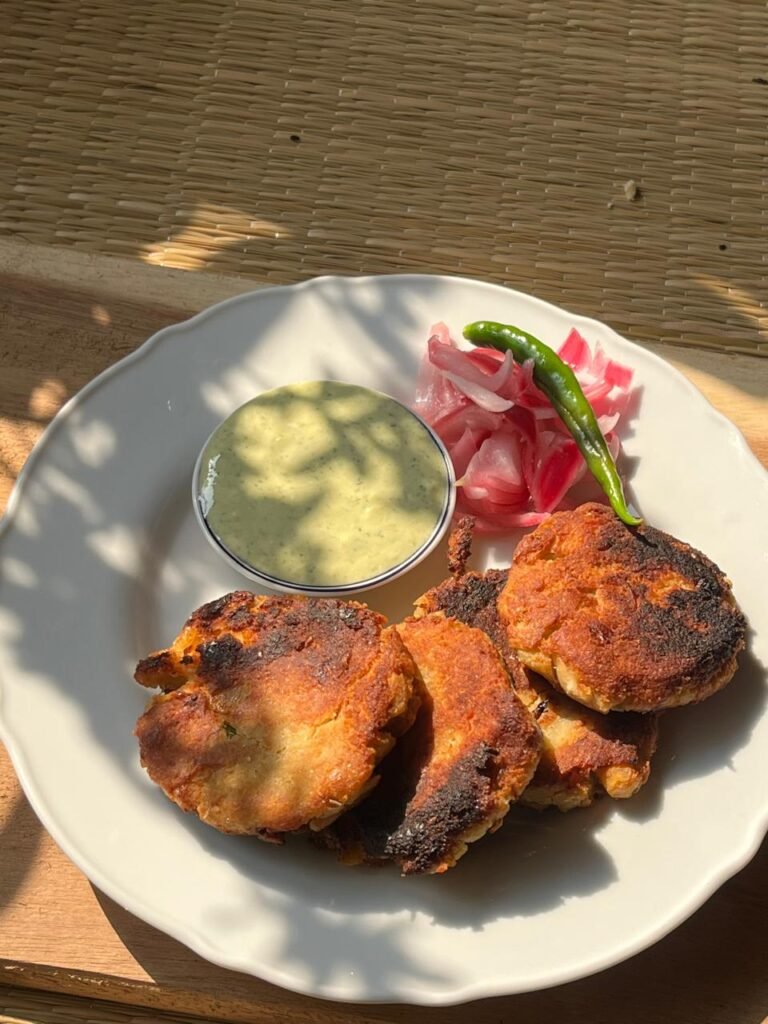
High Protein Shami Kabab
This high protein shami kabab uses boiled chicken, soaked chickpeas, and ghee. No maida, no deep frying. 26g protein per serving, gut-friendly, freezes beautifully. I spent the first six months after my IBS diagnosis convinced that anything that felt like a treat was off the table.
Kababs specifically. The kind of food you order without thinking — at a wedding, at a dhaba, at someone’s house where they just keep passing the plate and you just keep eating. That version, with maida coating and deep frying and raw onion tucked inside, does not work for me anymore. I know exactly what happens if I eat it.
But I missed kababs. Not sometimes. Regularly.
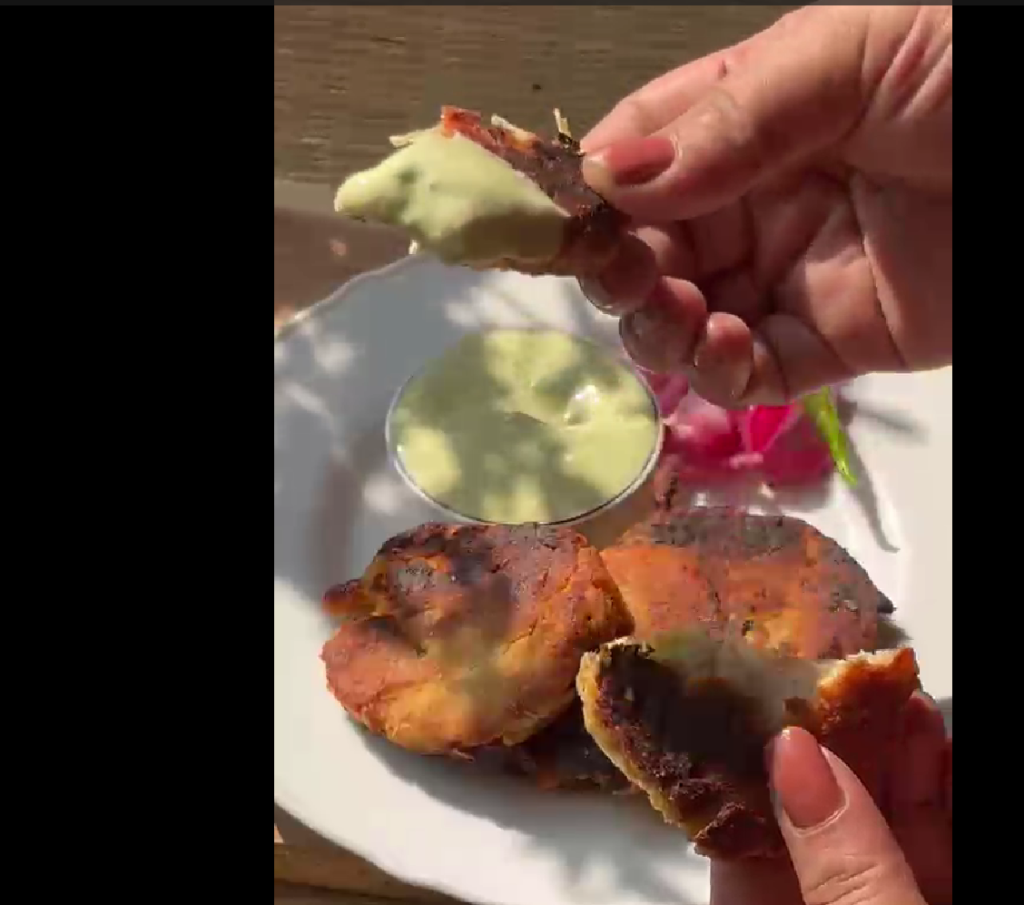
So I went back to how shami kabab is actually supposed to be made — before it got deep-fried and battered and made heavy. Boiled chicken. Soaked chickpeas. Whole spices cooked in and removed. No maida. A light coat of semolina (suji). Fried in ghee, not refined oil. Served with green chutney, a spoon of curd, and pickled onions on the side.
This high protein shami kabab gives me 26 grams of protein in three kababs. My gut handles it completely fine. My dietitian confirmed the method — boiling the chicken instead of frying it raw, soaking the chickpeas overnight, cooking the garlic through rather than using it raw — every one of those steps makes the end result gentler on an IBS stomach without taking anything away from the taste.
500 grams of chicken makes 10 to 12 kababs. I make the full batch, eat three for dinner, and freeze the rest flat. On any night I need a quick high-protein meal and have no energy to cook, these come out of the freezer directly into a ghee-lined pan. That is the whole plan.
Table of Contents
Is High Protein Shami Kabab Good for IBS?
The traditional shami kabab — made correctly, not the deep-fried version — is actually one of the better options for people managing IBS. Here is why each component works.
Boiled chicken is one of the easiest animal proteins to digest. There is no browning, no caramelisation of the surface, no oil soaking in during cooking. The protein is available cleanly. People who cannot handle grilled or fried chicken on a bad gut day often find boiled chicken completely manageable.
Soaked chickpeas (kabuli chana) in small quantities are tolerable for most people with IBS. The soaking is the key step — overnight soaking in water breaks down a significant portion of the oligosaccharides that cause bloating and gas. Chickpeas that go straight from dry to pot without soaking are a different story. In this recipe, the chickpeas are also fully boiled with the chicken until soft, which further reduces the compounds that cause digestive trouble.
Whole spices — cinnamon (dalchini), garlic (lahsun), ginger (adrak), green chilli (hari mirch) — are all boiled in with the chicken and then removed or cooked so thoroughly that their raw harshness is gone. Cooked garlic is significantly gentler than raw garlic for IBS. My dietitian has flagged raw garlic as a common hidden trigger — in this recipe, it is never raw.
Ghee over refined oil is my standard switch for almost every recipe now, and this high protein shami kabab is no different. A shallow fry in ghee on medium heat is not the same as deep frying in refined oil. The fat content is similar, but ghee’s composition — higher in short-chain fatty acids including butyrate — is generally kinder to the gut lining.
No maida. No breadcrumbs. Semolina (suji) as the coating, which is coarser and creates a crispier exterior without the heaviness of refined flour.
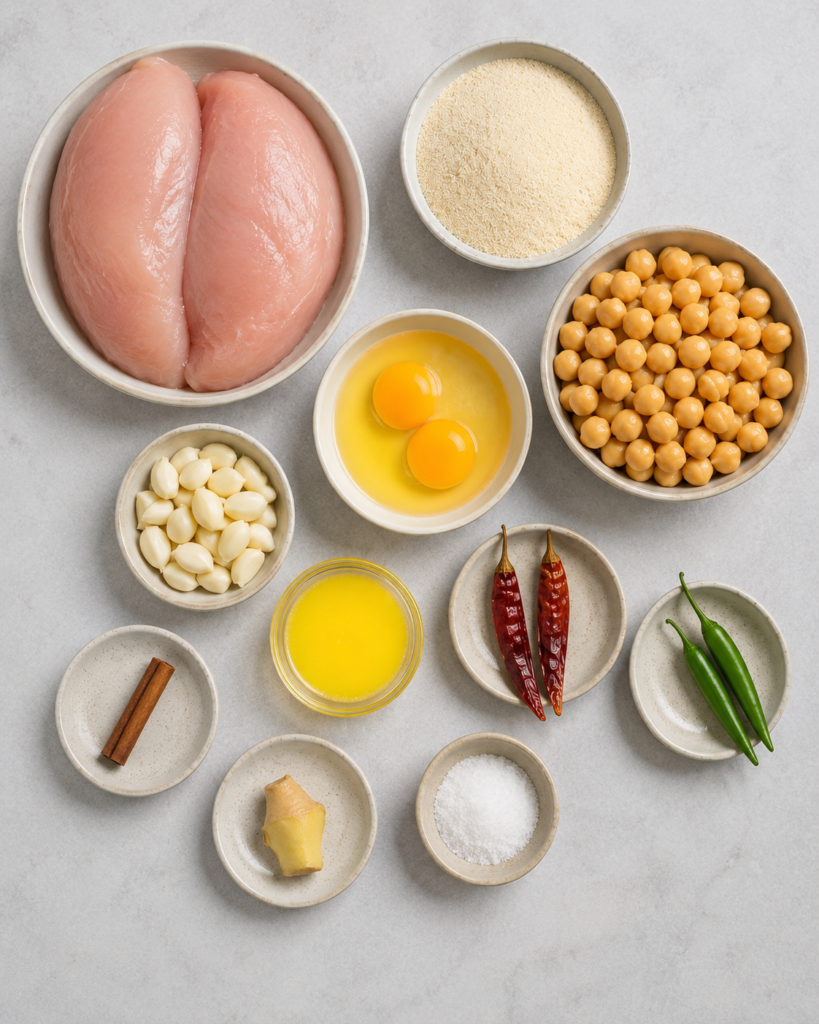
What Ingredients Go Into High Protein Shami Kabab?
Everything goes into one pot to boil first. That is the beauty of this recipe — there is no separate tempering, no masala frying, no layered cooking. You boil, you smash, you shape, you fry.
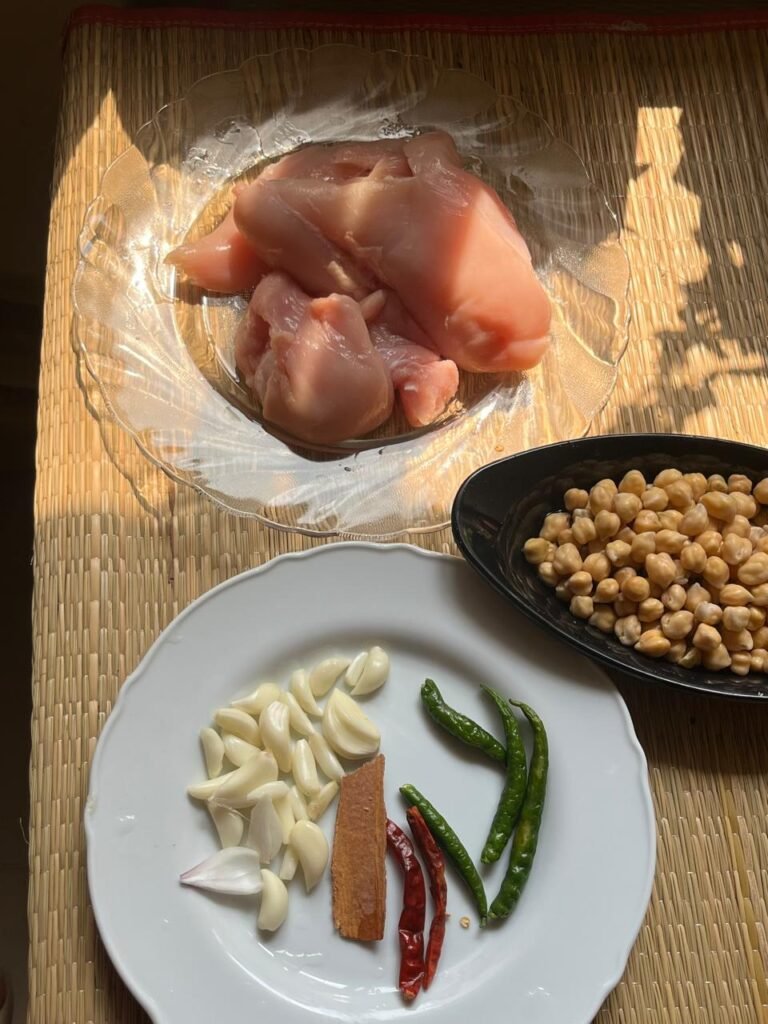
Chicken (500g, bone-in or boneless) — I use bone-in chicken pieces because the bones add depth to the boiling liquid and the meat pulls off easily once cooked. Boneless works too and saves the step of picking meat off bones.
Chickpeas (kabuli chana), soaked overnight — Start with about 3 to 4 tablespoons of dry chickpeas. After overnight soaking they roughly double in size. They boil soft alongside the chicken and act as the binder — no egg, no maida needed if you smash them correctly.
Garlic cloves (lahsun), 4 to 5 — Whole. They boil with the chicken and become completely soft by the time the pot is done.
Ginger (adrak), one small piece — Adds warmth and aids digestion. Ginger is one of the few spices that is actively helpful for IBS — it has well-documented anti-spasmodic properties that ease gut cramping.
Green chilli (hari mirch), 2 to 3 — Adjust completely to your tolerance. On a bad IBS day I use one, slit down the middle so the seeds can release flavour into the liquid without all the heat staying in the kabab mix.
Cinnamon stick (dalchini), one small piece — This is what gives shami kabab its warmth and that slightly sweet, complex background note that makes it taste different from any other chicken preparation. Do not skip it.
Semolina (suji), for coating — Just enough to roll the shaped kababs in before frying. The semolina creates the slightly crisp exterior without any maida.
Salt, to taste.

Ghee, for shallow frying — one to two teaspoons per batch.
How Do You Make High Protein Shami Kabab Step by Step?
Step 1 — Soak the chickpeas. The night before, cover dry chickpeas in plenty of cold water and leave them overnight. This is not optional. Unsoaked chickpeas do not soften properly in the time the chicken takes to cook, and they will cause significantly more bloating.
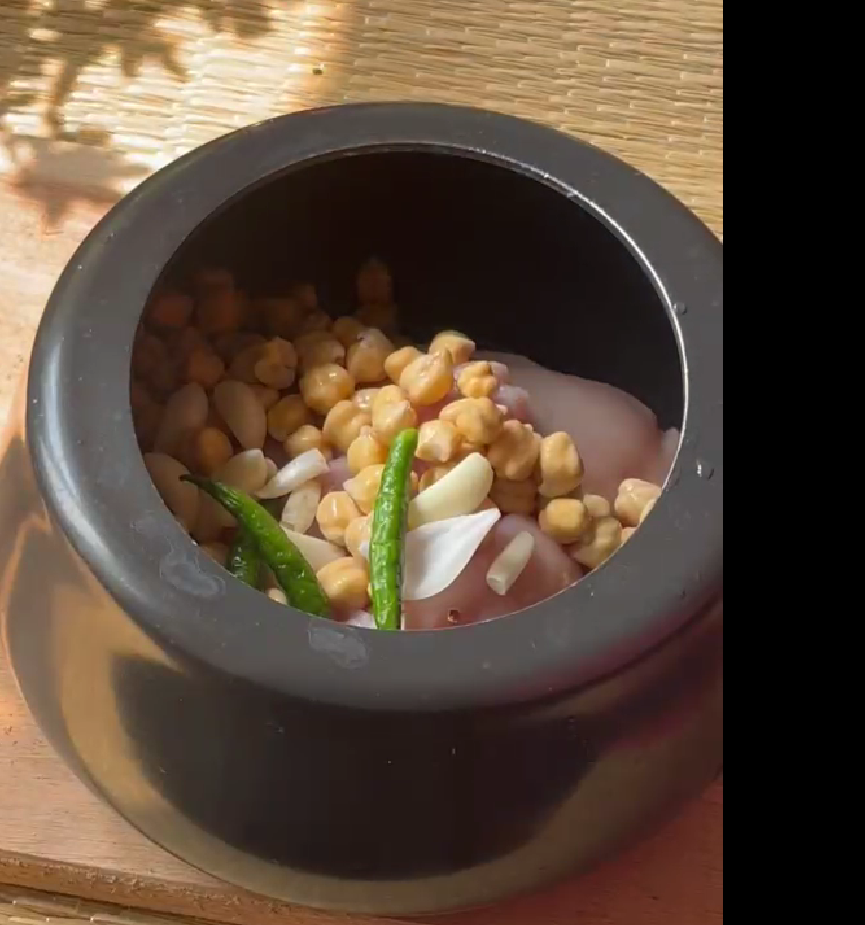
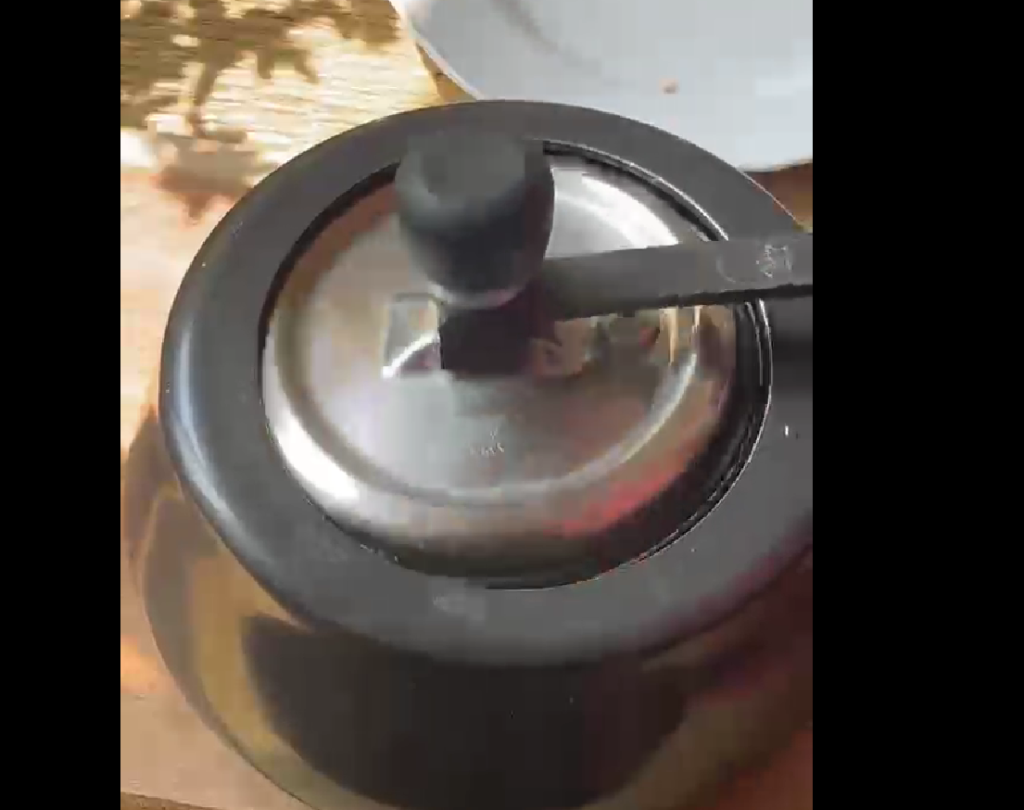
Step 2 — Boil everything together. In a pot, add the chicken pieces, drained soaked chickpeas, garlic cloves, ginger, green chillies, cinnamon stick, and salt. Cover with enough water to submerge everything. Bring to a boil, then reduce to a simmer and cook for 25 to 30 minutes until the chicken is completely cooked through and the chickpeas are fully soft — they should crush easily between your fingers with no resistance.
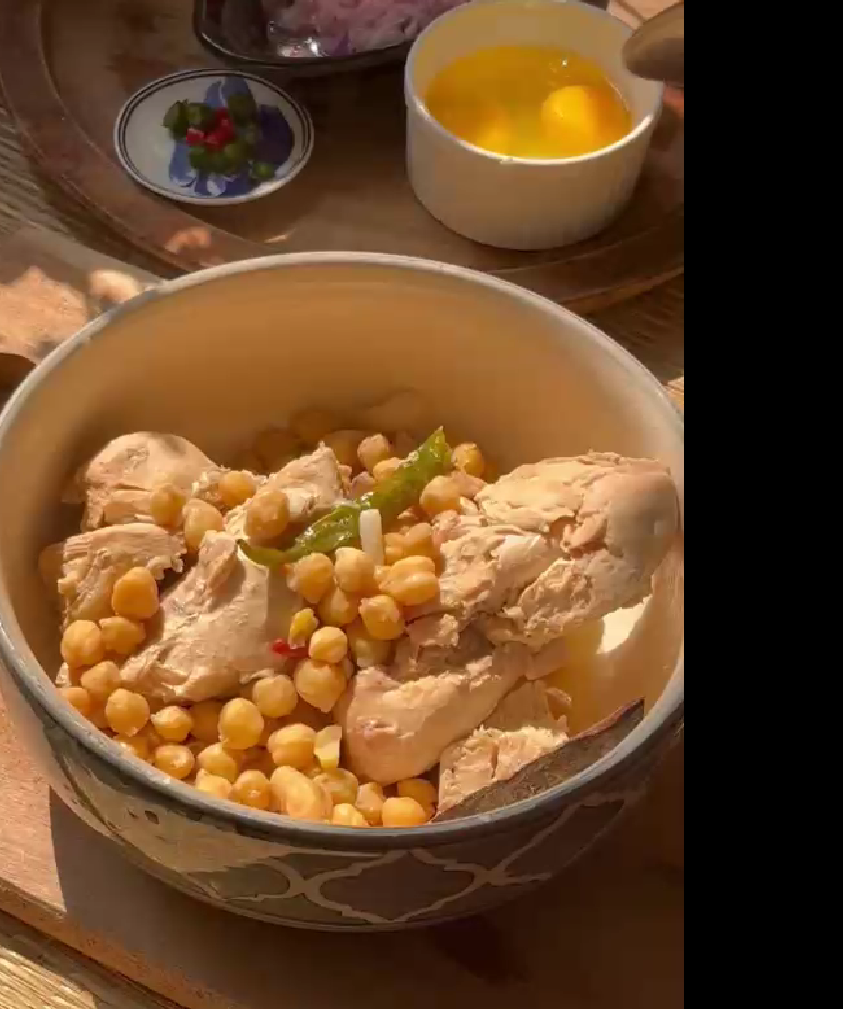
Step 3 — Drain and dry. Remove everything from the pot and drain thoroughly. This step matters more than people realise. Any excess moisture in the mixture will make the kababs fall apart in the pan. Spread everything on a plate for 5 minutes to let steam escape.
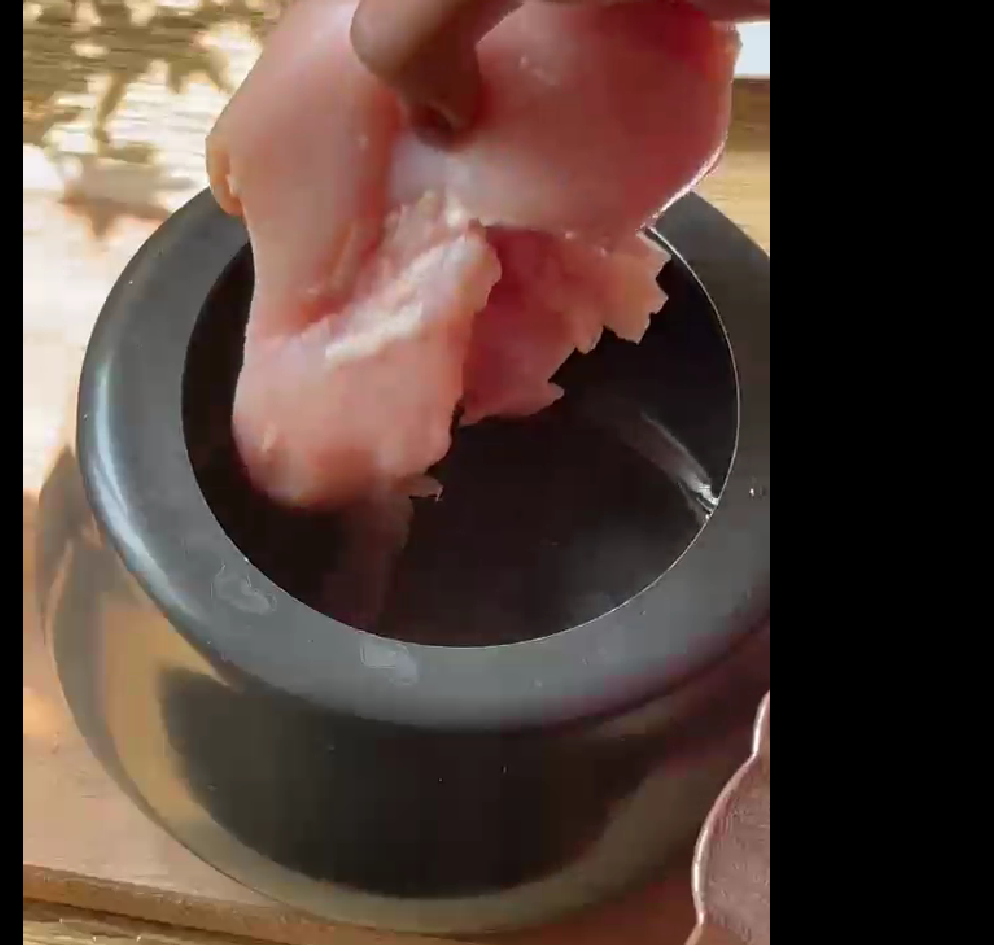
Step 4 — Remove bones and whole spices. Pick out the cinnamon stick. Pull the chicken meat off the bones if you used bone-in pieces.
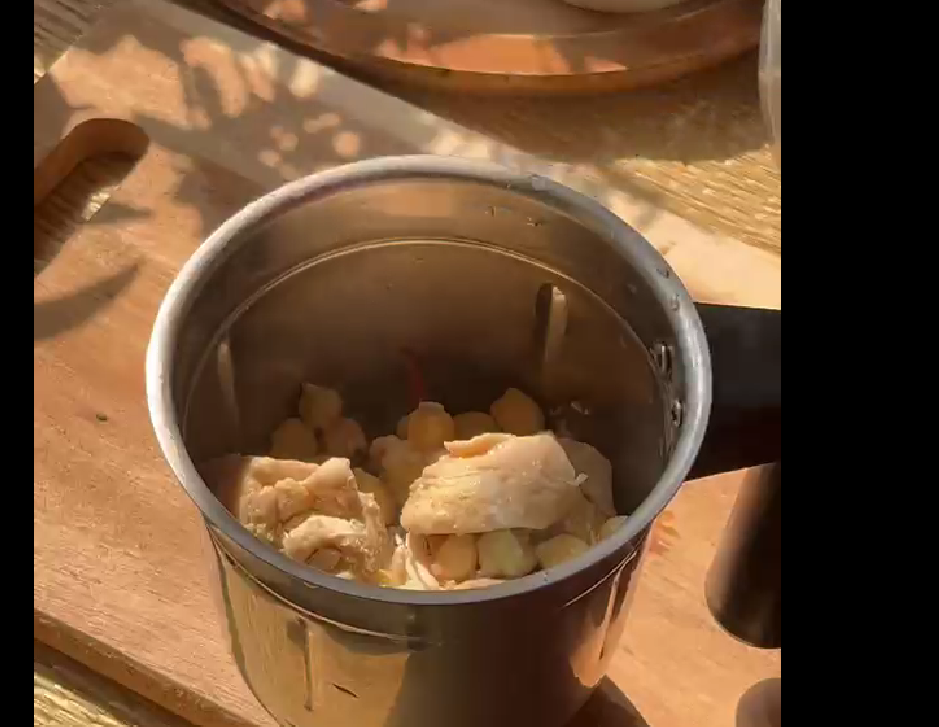
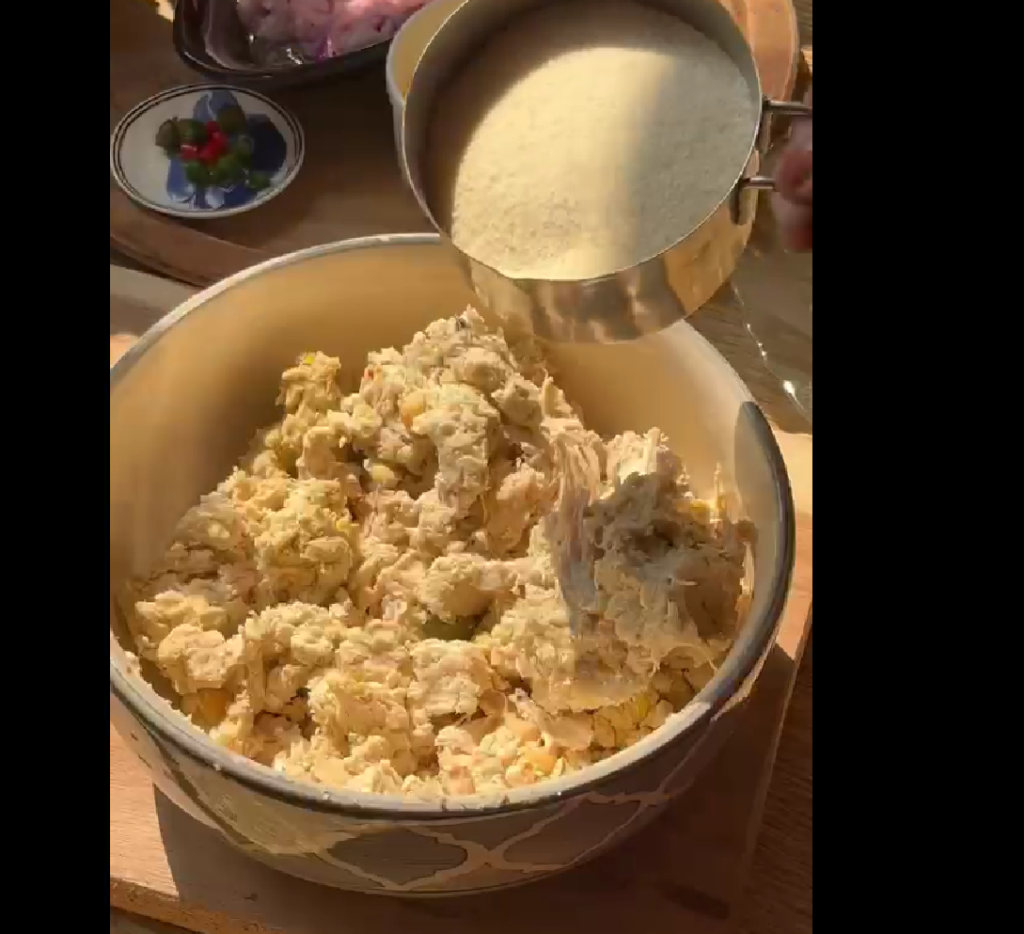
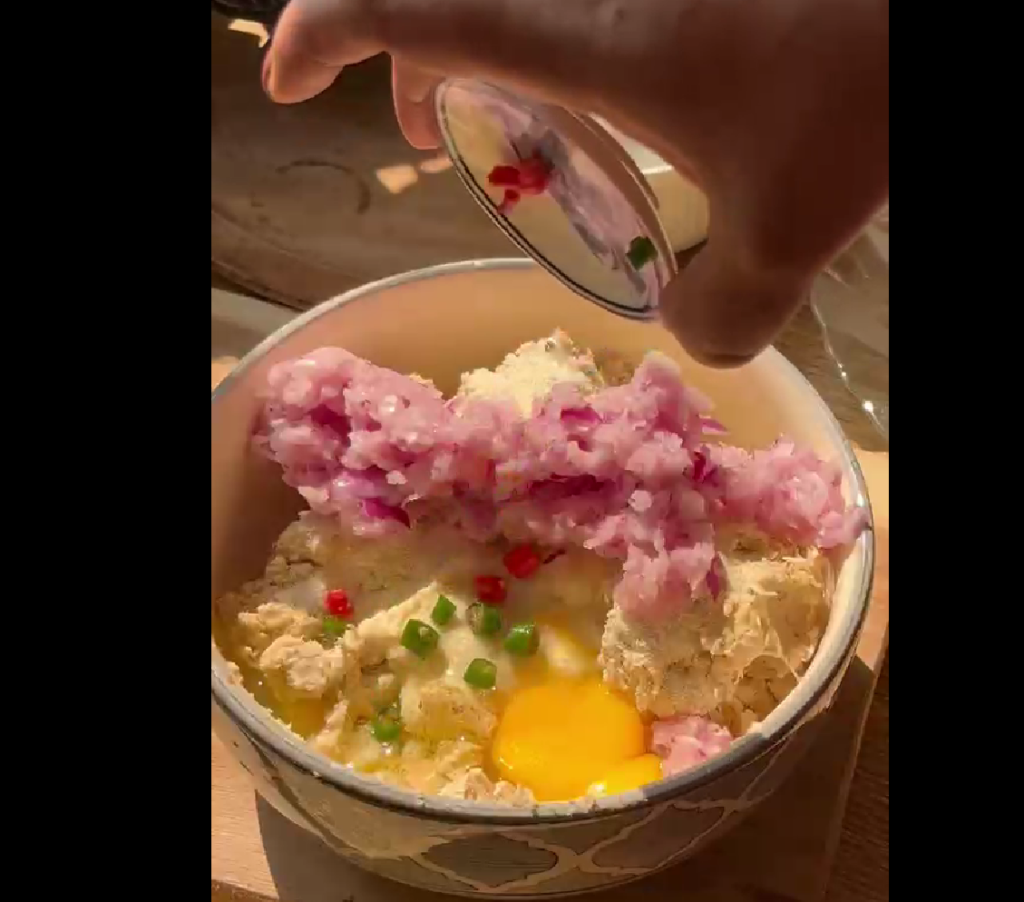
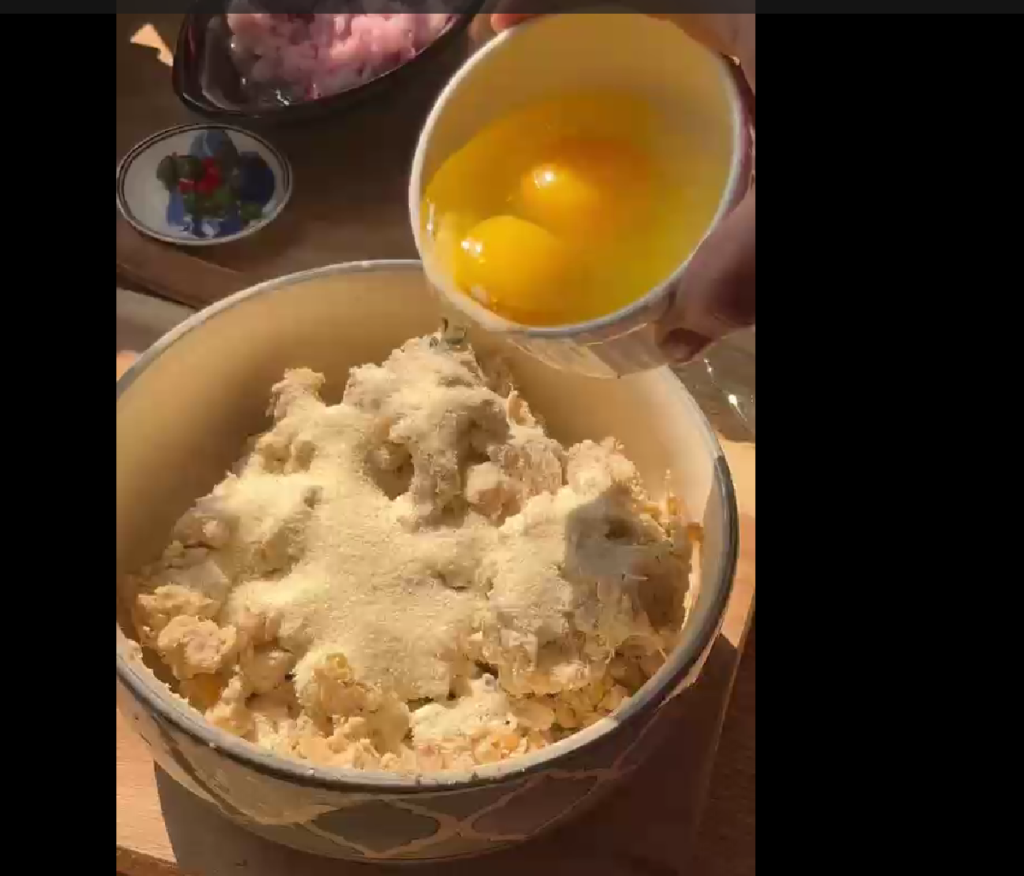
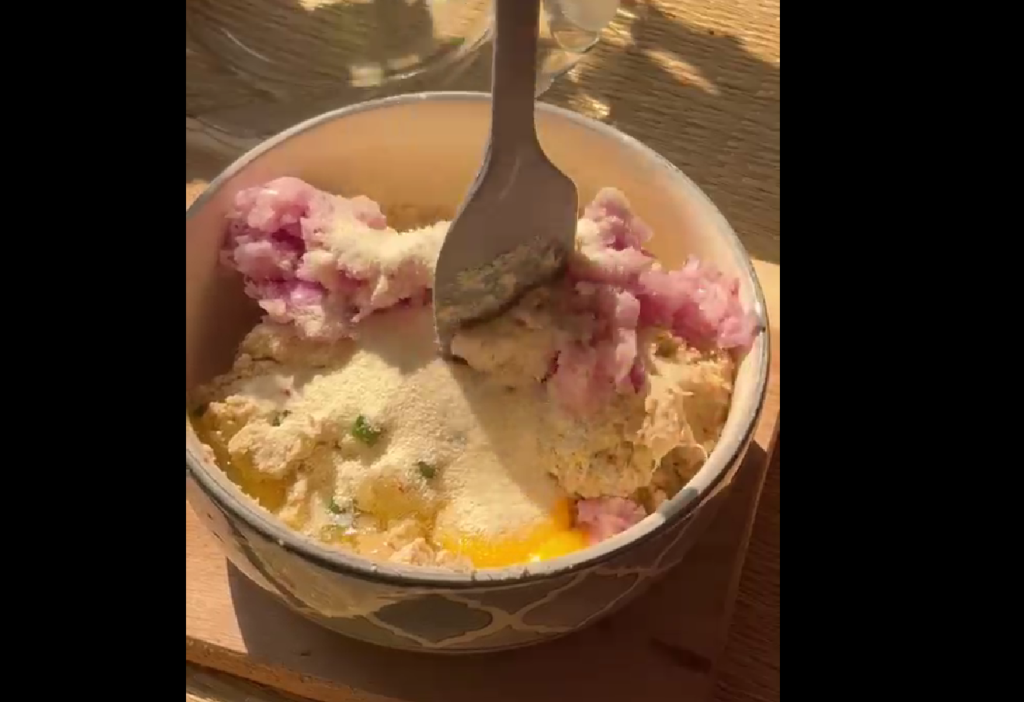
Step 5 — Smash, do not blend. Use a spatula or the back of a spoon and smash the chicken and chickpeas together directly on the plate or in a wide bowl. You want a rough, uneven mix — fibrous chicken strands with partially mashed chickpeas throughout. If you grind it completely smooth in a mixer, the kababs lose all texture and the chickpeas can no longer bind properly. A few pulses in a mixer is fine; a smooth paste is not. This rough texture is what makes a high protein shami kabab hold together and have bite.
Step 6 — Taste and adjust salt.
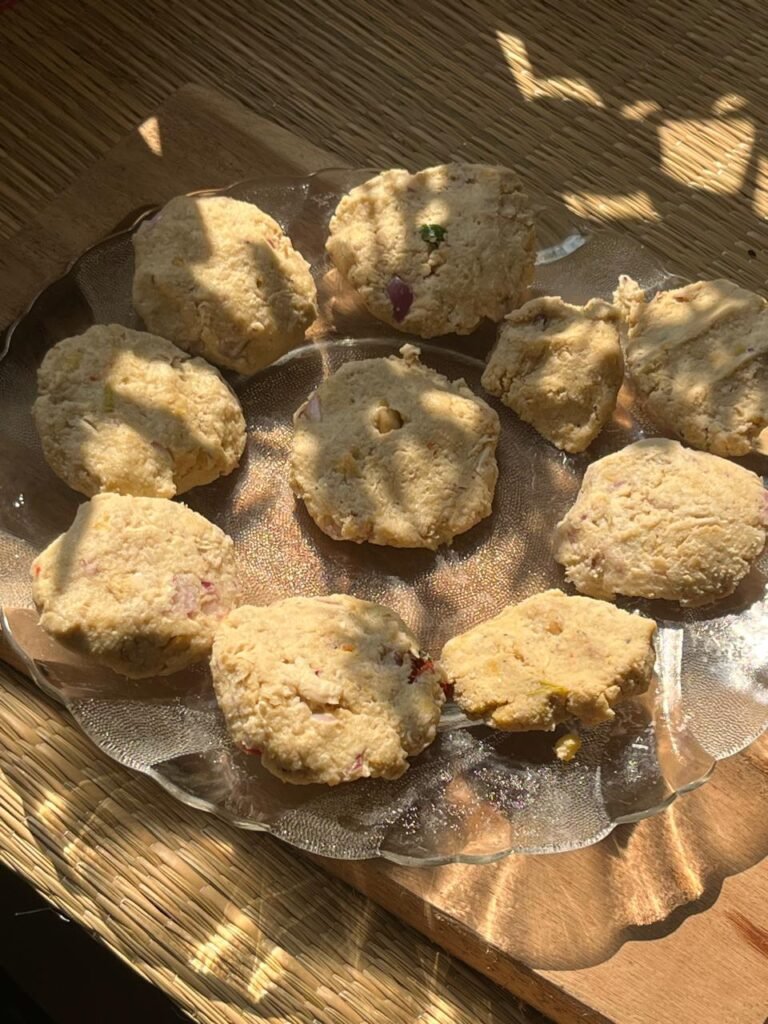
Step 7 — Shape. Wet your palms slightly. Take a portion of the mixture — roughly the size of a golf ball — and press it into a flat round patty about 1.5cm thick. Roll it gently in semolina to coat all sides. Repeat for all kababs. 500g of chicken gives you 10 to 12 kababs.
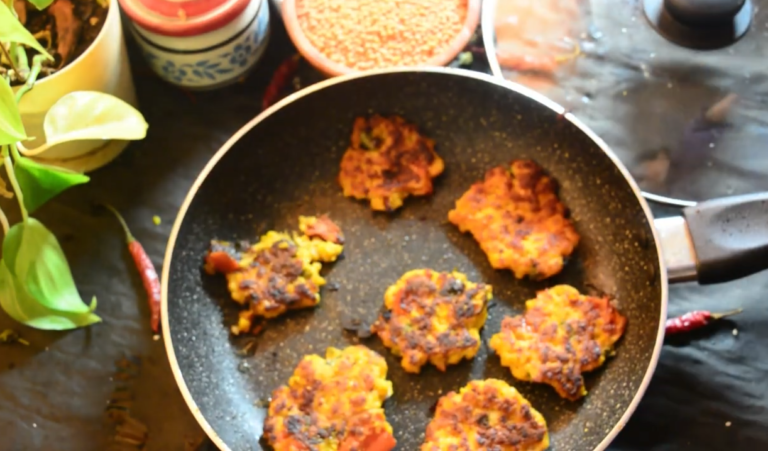
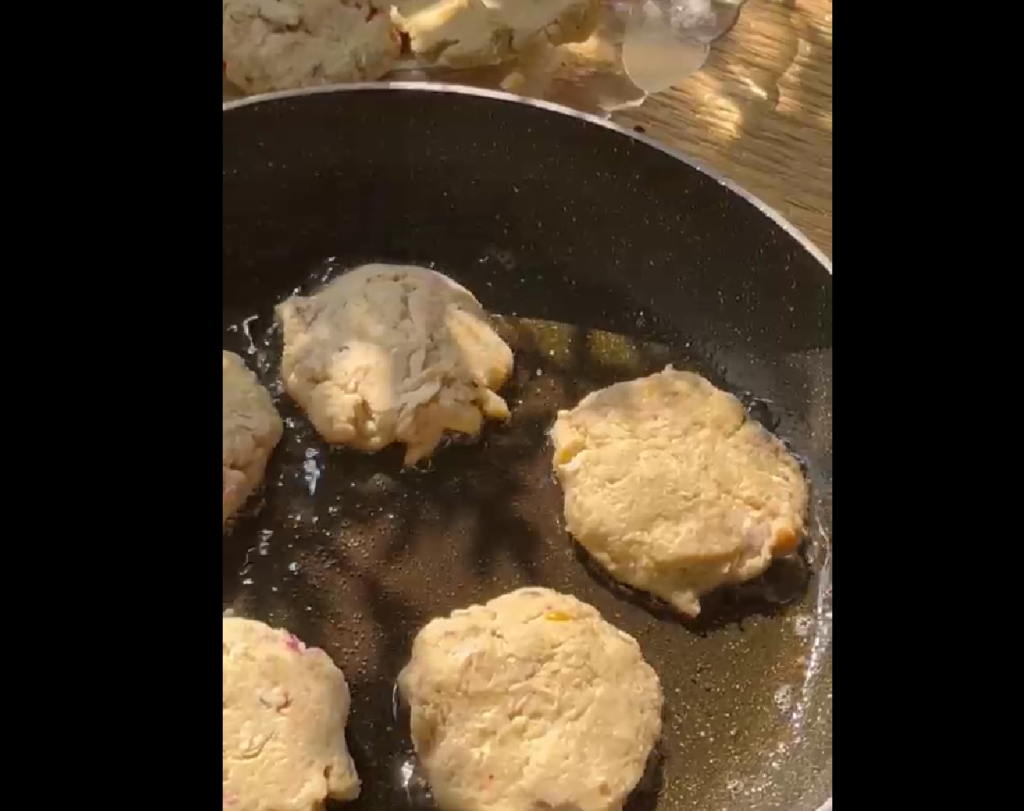
Step 8 — Fry in ghee. Heat a non-stick pan on medium. Add one teaspoon of ghee and let it coat the pan. Place kababs in a single layer — do not crowd the pan. Cook for 3 to 4 minutes without moving until the bottom is golden and releases naturally. Flip once, 3 to 4 minutes on the other side.
Step 9 — Serve immediately with green chutney, a spoon of hung curd, and pickled onions on the side. For a complete meal, this pairs well alongside a simple moong dal or masoor dal.
Why Is the Texture of the Mixture So Important?
This is the question nobody thinks to ask until their kababs fall apart in the pan.
The chickpeas are your binder. When you smash them roughly, they release starch that acts like glue between the chicken fibres. When you blend them smooth, the starch disperses into a paste that cannot hold structure once it hits heat.
Think of it this way: a rough smash keeps the chickpeas doing two jobs at once — binding and adding texture. A smooth blend turns them into sauce that has no structural role.
The same applies to the chicken. Boiled chicken that is smashed retains long fibres that interlock with each other. Blended chicken becomes a paste that compresses under heat and turns dense rather than tender.
If your high protein shami kabab is falling apart when you flip it, the mixture is either too wet (drain longer next time) or too smooth (smash rather than blend). Neither problem requires starting over — a falling-apart kabab still tastes exactly the same, it just looks messier on the plate.
You can also find a similar approach to building high-protein meals from simple Indian proteins in the IBS-friendly Indian dinner guide on Caloriematterss.
How Do You Freeze Chicken Shami Kabab?
This is genuinely one of the best things about this recipe. The high protein shami kabab freezes in its uncooked, shaped form and goes from freezer to pan with no thawing required.
After shaping and rolling in semolina, place the kababs in a single layer on a plate or tray. Freeze uncovered for one hour until firm. Once firm, transfer to an airtight freezer bag or container — at this point they will not stick together. They keep well for up to 3 days in the freezer.
To cook from frozen: heat a non-stick pan on medium-low with a teaspoon of ghee. Place frozen kababs directly in the pan without thawing. Add one extra minute per side compared to fresh — so 4 to 5 minutes per side instead of 3 to 4. Cover the pan with a lid for the first 2 minutes to help the inside cook through before the outside browns too fast.
Do not microwave to thaw first — the semolina coating absorbs moisture and goes soggy. Straight from freezer to ghee-pan is the right method every time.
If you are building a high-protein meal prep week, these kababs alongside the high protein chicken skewers cover most of your protein for the week in two batch-cooking sessions.
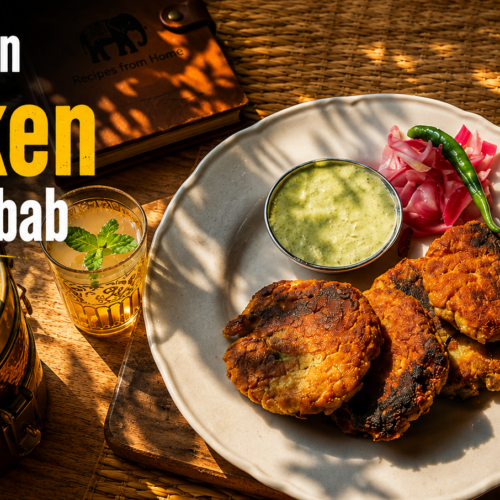
High Protein Shami Kabab – Chicken & Chickpeas, IBS-Friendly

Equipment
- 1 Non Sticky Pan with Lid
- 1 Pressure Cooker
- 1 Spatula
- 1 Mixer Grinder
- 1 Mixing bowl
- 1 Serving Plate
Ingredients
For boiling:
- 500 g chicken bone-in pieces or boneless breast
- 3 –4 tbsp chickpeas kabuli chana, soaked overnight and drained
- 4 –5 garlic cloves lahsun, whole
- 1 small piece ginger adrak
- 2 –3 green chillies hari mirch — adjust to IBS tolerance
- 1 small cinnamon stick dalchini
- Salt to taste
- Enough water to submerge everything
For shaping and frying:
- Suji semolina, for coating — approximately 3 to 4 tbsp
- 1 2 tsp ghee per frying batch
To serve:
- Green chutney Hari chutney
- 2 3 tbsp hung curd
- Small handful pickled onions optional — skip if onion is a trigger
Instructions
- Soak overnight — Cover chickpeas in cold water the night before. Drain before using.
- Boil — Add chicken, soaked chickpeas, garlic, ginger, green chillies, cinnamon stick, and salt to a pot. Cover with water. Bring to boil, reduce to simmer, and cook 25–30 minutes until chicken is cooked through and chickpeas crush easily.
- Drain and dry — Remove everything from pot. Drain thoroughly. Spread on a plate for 5 minutes to let moisture escape. Remove cinnamon stick. Pull chicken off bones if using bone-in pieces.
- Smash — Use a spatula or back of a spoon to smash chicken and chickpeas together into a rough, textured mix. Do not blend smooth — the rough texture is what binds and gives the kabab structure.
- Taste and adjust salt.
- Shape — Wet palms slightly. Roll mixture into golf ball-sized portions and press into flat round patties about 1.5cm thick. Roll each in semolina to coat all sides.
- Fry — Heat non-stick pan on medium. Add 1 tsp ghee. Place kababs in single layer — do not crowd. Cook 3–4 minutes without moving until bottom is golden and releases cleanly. Flip once, 3–4 minutes on the other side.
- Serve hot with green chutney, hung curd, and pickled onions.
Video
Notes
Frequently Asked Questions
Is high protein Shami kabab good for IBS?
Yes—when prepared this way. The recipe uses boiled chicken instead of frying raw chicken, overnight-soaked chickpeas to reduce bloating compounds, no raw onion in the mixture, no maida coating, and ghee instead of refined oil. These changes remove several common IBS triggers found in traditional Shami kababs. If you’re trying them for the first time, start with two kababs and see how your body responds.
Why do you soak the chickpeas overnight—can you skip it?
Overnight soaking helps remove a significant amount of the oligosaccharides that can cause bloating and gas, especially for people with IBS. The soaking water is discarded, taking many of those compounds with it, and boiling breaks down even more. It only takes a few minutes to prepare the night before and makes a noticeable difference to digestion, so it’s best not to skip this step.
Why should you smash the mixture instead of blending it smooth?
Smashing the mixture keeps the chickpea starch and chicken fibres intact, creating a texture that naturally holds the kababs together. Blending everything into a smooth paste weakens the structure, making the kababs more likely to fall apart while cooking. A few quick pulses in a mixer are fine, but avoid turning the mixture into a completely smooth paste.
Can you make chicken Shami kabab without egg?
Yes. This recipe doesn’t need eggs because the soaked and boiled chickpeas provide the binding, while semolina creates the outer structure. As long as the cooked mixture is well drained and gently smashed instead of blended smooth, the kababs will hold together. If they seem too soft, drain the mixture longer rather than adding an egg.
How long can you store chicken Shami kabab in the freezer?
Freeze uncooked shaped kababs for up to 3 days. Arrange them in a single layer until firm, then transfer them to an airtight freezer bag or container. Cook directly from frozen without thawing, as thawing softens the semolina coating. Cooked kababs keep well in the refrigerator for up to 2 days and can be reheated gently in a dry pan over low heat.
🌿 Love gut-friendly recipes? Add Caloriematterss as your Google Preferred Source so my low-FODMAP, high-protein recipes show up more often for you. Set Caloriematterss as a preferred source →