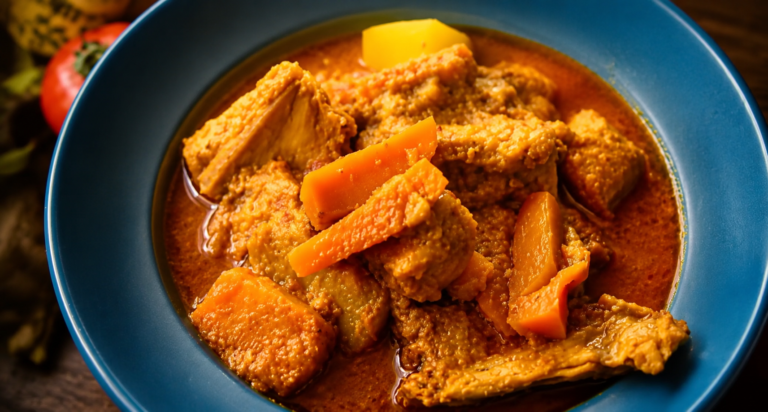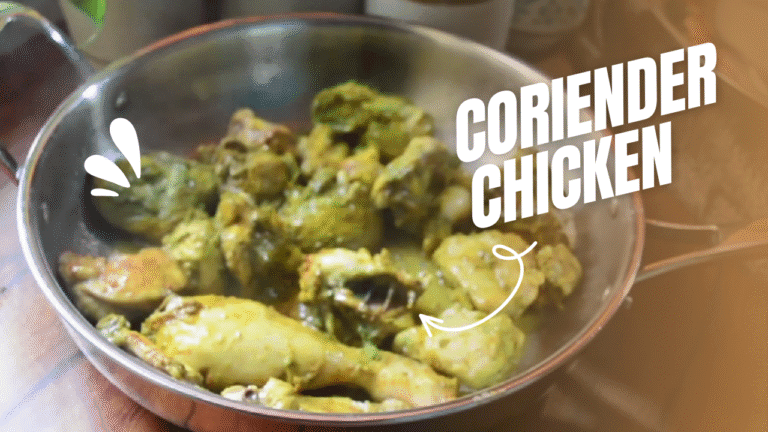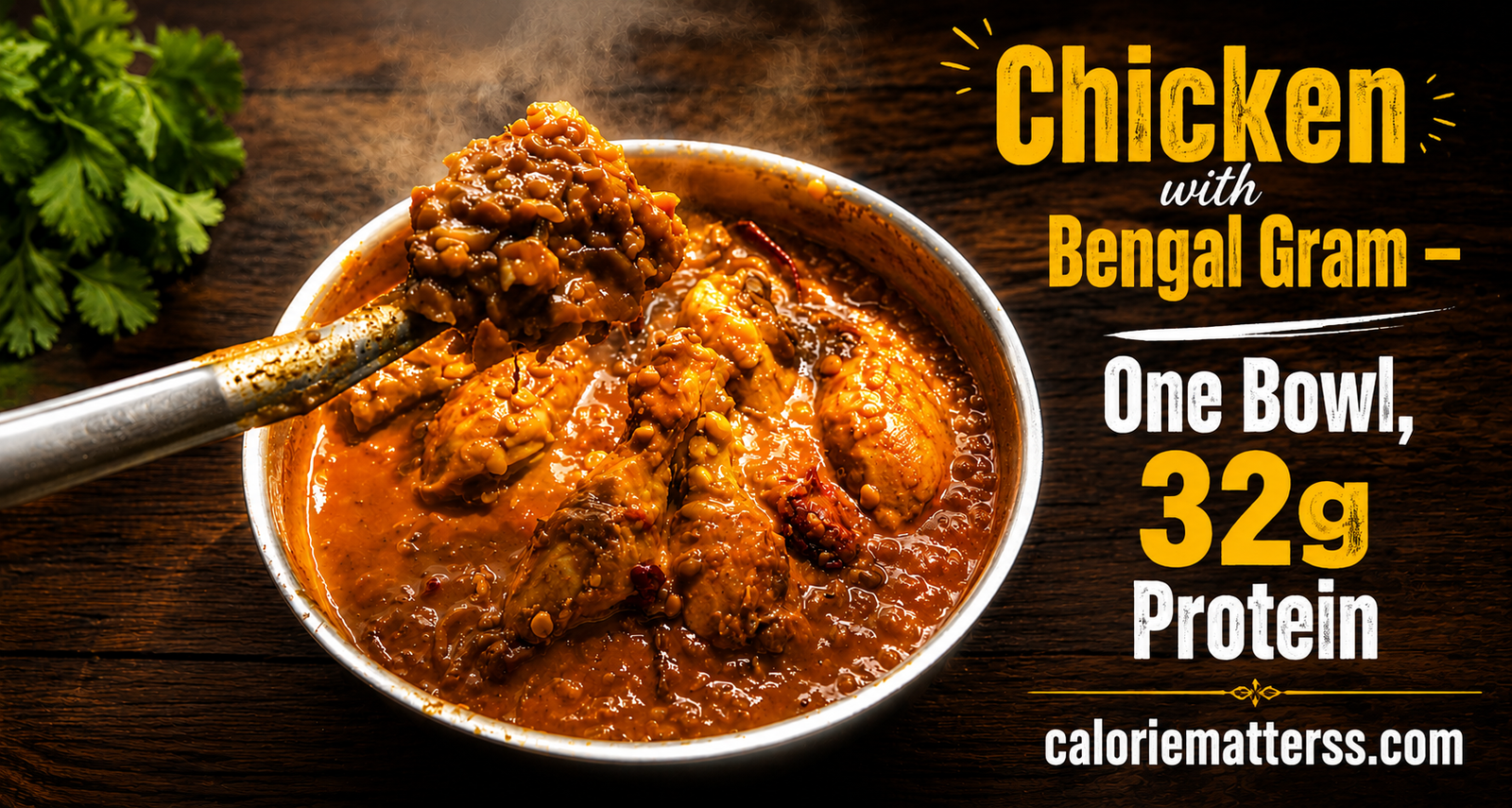
Chicken with Bengal Gram – One Bowl, 32g Protein, IBS-Friendly (No Rice Needed)
📌 Quick Guide
What it is: Chicken leg pieces and pre-soaked, pre-boiled Bengal gram cooked in a whole-spice masala with onion, tomato, and ginger garlic paste — one bowl, no rice needed
Why it works: Chicken and chana together deliver animal and plant protein in the same bowl — the combination hits a protein level that most single-protein dishes cannot match
IBS-friendly: Yes — Bengal gram is pre-soaked and pre-boiled (reduces bloating compounds significantly), whole spices are cooked through, no raw onion or garlic in the finished dish
Cook time: 40 minutes (plus overnight chana soak)
Calories: ~357 kcal | Protein: ~32g per serving (serves 2)
Story of a Chicken with Bengal Gram
This chicken with Bengal gram is a one-bowl high protein meal with whole spices and proper masala. 32g protein, IBS-friendly, no rice needed. Serves 3, ready in 40 minutes.
I have a specific memory from before my IBS diagnosis — the way I used to eat at weddings.
Biryani on one side, some sort of chana preparation on the other, a piece of chicken in the middle. Not thinking about it. Just eating. The combination of chicken and chana together was something I had been doing intuitively for years without understanding why it worked so well as a meal — it was filling in a way that neither the chicken nor the chana alone could quite manage.
When I started rebuilding my diet around protein in 2023, my dietitian explained what I had been doing without knowing it. Chicken provides complete animal protein — all nine essential amino acids in high concentration. Bengal gram (chana dal) provides plant protein plus fiber and slow-release carbohydrate. Together in the same bowl, they create a protein-and-satiety combination that most single-protein dishes cannot match. This is why chicken with Bengal gram leaves you feeling full for four to five hours without needing rice, roti, or anything else alongside it.
This version is the simplest way I make it. One tablespoon of olive oil. Whole spices crackled in the oil first — cumin (jeera), bay leaf (tejpatta), a dry red chilli, cinnamon (dalchini), cardamom (elaichi). Onion fried until translucent. Ginger garlic paste, then chopped tomato, then the dry spice powders, then the pre-soaked and pre-boiled chana. Chicken leg pieces go in last and cook in the masala until soft. One pan, one bowl.
32 grams of protein per serving. 357 calories. No rice needed and genuinely not missed.
Table of Contents
Why Does Chicken with Bengal Gram Work So Well as a High Protein Meal?
Most high-protein Indian meals rely on a single protein source — chicken alone, dal alone, paneer alone. Each works. But chicken with Bengal gram does something different: it stacks two protein sources with complementary nutritional profiles in the same dish.
Chicken leg pieces bring animal protein — approximately 25.9g per 100g of cooked meat — that is highly bioavailable, meaning the body can absorb and use it efficiently. The amino acid profile of chicken is complete, which means it contains all nine essential amino acids your body cannot synthesise on its own.
Bengal gram (chana dal) brings plant protein — approximately 8.9g per 100g cooked — alongside a type of resistant starch and soluble fiber that chicken alone cannot provide. The fiber slows digestion of the entire meal, extending the satiety window well beyond what chicken alone achieves. The starch in chana also provides energy without a blood sugar spike, because the fiber wrapping the starch molecules slows its breakdown and absorption.
The result per serving — two chicken leg pieces plus the chana dal portion — is 32.3 grams of protein and a calorie count of 357, which is a well-proportioned meal that needs nothing added to complete it. This is not accidental. My dietitian was the first to put numbers to something I had been eating instinctively, and the numbers made the logic clear.
Is Chicken with Bengal Gram Good for IBS?
Yes — with the right preparation steps, both of which are in this recipe.
Bengal gram must be pre-soaked overnight and pre-boiled. This is the non-negotiable preparation step for anyone with IBS who wants to eat dal without bloating. Raw dry Bengal gram contains oligosaccharides — carbohydrates that ferment in the large intestine and produce gas and bloating. Overnight soaking in water dissolves a significant portion of these compounds into the soaking liquid, which you drain and discard. Pre-boiling until completely soft breaks them down further.This chicken with Bengal gram recipe has been through both processes — it is as gut-gentle as chana can be.
Whole spices are crackled in oil and cooked throughout. None of the aromatic ingredients in this recipe are raw in the finished dish. Garlic and ginger go in as a cooked paste, not raw. Onions are fried to translucency before anything else is added. The whole spices — jeera, tejpatta, dalchini, elaichi, dry red chilli — are crackled in oil at the start, which blooms their volatile oils and makes them easier to digest while also distributing their flavour through the entire dish. Cooked aromatics are consistently gentler on an IBS gut than raw ones.
Olive oil over refined oil. One tablespoon of olive oil for the whole dish across three servings is a modest fat quantity, and olive oil’s monounsaturated fat composition makes it one of the better cooking fats for gut health. It does not cause the gut motility spike that large amounts of refined vegetable oil can.
The one ingredient to watch is the dry red chilli. This recipe uses one whole dry red chilli crackled in oil — the heat from this is relatively mild because it is cooked whole and the seeds remain inside unless the chilli splits. If you are in an IBS flare or particularly heat-sensitive, remove the dry red chilli before adding the onion. The masala is complete without it.
What Is the Right Way to Prepare Bengal Gram for This Recipe?
Bengal gram – needs two preparation steps before it goes into the pot with the chicken.
Overnight soak. Measure 100g of dry Bengal gram and cover with at least three times its volume of cold water. Leave overnight — a minimum of 8 hours, 12 hours is better. The water will turn slightly cloudy as the oligosaccharides dissolve out of the gram. Drain this water completely and discard it — do not use it as cooking liquid.
Pre-boil until soft. Cover the drained soaked gram with fresh water in a pot. Bring to a boil and cook for 25 to 35 minutes until completely soft — a cooked chana should crush easily between your thumb and index finger with no resistance. Do not add salt during boiling; salt slows the softening process. Drain and set aside.
The pre-boiled Bengal Gram goes into the masala towards the end of cooking, after the oil has separated from the masala base. It finishes cooking in the masala alongside the chicken and absorbs the spiced gravy. This second cook in the masala is what gives the finished chicken with Bengal gram its depth — the chana is not just added for protein, it absorbs and carries the masala flavour throughout the dish.
If you want to save time on weeknights: boil a larger batch of Bengal gram on Sunday — 300g dry, which gives approximately 660g cooked — and refrigerate in portions. Each portion for this recipe is 100g dry equivalent (approximately 220g cooked). Use one portion per batch of this dish through the week without re-soaking or re-boiling.
How Do You Build the Masala for Chicken with Bengal Gram?
The masala in this recipe is built in layers — each ingredient added in the right order so that everything cooks properly and the oil separates cleanly before the chana and chicken go in. The oil separating from the masala is the visual cue that tells you the masala is done and ready to receive the main ingredients.
Layer 1 — Whole spices.
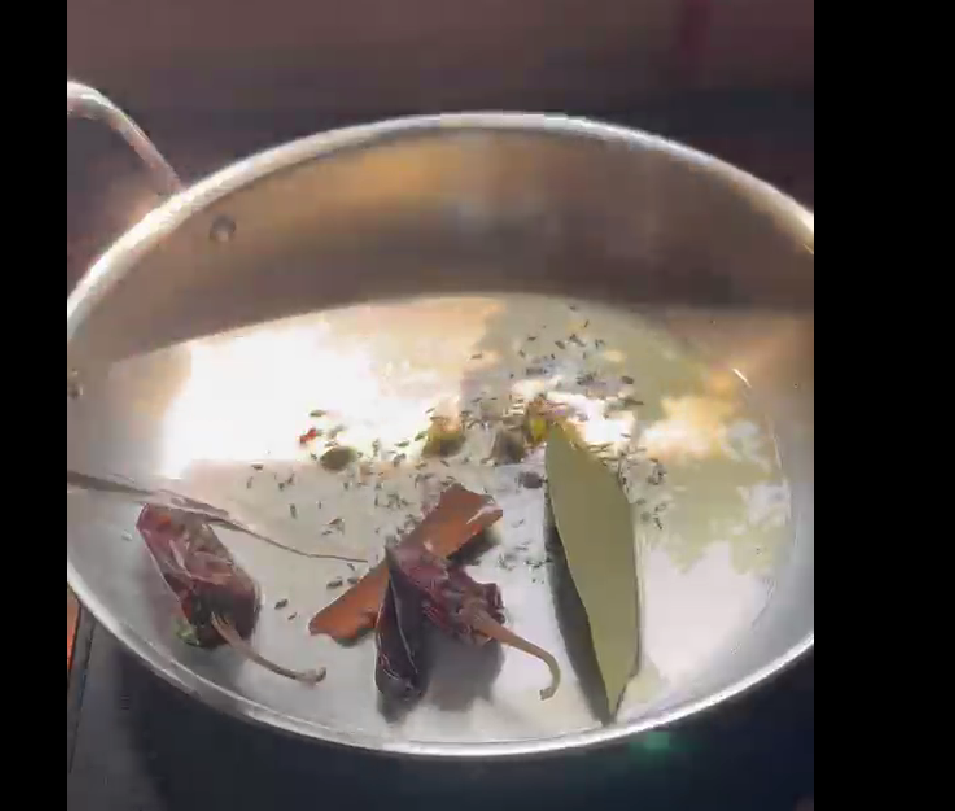
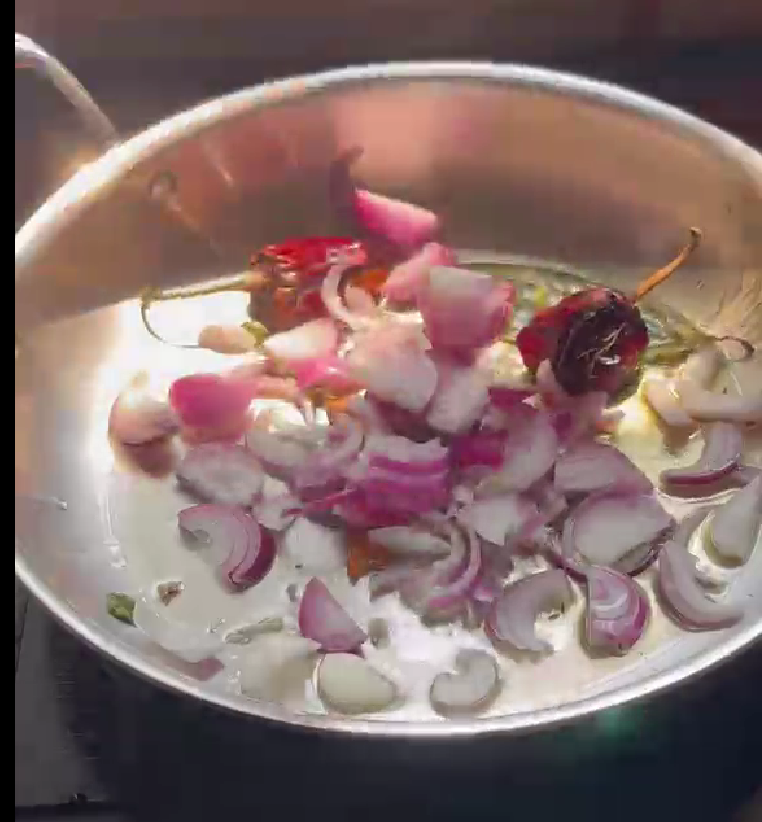
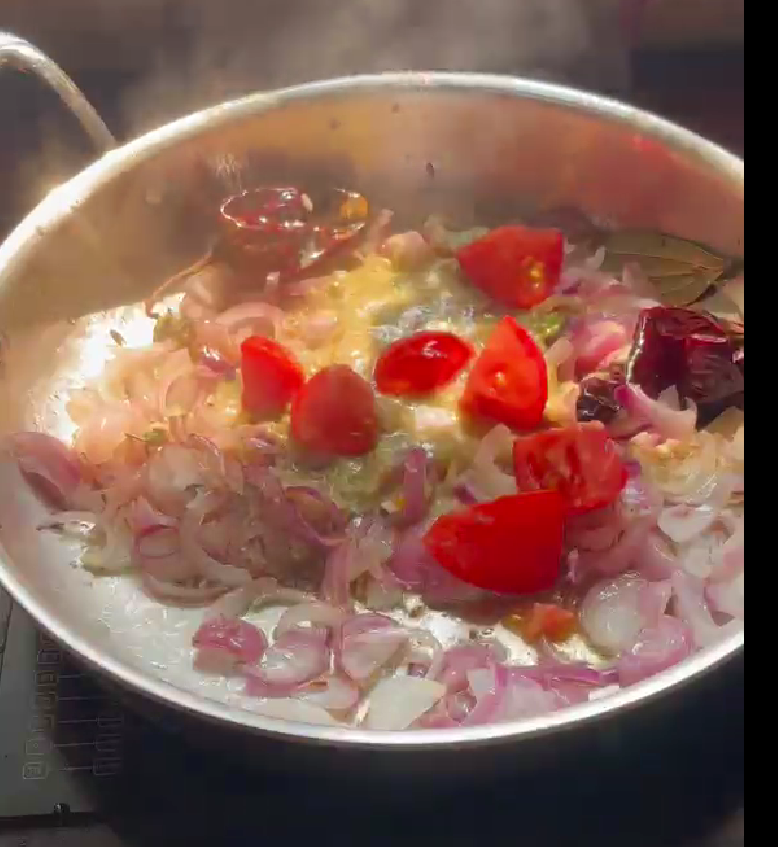
Heat one tablespoon of olive oil in a heavy-bottomed pan or kadai on medium. When the oil shimmers, add cumin seeds (jeera), one bay leaf (tejpatta), one dry red chilli, one small cinnamon stick (dalchini), and two cardamom pods (elaichi). Let them crackle for 30 to 45 seconds — the jeera will darken slightly and the spices will smell intensely fragrant. Do not let them burn. This crackling step releases the volatile oils from each spice and distributes them through the cooking fat, which then carries those flavours through the entire dish.
Layer 2 — Onion.
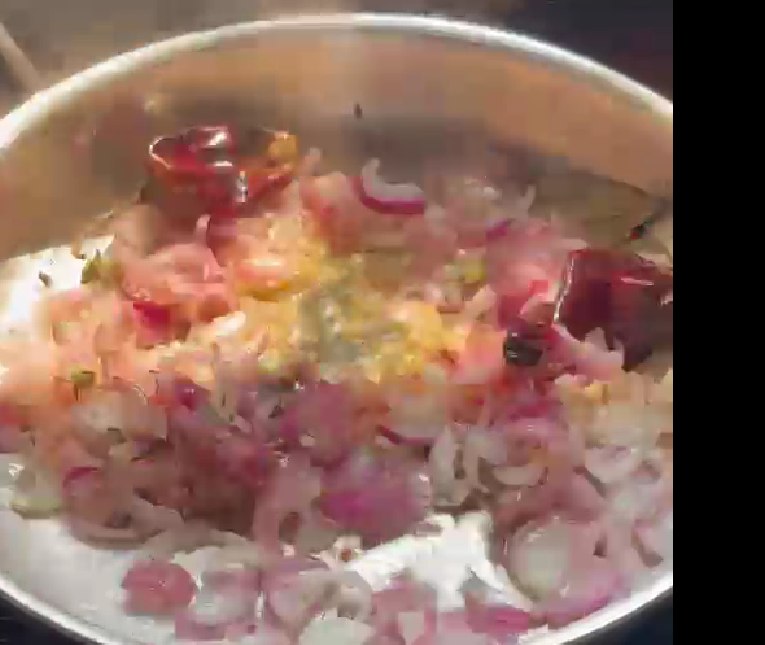
Add two medium onions, sliced. Fry on medium heat for 8 to 10 minutes, stirring occasionally, until translucent and just beginning to turn light gold at the edges. Do not rush this step — under-cooked onion in the finished dish is one of the most common IBS triggers in Indian cooking. Fully cooked onion that has lost its raw bite is considerably gentler on a sensitive gut.
Layer 3 — Ginger garlic paste.
Add two tablespoons of ginger garlic paste (adrak lahsun paste). Fry for 2 to 3 minutes until the raw smell disappears completely and the paste has dried slightly and stuck to the pan surface. This step cooks out the pungent raw garlic compounds that are the biggest IBS trigger in Indian cooking. Do not add the tomatoes until this step is complete — the acid in tomato prevents the garlic from cooking properly if added too early.
Layer 4 — Tomato and dry spices.
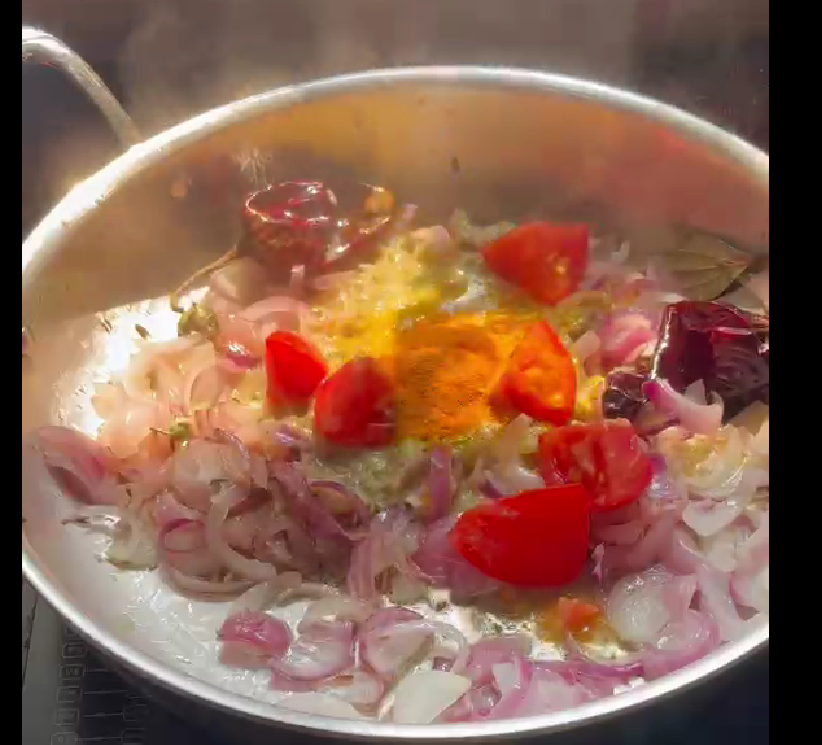
Add two medium tomatoes, chopped. Add one teaspoon each of coriander powder (dhania), salt (namak), turmeric (haldi), and lal mirch (red chilli powder — for colour and mild heat). Stir everything together. Cook on medium heat for 8 to 10 minutes, pressing the tomatoes down as they soften, until the oil separates from the masala and pools at the edges of the pan. This is the signal — oil separation means the tomatoes have cooked completely and the masala is ready.
Layer 5 — Chana and chicken.
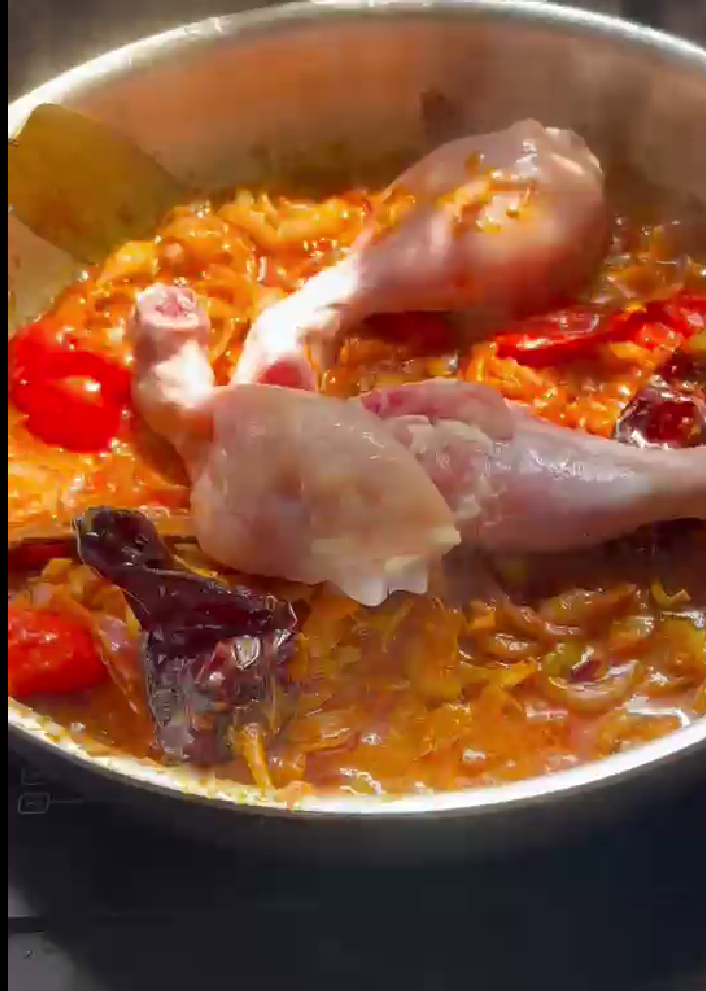
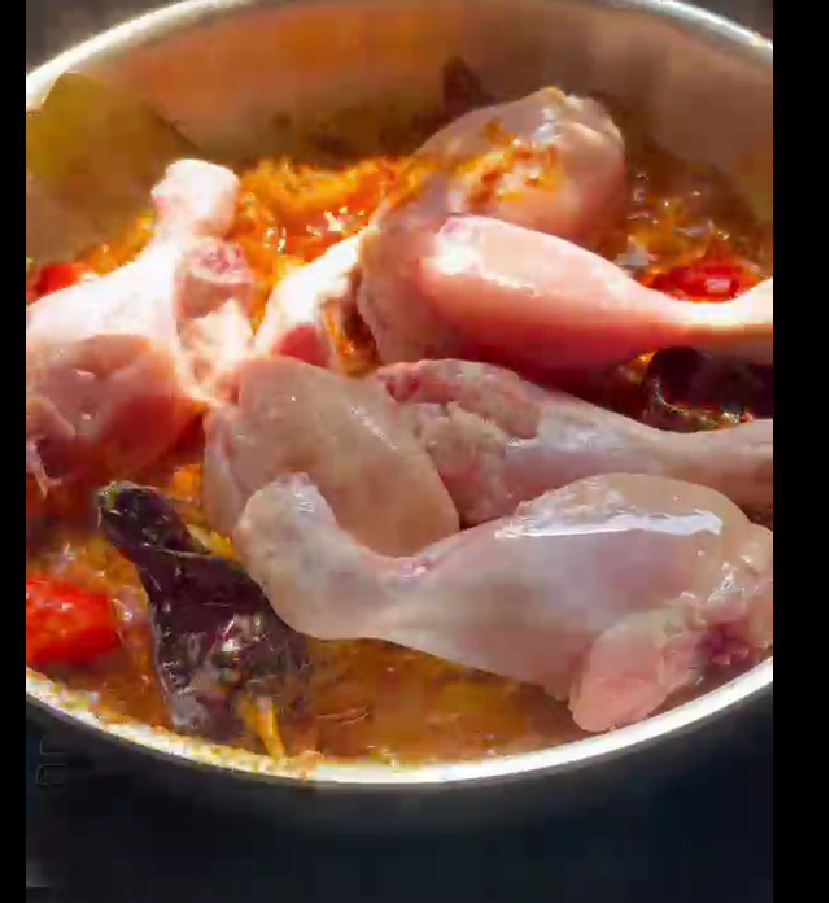
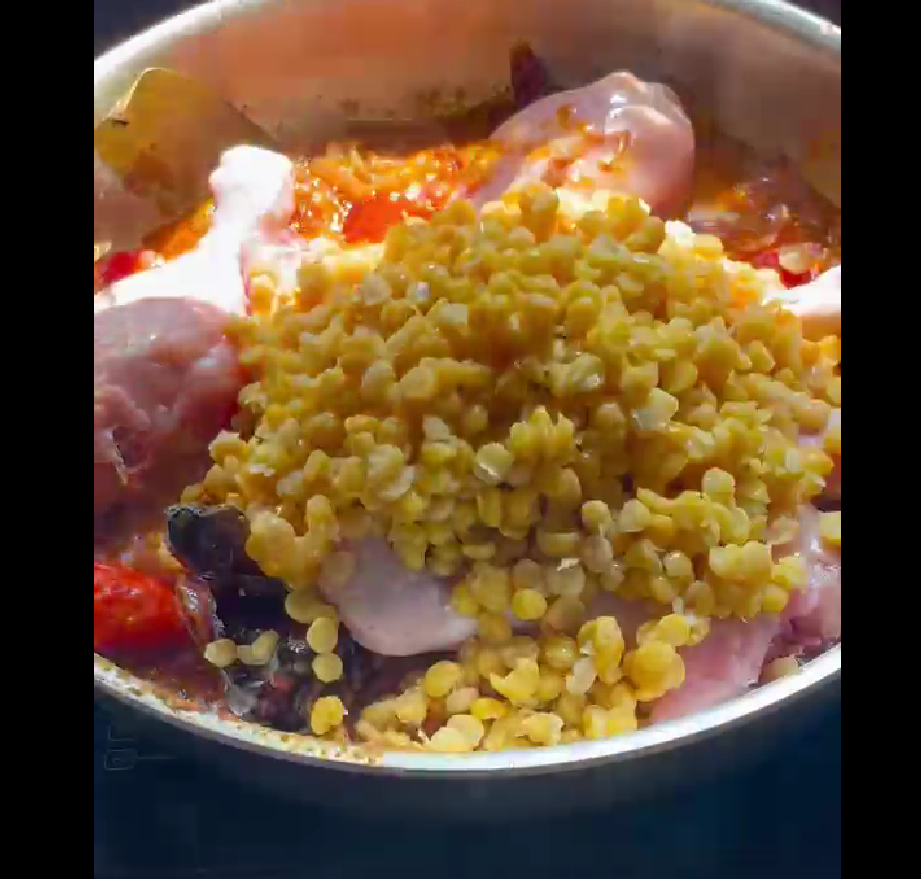
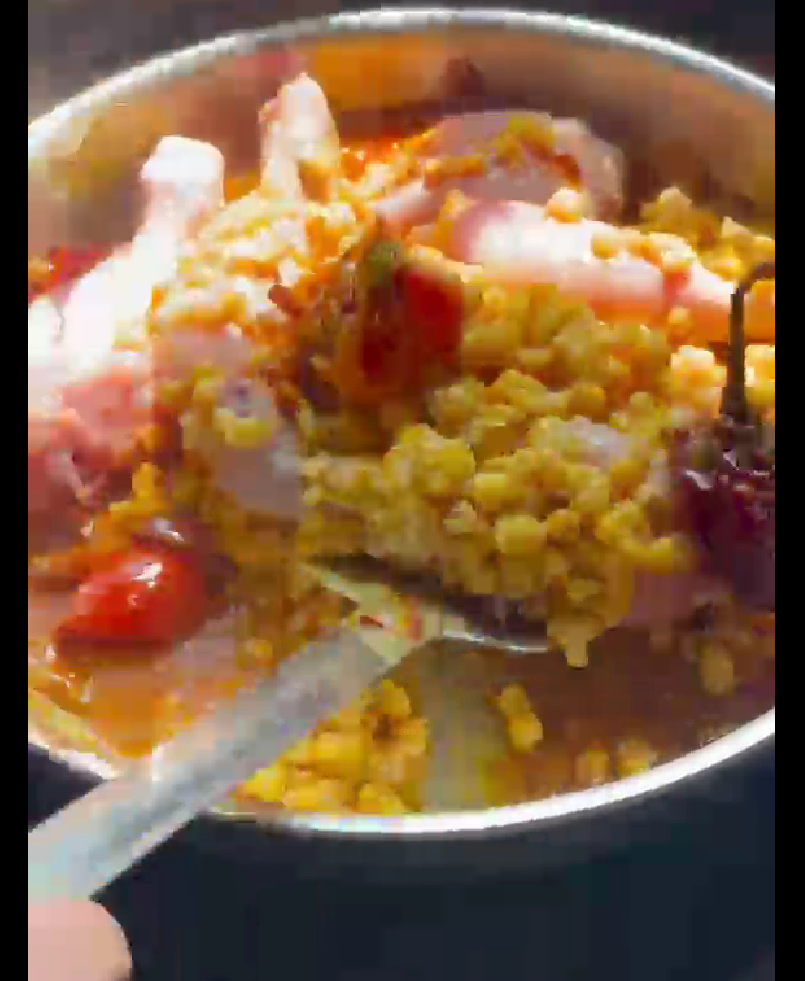
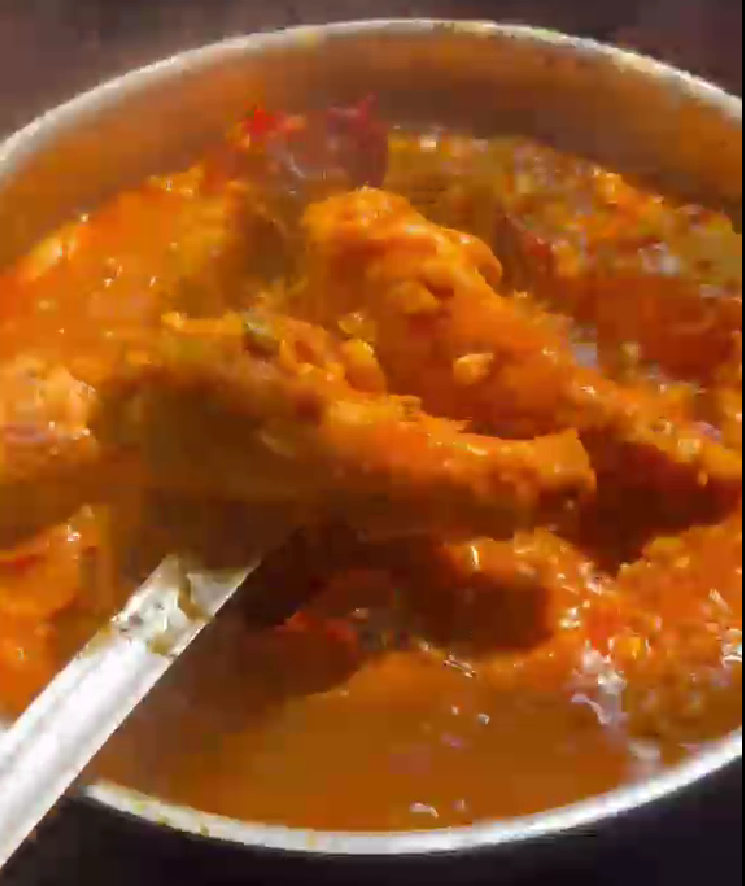
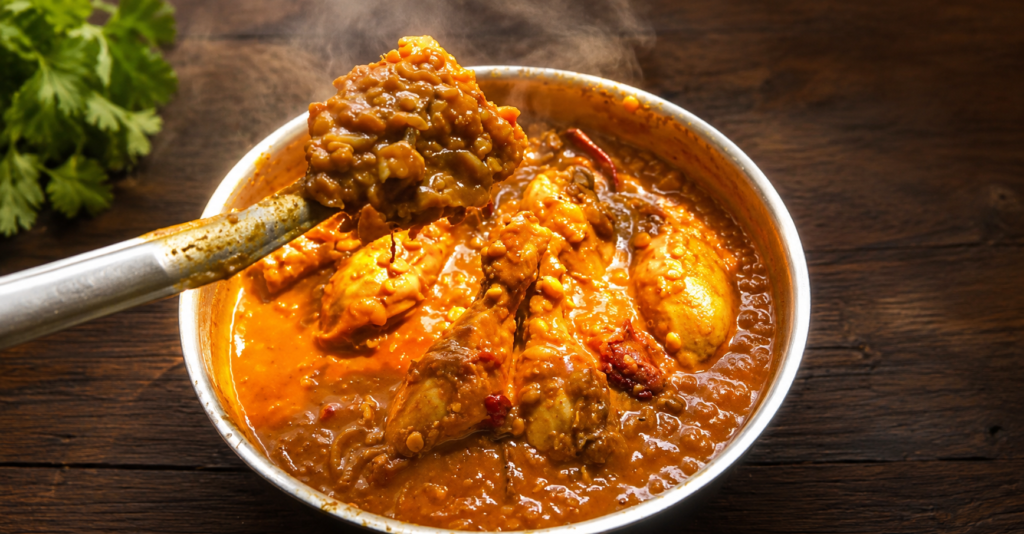
Add the pre-boiled Bengal gram and the six chicken leg pieces. Stir to coat everything in the masala. Add enough water to just come level with the ingredients — approximately half a cup. Cover with a lid, reduce to medium-low, and cook for 20 to 25 minutes until the chicken is cooked through and the chana has absorbed the masala.
Final check.
Cut the thickest piece of chicken near the bone — no pink inside, juices run clear. The chana should be fully soft and the gravy should have thickened around the chicken pieces. Serve hot.
Why Does This Chicken with Bengal Gram Not Need Rice?
Because the Bengal gram is already providing what rice would provide — carbohydrate and bulk — but with significantly more nutritional value.
One cup of cooked white rice gives you approximately 206 calories and 4.5 grams of protein, with almost no fibre and a high glycaemic index. The Bengal gram in this recipe at the per-serving portion gives you carbohydrate alongside 6.5 grams of plant protein and fibre that rice simply does not have. The chana makes the meal filling in a way that rice makes a meal filling — but without the blood sugar spike and without the empty calorie contribution.
For people with IBS specifically, white rice is often recommended as a bland, easy-to-digest carbohydrate during flares. Outside of a flare, it is simply a low-nutrient carbohydrate. Replacing it with chana in a meal that already has full masala flavour and satisfying texture is not a sacrifice — it is an upgrade.
The gravy from the masala also provides enough moisture in the bowl that rice does not feel needed for the eating experience. Thick masala clinging to chicken pieces and chana is a complete sensory meal. I serve this chicken with Bengal gram with just a few slices of raw cucumber (kheera) on the side for cooling contrast — nothing else needed.
For more on using dals and legumes as protein sources in IBS-friendly Indian cooking, the best dals for IBS guide covers the full picture of which legumes work best and why the preparation method changes everything.
How Does This Compare to Other High Protein Chicken Recipes on Caloriematterss?
This chicken with Bengal gram sits at the higher end of the protein range across the chicken recipes on this site — 32g per serving compared to 26g for the high protein shami kabab and 18g for the oats chilla breakfast. The reason is the dual protein source — chicken plus Bengal gram in the same dish stacks protein in a way that a single-ingredient recipe cannot.
It is also the most complete one-bowl meal in terms of macronutrients. The shami kabab and the skewers are high-protein preparations that work best as part of a larger meal. This chicken with Bengal gram is a meal by itself — protein, complex carbohydrate, fibre, and fat from the olive oil all in one pan. Nothing needs to be added for nutritional completeness.
If you are building a weekly meal plan around high-protein, IBS-friendly cooking, this is the recipe for the nights when you want one pot, one bowl, and nothing else to think about. Batch it for three people or make the full recipe for one person across three meals — the dish reheats well on a low-flame pan with a small splash of water to loosen the gravy.
Chicken with Bengal Gram – One Bowl, 32g Protein, IBS-Friendly

Equipment
- 1 Pressure Cooker For cooking Bengal Gram
- 1 Stainless Steel Wok with Lid
- 1 Spatula
Ingredients
For the whole spice base:
- 1 tbsp olive oil
- 1 tsp cumin seeds jeera
- 1 bay leaf tejpatta
- 1 dry whole dry red chilli lal mirch
- 1 small cinnamon stick dalchini
- 2 cardamom pods elaichi
For the masala
- 2 medium onions pyaaz, sliced
- 2 tbsp ginger garlic paste adrak lahsun paste
- 2 medium tomatoes tamatar, chopped
- 1 tsp coriander powder dhania
- 1 tsp salt namak — adjust to taste
- 1 tsp turmeric powder haldi
- 1 tsp lal mirch powder red chilli powder — for colour
Main ingredients:
- 100 g dry chana dal or Bengal gram kala chana, soaked overnight and pre-boiled until soft
- 500 g chicken leg pieces — 6 pieces bone-in
- ½ cup water
Instructions
- Prep the chana — Soak 100g dry Bengal gram in cold water overnight. Drain. Boil in fresh water for 25–35 minutes until completely soft (crushes easily between fingers). Drain and set aside.
- Crackle whole spices — Heat olive oil in a heavy kadai or pan on medium. Add jeera, tejpatta, dry red chilli, dalchini, and elaichi. Let crackle for 30–45 seconds until fragrant. Do not burn.
- Fry onion — Add sliced onion. Cook 8–10 minutes on medium, stirring occasionally, until translucent and lightly golden at the edges.
- Cook ginger garlic paste — Add adrak lahsun paste. Fry 2–3 minutes until the raw smell disappears and the paste has dried slightly and stuck to the pan.
- Build the masala — Add chopped tomatoes, dhania powder, salt, haldi, and lal mirch powder. Stir well. Cook 8–10 minutes, pressing tomatoes as they soften, until the oil separates and pools at the edges. This is your signal the masala is ready.
- Add chana and chicken — Add pre-boiled Bengal gram and chicken leg pieces. Stir to coat in masala. Add ½ cup water. Cover with lid, reduce to medium-low, cook 20–25 minutes.
- Check doneness — Cut the thickest piece near the bone — no pink, juices run clear. Chana should be fully soft and masala absorbed.
- Serve hot — As a complete one-bowl meal. A few slices of raw cucumber on the side for contrast.
Video
Notes
Frequently Asked Questions
Is chicken with Bengal gram good for IBS?
Yes—with two important preparation steps. Bengal gram should be soaked overnight and pre-boiled until completely soft before cooking. Soaking helps remove bloating-causing oligosaccharides, while pre-boiling breaks them down further. The onion, ginger-garlic paste, and tomatoes are also fully cooked, leaving no raw aromatics in the finished dish. These steps make this recipe much gentler for people with IBS than many traditional chana dishes.
Why do you pre-boil the Bengal gram before adding it to the masala?
Pre-boiling helps both digestion and cooking. It continues breaking down the compounds that soaking begins to remove, making the Bengal gram easier to digest. It also ensures the gram becomes tender before it’s combined with the chicken, which cooks much faster. Soft, pre-boiled Bengal gram also absorbs the masala more effectively, giving the dish deeper flavour.
What does “oil separation” mean and why does it matter?
Oil separation happens when you see oil collecting around the edges of the masala. This indicates the tomatoes have cooked down fully and the spices have bloomed properly. Adding the chicken and Bengal gram before this stage can leave the curry tasting raw and acidic. Waiting for oil separation creates a richer, smoother, and more balanced flavour.
Can you make this recipe with boneless chicken instead of leg pieces?
Yes. Boneless chicken cooks in about 12 to 15 minutes, so add it after the Bengal gram has simmered in the masala for around 5 minutes. Bone-in chicken leg pieces create a richer gravy because the bones release gelatin and flavour while cooking. Boneless chicken is quicker and easier to eat, while bone-in delivers the best flavour.
How do you reheat chicken with Bengal gram without drying it out?
Reheat it in a covered pan over medium-low heat with 2 to 3 tablespoons of water added to the thickened masala. Heat for about 5 minutes until warmed through. Avoid microwaving, as it can dry out the chicken and heat unevenly. Stored in the fridge, the dish keeps well for up to 2 days, and the flavour becomes even better overnight as the Bengal gram absorbs more of the masala.
🌿 Love gut-friendly recipes? Add Caloriematterss as your Google Preferred Source so my low-FODMAP, high-protein recipes show up more often for you. Set Caloriematterss as a preferred source →