3 Ingredient Chicken Recipe – Peanut, Garlic & Green Chilli (High Protein, IBS-Friendly)
📌 Quick Guide
What it is: Boneless chicken breast marinated in dry-roasted peanut, garlic, and green chilli paste — then pan-fried in 1 tsp ghee
Why it works: Three real ingredients do all the flavour work — no spice rack needed, no long prep
IBS-friendly: Yes — no refined oil, no maida, cooked garlic is gentler than raw, peanut in small amounts is fine for most
Cook time: 20 minutes (plus 30 min marination)
Calories: ~250 kcal | Protein: ~35g
Some days my brain is completely done and I still have to eat. Not just eat — eat enough protein, eat something that will not upset my gut, eat something that does not taste like a punishment. On those days, complicated recipes are not happening. A long ingredient list is not happening. Standing at the stove for 45 minutes is absolutely not happening.
This 3 ingredient chicken recipe is what happens instead.
Peanuts (moongphali). Garlic (lahsun). Green chilli (hari mirch). That is the entire flavour system. Dry roast them, grind them into a rough paste, coat the chicken, fry in one teaspoon of ghee. It sounds too simple. It is not. The roasted peanut creates a nutty, slightly smoky coating that sticks to the chicken and chars at the edges in a way that no five-spice marinade can match.
I found this combination by accident — I had almost nothing in the kitchen, my IBS was bad that week, and I needed something high in protein that would not involve me thinking too hard. I mentioned it to my dietitian at my next appointment and she confirmed what I had already figured out from eating it: cooked garlic in small amounts is significantly gentler on the gut than raw garlic, peanut in controlled quantities is fine for most people managing IBS, and green chilli used carefully is tolerable for many even on reactive days.
36 grams of protein. One pan. Three ingredients. This 3 ingredient chicken recipe is now a permanent fixture in how I eat.
Table of Contents
Is a 3 Ingredient Chicken Recipe Actually Enough Flavour?
This is the question everyone asks and I understand why. We are conditioned to think good chicken needs jeera, dhania, haldi, garam masala, the works. And those are all good — I use them constantly in other recipes.
But there is something that happens when you dry roast peanuts and garlic together and grind them. The heat draws out oils from both. The peanut goes from raw and beany to toasty and deep. The garlic sweetens. The green chilli adds sharp heat without the same burn as red chilli powder because it has more moisture and a different capsaicin profile.
When that paste coats chicken and hits a hot pan with ghee, the sugars in the garlic caramelise fast. The peanut coating gets a slight crust. The chicken underneath stays juicy because the paste acts as a barrier between the heat and the meat.
This 3 ingredient chicken recipe is not bland. It is genuinely, unexpectedly good in a way that surprises people the first time they make it. The simplicity is the point — three ingredients used correctly beat ten ingredients used carelessly.
Are Peanuts Safe to Eat with IBS?
For most people, yes — in controlled amounts.
Peanuts (moongphali) are legumes, not true nuts, and they do contain some FODMAPs. The key word is amount. A small quantity — the kind you use in this recipe, roughly one tablespoon of dry-roasted peanuts per 200g of chicken — sits well within the range that most people with IBS tolerate without issue. It is when you eat a large handful of raw peanuts at once that problems tend to start.
The dry roasting step in this 3 ingredient chicken recipe also matters for digestion. Roasting breaks down some of the harder-to-digest compounds in peanuts. The same principle applies to why soaked and boiled legumes cause less trouble than undercooked ones — heat changes the structure of the proteins and starches in a way your gut finds easier to process.
My dietitian was clear with me: peanut used as a coating or paste in small amounts is very different from peanut used as a snack in large quantities. If you have a known peanut sensitivity or allergy, do not make this recipe. If you have IBS but no specific peanut reaction, start with a small batch and see how your body responds before making it a regular meal.
For more on building gut-safe, high-protein Indian meals, the guide on IBS-friendly Indian dinner ideas covers a lot of the same logic.
How Do You Make the Peanut Garlic Paste for This Recipe?
The paste takes about 5 minutes and it is the most important step.
Take everything off the heat and let it cool for 2 minutes. Do not grind hot — steam builds up in the blender and the texture becomes wet rather than paste-like.
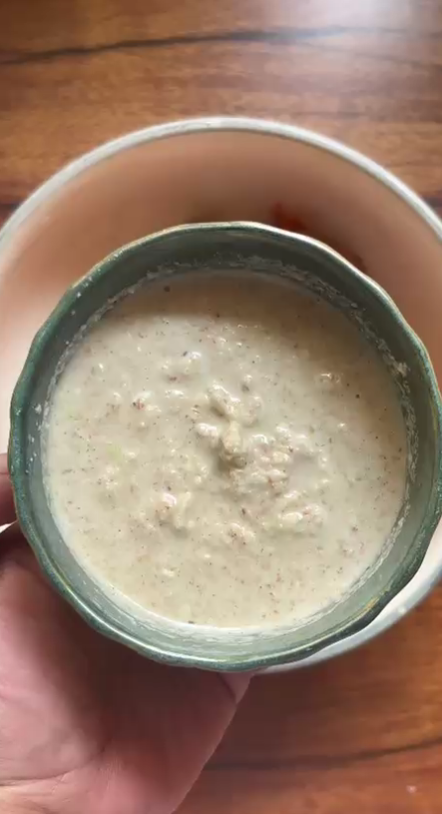
Grind to a rough paste. You want texture, not a smooth sauce. If you blend it completely smooth, it slides off the chicken instead of coating it. A few pulses in a small mixer or a hand grind with a mortar and pestle (imam dasta) gives you the right consistency — coarse enough to stick, fine enough to coat evenly.
What Is the Best Way to Cook This 3 Ingredient Chicken Recipe?
One teaspoon of ghee. Medium-low heat. Patience.
The peanut paste has its own fat content — peanuts are around 49% fat by weight, which means the coating itself contributes to the cooking. The ghee is there to prevent sticking and to help the initial sear, not to be the primary cooking fat. This is why one teaspoon is genuinely enough for a full pan of chicken.
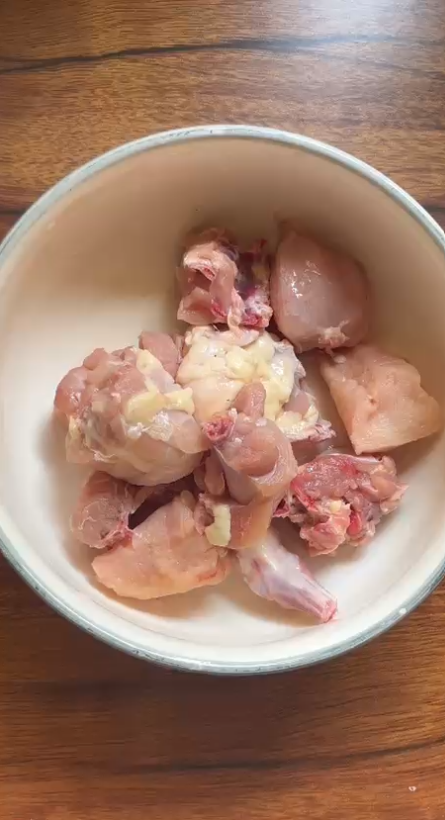
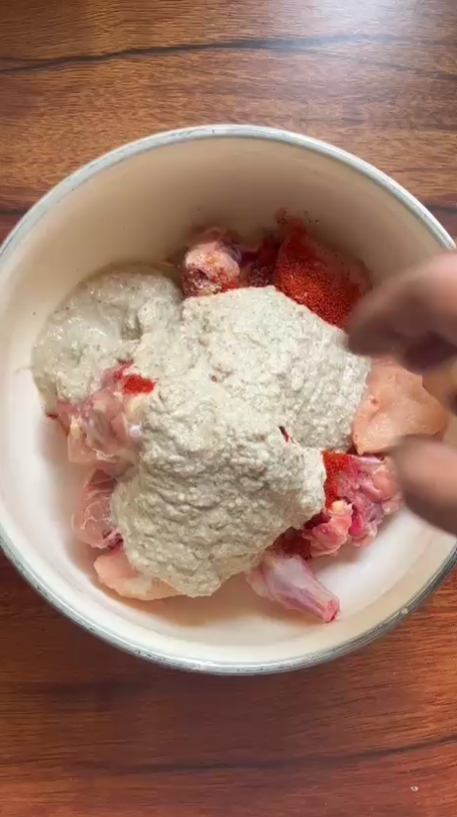
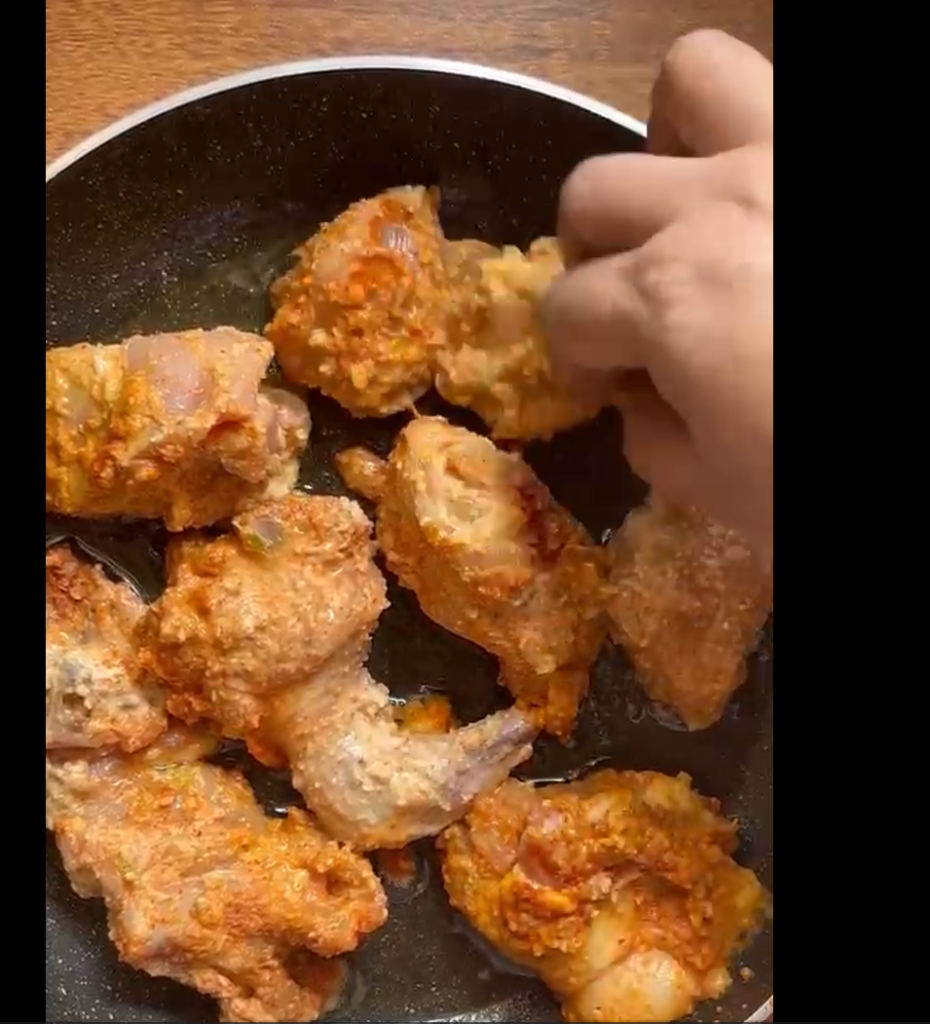
Steps For 3 Ingredient Chicken Recipe
Heat the pan first, then add the ghee. Let it melt and coat the pan. Place the chicken pieces in a single layer — do not stack or overlap. The paste needs direct contact with the pan surface to form the crust that makes this recipe work.
Cook on medium-low for 4 to 5 minutes without moving the chicken. The peanut coating will stick to the pan at first and then release as it cooks — exactly like with the high protein chicken skewers I make in the same way. If you try to move it before it is ready, the coating tears off. Let it sit.
Flip once. Another 3 to 4 minutes on the other side. The chicken should be cooked through — cut the thickest piece to check for no pink and clear juices. The outside should be golden brown with some slightly darker patches where the garlic and peanut have charred. That char is flavour, not burning.
What Do You Eat With This 3 Ingredient Chicken Recipe?
This is a high-protein, low-carbohydrate meal on its own — 35 grams of protein in one serving with no added carbohydrates from the recipe itself.
If you are eating it as a complete meal and want some carbohydrates, it goes well alongside a small portion of plain cooked rice or a dal. My personal go-to is pairing it with moong dal or masoor dal — both are easy on the gut and add a different texture and protein layer to the plate.
It also works as a high-protein component inside a larger meal — serve it with sliced raw cucumber (kheera), a squeeze of lemon, and some hung curd if your gut is having a good day. The cooling curd against the charred peanut chicken is a combination worth trying.
What it does not need: rice, roti, anything elaborate. Three ingredients got you this far. Keep the serving simple.
Can You Use This Recipe for Meal Prep?
Yes, and it holds up better than most chicken preparations.
The peanut coating forms a slight crust during cooking that protects the chicken from drying out in the fridge. Store cooked pieces in an airtight container for up to 2 days. Reheat in a covered non-stick pan on low with the tiniest drop of water — 2 minutes is enough to warm through without making the outside soggy.
You can also prep the paste ahead. The dry-roasted peanut-garlic-chilli paste keeps in the fridge for 3 days in a small jar. Marinate fresh chicken directly from the fridge paste and cook when needed. This is the version I use when I know the week ahead is going to be difficult — paste made Sunday, chicken ready in 20 minutes any night I need it.
The 3 ingredient chicken recipe is also freezer-friendly in the marinated, uncooked form. Coat the chicken in the paste, portion into freezer bags, and freeze flat. Thaw in the fridge overnight and cook the next day. The paste holds through freezing with no change to flavour or texture.
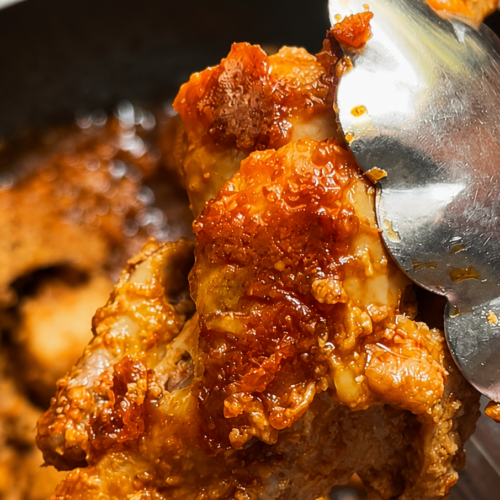
3 Ingredient Chicken Recipe – Peanut, Garlic & Green Chilli
Equipment
- 1 Non Sticky Pan with Lid
- 1 Spatula
- 1 Serving Plate
Ingredients
- 200 g chicken cut into medium pieces
- 1 tbsp raw peanuts moongphali
- 3 –4 garlic cloves lahsun
- 1 –2 green chillies hari mirch — adjust to tolerance
- ¼ tsp salt namak
- 1 tsp ghee for frying
Instructions
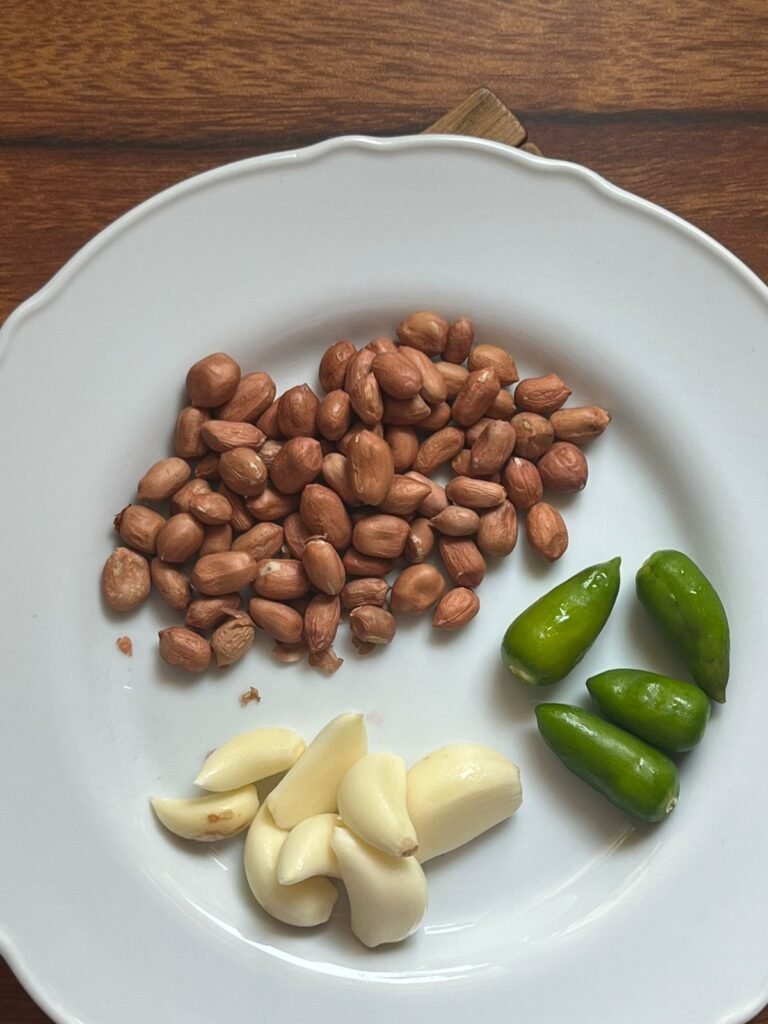
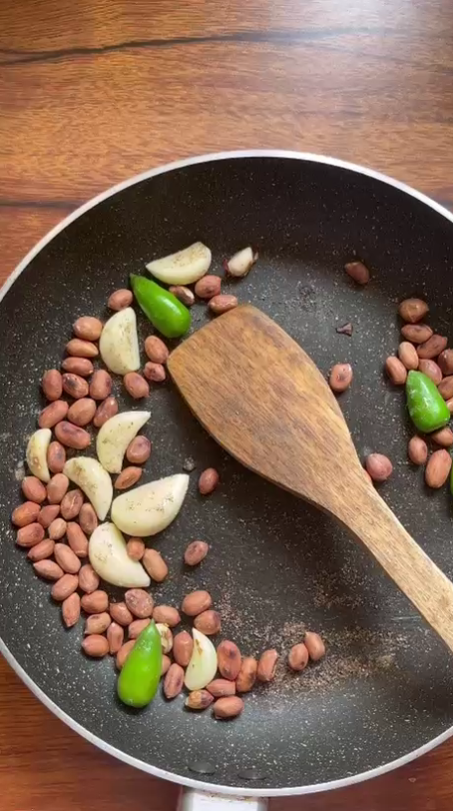
- Dry roast — Heat a small pan on medium, no oil. Add peanuts and roast for 2–3 minutes until the skin blisters and the smell turns toasty. Add garlic cloves for the last 90 seconds. Add green chilli for the final 30 seconds. Remove and cool for 2 minutes.
- Make the paste — Grind roasted peanuts, garlic, and green chilli with salt to a rough, coarse paste. Do not over-blend — texture helps it coat and stick. A mortar and pestle (imam dasta) works well here.
- Marinate — Rub paste thoroughly into chicken pieces. Cover and rest for minimum 30 minutes (1 hour preferred, overnight in fridge is best).
- Fry — Heat a non-stick pan on medium-low. Add ghee and let it coat the pan. Place chicken in a single layer. Do not move for 4–5 minutes until the coating releases naturally and forms a crust.
- Flip once — Cook 3–4 more minutes on the other side until golden-brown with slight char on the edges.
- Check doneness — Cut the thickest piece: no pink inside, juices run clear.
- Serve — With sliced cucumber, a squeeze of lemon, or alongside dal and rice.
Video
Notes
Frequently Asked Questions
Are peanuts safe to eat if you have IBS?
For most people with IBS, yes—in small, controlled amounts. The quantity in this recipe (about 1 tablespoon of peanuts per 200g of chicken) is within the range many people tolerate well. Dry roasting also helps develop flavour while making the ingredients gentler to digest. If you have a peanut allergy, avoid this recipe. If you have IBS without a known peanut sensitivity, try a small portion first and see how your body responds.
Why do you dry roast the ingredients before grinding?
Dry roasting transforms all three ingredients. Peanuts develop a deeper, nuttier flavour as their natural oils are released, garlic becomes sweeter and gentler than when raw, and the green chilli softens as it lightly blisters. Grinding everything raw produces a much flatter flavour. This simple roasting step is what gives this 3-ingredient chicken recipe its rich, complex taste.
Can I make this recipe without a blender or mixer?
Yes. A mortar and pestle (imam dasta) is actually ideal because it creates a coarse paste that clings to the chicken and develops a better char during cooking. A smooth paste tends to slide off. If you don’t have either tool, you can crush the ingredients with the back of a heavy spoon in a sturdy bowl. Aim for a thick, textured paste rather than a smooth liquid.
How is this different from regular peanut chicken curry?
Peanut chicken curry is cooked in a rich sauce made with onions, tomatoes, spices, and liquid. This 3-ingredient chicken recipe is completely different. The peanut mixture forms a dry coating rather than a gravy, and the chicken is pan-fried instead of braised. The result is a crispy, nutty crust with juicy chicken inside, while also being much lighter in calories because it uses no coconut milk and very little oil.
How do I store the peanut garlic paste if I make it in advance?
Store the paste in a small airtight jar in the refrigerator for up to 3 days. You can prepare a larger batch at the start of the week and coat fresh chicken each time before cooking. The paste itself doesn’t freeze well because the texture changes, but marinated uncooked chicken freezes well for up to 2 weeks. Defrost it overnight in the fridge and cook it fresh.
🌿 Love gut-friendly recipes? Add Caloriematterss as your Google Preferred Source so my low-FODMAP, high-protein recipes show up more often for you. Set Caloriematterss as a preferred source →
One Comment