Non-Dairy Curds: 5 Vegan Dahi Options I Tried for My IBS (Honest FODMAP Notes)
📝 Quick Guide
What it is: Five non dairy curds I’ve fermented at home — peanut, almond, coconut, cashew and rice — with honest notes on how each one actually sat with my gut.
Why it works: They’re all lactose-free, so they skip the dairy that leaves me acidic and bloated. The live cultures do the same probiotic job as dairy dahi.
Honest IBS/low-FODMAP note: Dairy-free is not the same as low-FODMAP. Coconut and rice curd are gentlest for me in small amounts. Cashew is high-FODMAP; almond and peanut are moderate. I flag each one below — test small.
Non dairy curds are what got dahi back into my life after my gut stopped tolerating the regular kind. Growing up in India, curd was a daily thing — with khichdi, as chaas, cooling and everywhere. But after my IBS diagnosis in 2023, dairy curd started costing me: gas, bloating, and that heavy, uncomfortable feeling after meals, worse at night. So I stopped forcing it and started fermenting my own plant-based versions instead.
I want to be honest up front, because most posts on this topic get one thing wrong. Dairy-free does not mean FODMAP-free. Some of these nut-based curds are actually moderate or high on FODMAPs, which means “vegan” doesn’t automatically mean “gentle on IBS.” So for each one below I’ll tell you both how it tasted and how it genuinely sat with my gut, including the ones I keep to small portions or occasional use.
Here are the five I’ve made and lived with.
5 Non Dairy Curds
1. Peanut curd — my everyday option
This is the one I make most. Soaked peanuts (moongphali), blended and boiled into a milk, cooled to lukewarm, then fermented with a spoon of vegan curd or a probiotic capsule for 8 to 10 hours. It sets thick and creamy, neutral in flavour, and it’s got real protein, which matters to me.
Honest FODMAP note: peanuts are low-FODMAP in a standard serve, but the amount stacks up if you eat a big bowl. A small portion sits well with me and keeps me full; a large one can feel heavy. It’s my daily option, but a modest daily option.
2. Almond curd — light and slightly sweet
Soaked, peeled almonds (badam) blended with water, boiled gently, cooled, and fermented for 8 to 10 hours. It’s lighter than peanut curd and a little sweet, so I use it more in smoothies or as a soft dessert base than as a savoury side.
Honest FODMAP note: almonds are low-FODMAP only in small amounts — around 10 almonds’ worth. A curd made from a full cup, eaten in quantity, tips into moderate territory. So I treat almond curd as an occasional lighter option, not an all-day one.
3. Coconut curd — my summer favourite
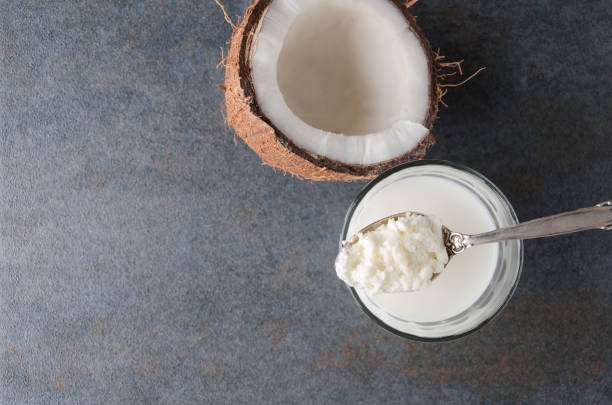
Thick full-fat coconut milk (nariyal doodh), warmed to lukewarm, fermented with a probiotic capsule for around 8 hours. Cooling, easy to digest, and lovely after a spicy meal. I’ve written the full method separately.
Honest FODMAP note: coconut milk is low-FODMAP only in modest amounts, roughly 1/4 cup (60 ml) per serve. It’s one of the gentler ones for me, but still a small-portion food, not a big bowl.
Full recipe: my probiotic coconut curd.
4. Cashew curd — rich, but occasional
Soaked cashews (kaju) blended into a rich cream, boiled, cooled and cultured. The texture is luxurious, which makes it lovely for a dip, raita or dessert on a special occasion.
Honest FODMAP note, and this is an important one: cashews are high-FODMAP. This isn’t a gut-friendly everyday curd — it feels heavy for me if I have it often, and if you’re sensitive to GOS and fructans it may trigger you. I make it rarely, in small amounts, and I’d skip it entirely during a flare.
5. Rice curd — the budget, gut-gentle one
The old-school one. Cooked rice left in a clay pot with extra water overnight to ferment, then mixed with a little rock salt (sendha namak) and grated ginger the next day, served cool like curd rice.
Honest FODMAP note: plain rice is low-FODMAP, which makes fermented rice water curd one of the gentler options here for my gut, and it’s the cheapest by far. It’s mild and light — a good one during a sensitive phase.
Why do I use non dairy curds instead of dairy dahi?
The honest answer is simple: dairy curd triggers me and these don’t, or trigger me less. Cutting lactose removed the acidity and the loose stools I used to get, especially at night. I’m not anti-dairy as a rule — plenty of people tolerate it fine, and if you do, there’s no reason to switch. But my gut said no, so I listened.
What I won’t claim is that these fix hormones, clear acne or heal anything. That’s where a lot of vegan-curd posts overreach. What they do for me is give me a lactose-free, probiotic food I can actually enjoy. That’s plenty.
How do I eat non-dairy curds day to day?
I use them more or less like regular dahi, in modest portions:
- A small peanut curd smoothie with banana in the morning
- Coconut curd raita alongside khichdi or poha at lunch
- Rice curd with a light sabzi in the evening during a gentle phase
- Almond curd with a little cinnamon as an occasional soft dessert
You don’t need to overhaul your diet. Swapping non-dairy curd into the recipes you already make is enough.
How do I store non dairy curds?
In a clean glass jar (not plastic), refrigerated straight after fermentation, used within three to four days. Stir before use, and always use a clean, dry spoon. Because these are fresh and preservative-free, they don’t keep like a shop pot — if one smells sharp or off rather than pleasantly tangy, bin it.
Which non dairy curd should you start with?
If you have IBS and want the gentlest entry point, I’d start with coconut or rice curd — both are low-FODMAP in normal portions and easy to make. Peanut curd is my everyday protein option if peanuts suit you. I’d leave cashew for occasional treats only, and keep almond light. Start with one, in a small portion, and see how your own gut responds before making it a habit.
If you want to go deeper, here’s my probiotic coconut curd recipe and my gut-friendly kitchen essentials, both of which pair with everything above.
Healthy Palak Paneer , Low-FODMAP Black Sesame Spread
Frequently Asked Questions
What are non-dairy curds?
Non-dairy curds are dahi-like fermented foods made from plant milks such as peanut, almond, coconut, cashew or rice, set with a probiotic starter or culture instead of dairy. They are lactose-free, which makes them easier for people who react to regular curd.
How do I make non-dairy curds at home?
Blend and boil your chosen base into a milk, cool it to just lukewarm, stir in a dairy-free probiotic capsule or a spoon of vegan curd, cover, and ferment somewhere warm for 8 to 16 hours until it sets. Then refrigerate straight away.
Are non-dairy curds low-FODMAP and good for IBS?
It depends on the base. Coconut and rice curd are low-FODMAP in normal portions and gentlest for me. Almond and peanut are moderate, so keep portions small. Cashew is high-FODMAP and best kept occasional. Dairy-free does not automatically mean IBS-friendly.
Which non-dairy curd is best for beginners?
Coconut or rice curd are the easiest to make and the gentlest on the gut, so they are a good starting point. Peanut curd is a good everyday option if peanuts suit you and you keep the portion modest.
How long do homemade non-dairy curds last?
About three to four days in a clean glass jar in the fridge. Use a dry, clean spoon each time, and throw it out if it smells sharp or off rather than pleasantly tangy.
🌿 Love gut-friendly recipes? Add Caloriematterss as your Google Preferred Source so my low-FODMAP, high-protein recipes show up more often for you. Set Caloriematterss as a preferred source →