Peanut Pumpkin Seed Butter-Why Every Woman Over 35 Should Be Eating It
📌 Quick Guide Of Peanut Pumpkin Seed Butter
What it is: Dry-roasted peanuts (skins off) and pumpkin seeds blended into a smooth butter with just salt-no oil, no sugar, no water
Why the pumpkin seeds: One ounce delivers about 150mg of magnesium-the highest of any common food, per the NIH. Women need 310–320mg a day and most of us fall short
Gut-friendly: Yes, at 2 tbsp-both are low FODMAP in this portion, and roasting makes them easier to digest
Keeps: 3–4 weeks in the fridge | Time: 20 minutes
Calories: ~178 kcal | Protein: ~8.6g (per 2 tbsp)
Peanut pumpkin seed butter started as a way to use up a bag of pumpkin seeds, and turned into the thing I now make every few weeks without thinking about it.
I’m 42. Somewhere in my late thirties I started paying attention to things I’d ignored for years-magnesium, iron, how tired I actually was by 4pm. Not in a dramatic way. Just noticing that the small stuff had started to matter more than it used to.
Pumpkin seeds kept coming up when I looked into it, and the numbers turned out to be better than I expected. But I was never going to sit and eat a bowl of pumpkin seeds every day. That’s not a habit that survives a busy week.
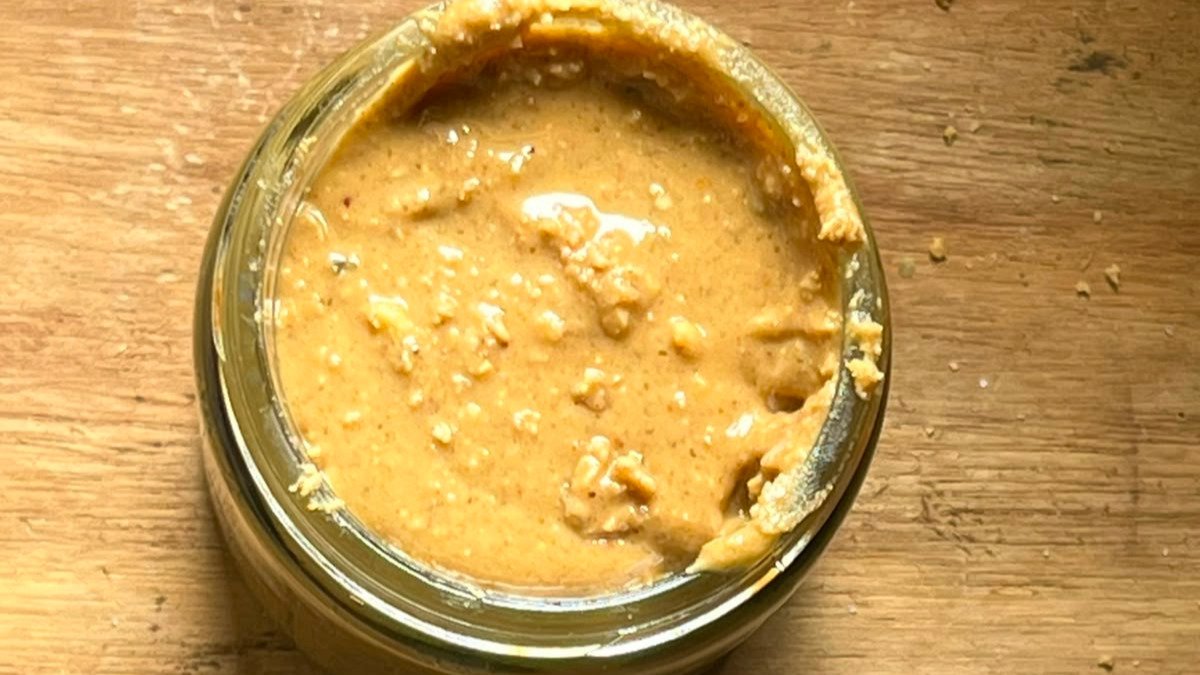
Blending them into peanut butter, though-that I’ll eat. Every day, on toast, off a spoon, stirred into things. So that’s what this is: dry-roasted peanuts and pumpkin seeds, blended down with a pinch of salt until the oils release and it turns into a proper smooth butter. No oil added, no sugar, no water. Just two things and salt.
It’s better than the jar from the shop on every count-nutritionally, in flavour, and in what’s not in it.
Table of Contents
Why Should You Mix Pumpkin Seeds Into Your Peanut Butter?
Pumpkin seeds add magnesium, zinc and iron-minerals peanuts have very little of. They also add protein and a deeper, earthier flavour that stops peanut butter tasting so one-note.
Here’s what each one is actually doing, with the real numbers.
Magnesium. Pumpkin seeds deliver approximately 150 mg of magnesium per ounce-the highest of common foods, followed by chia seeds at 111 mg and almonds at 80 mg per ounce, according to the NIH Office of Dietary Supplements magnesium fact sheet. Peanuts don’t come close. And magnesium isn’t a minor nutrient , it’s a cofactor in more than 300 enzyme that regulate everything from protein synthesis and muscle and nerve function to blood glucose control and blood pressure regulation.
Zinc. Pumpkin seeds are high in it; peanuts barely register. Zinc is involved in immune function and wound healing-and it supports gut lining repair, which matters if your gut is sensitive.
Iron. Women lose iron every month for most of their adult lives, and this is not a small issue. Iron deficiency is one of the most common nutritional problems in the world and disproportionately affects women and children. Pumpkin seeds contribute meaningfully; peanuts don’t.
More protein. Pumpkin seeds are about 30% protein by weight- higher than peanuts. Blending them in lifts the protein of this peanut pumpkin seed butter above what plain peanut butter gives you at the same serving.
Better taste. This is the part you notice first. Plain peanut butter is one flavour on repeat-sweet, salty, peanut. Pumpkin seeds add something earthy and slightly green underneath it. It’s more interesting, and it doesn’t get boring the way plain peanut butter does after a week.
So the pumpkin seeds aren’t a health garnish. They change what’s in the jar and what it tastes like at the same time.
Is Peanut Pumpkin Seed Butter Good for Women Over 35?
Yes — magnesium and iron are two of the nutrients women most commonly fall short on, and this is an easy daily way to get more of both. Two tablespoons on toast is a habit that actually sticks.
The numbers make the case better than I can. The RDA for women aged 31–50 is 320mg a day (310mg for 19-30). And the NIH’s analysis of national survey data found that 48% of Americans take in less magnesium from food and drink than they need. Nearly half. That’s not a fringe problem.
Now the honest part. A spoon of nut butter is not a supplement and it will not fix a real deficiency. If you’re properly low on iron or magnesium, that’s a conversation for your doctor and a blood test-not a jar in your fridge.
The NIH is clear that extra magnesium from food carries no risk for healthy people because the kidneys clear what you don’t need-which is exactly why food is the sensible place to start rather than high-dose pills.
The everyday version of this is what matters. Most of us aren’t deficient; we’re just consistently a bit under. And the fix for “a bit under” isn’t a dramatic intervention- it’s small things you’ll actually keep doing. That’s the whole case for this peanut pumpkin seed butter.
You were probably going to eat peanut butter anyway. Making it yourself with pumpkin seeds in it means the same habit now brings magnesium, zinc, iron and more protein than it did before, for the same effort.
That’s the sort of change that survives a bad week, which is the only kind that counts.
Is Peanut Pumpkin Seed Butter Safe for IBS?
Yes for most people, at a serving of around 2 tablespoons-both peanuts and pumpkin seeds are low FODMAP in that portion, and roasting them first makes them easier to digest. The portion is what matters, not the ingredients.
Peanuts are technically legumes and do carry some FODMAPs, but at two tablespoons of butter the amount is moderate and fine for most people with IBS. What causes trouble is eating a big handful of peanuts in one go, not a measured spread on toast. Pumpkin seeds are low FODMAP and one of the gentler seeds for a sensitive gut-they also supply dietary fiber, which helps with bowel transit and keeps you fuller.
Dry roasting helps too. Roasting breaks down some of the harder-to-digest compounds in both nuts and seeds, which is part of why roasted sits easier than raw for a lot of people. I roast them anyway for flavour, but the digestion side is a real bonus.
Two tablespoons is the number I stick to-for gut comfort and because nut butter is calorie-dense. If you have a peanut allergy this obviously isn’t for you. If you have IBS but no peanut reaction, start at one tablespoon and see how you feel before it becomes a daily thing.
The same measured-portion logic runs through the black sesame seeds laddu-seeds in a sensible amount, doing real work without overloading the gut.
No oil. You genuinely don’t need it. As the peanuts and pumpkin seeds break down in the blender, they release their own natural oils-that’s what turns dry crumb into smooth butter. Shop brands add palm oil to cut costs and stop separation, not because the butter requires it. Give it time and the nuts do it themselves.
No sugar. Roasting brings out a natural mild sweetness in both the peanuts and the seeds. Added sugar is unnecessary, and for a sensitive gut it’s an irritant worth skipping. If you want it a touch sweeter and smoother, a small drizzle of honey (shahad) at the end is the right move.
No water. This one’s about shelf life. Water in a nut butter creates the conditions for mould and cuts the keeping time from weeks to days. It also makes the butter seize and turn grainy. The natural oils give all the moisture this peanut pumpkin seed butter needs.
Should You Remove the Peanut Skins?
Yes-the thin red-brown skins are bitter and tannic, and that bitterness concentrates once you blend a whole batch into butter. Two minutes of rubbing saves the flavour.
In a handful of peanuts you’d never notice the skins. But blended into butter, where you’re concentrating a whole cup of them, the bitterness builds and you can taste it. Removing them gives a cleaner, smoother result.
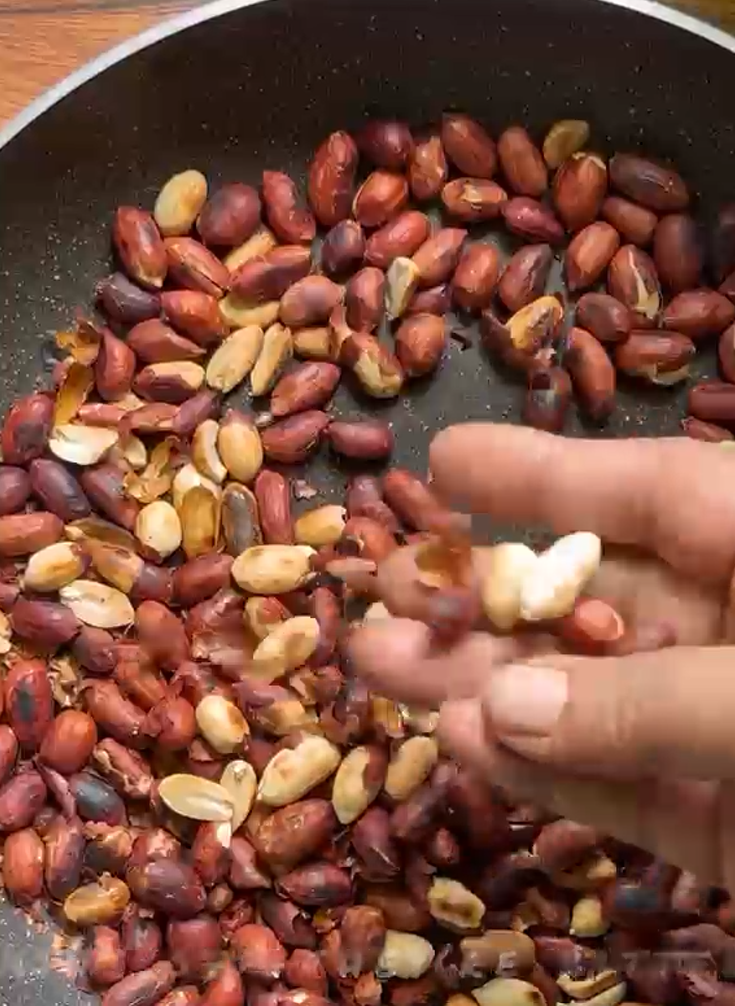
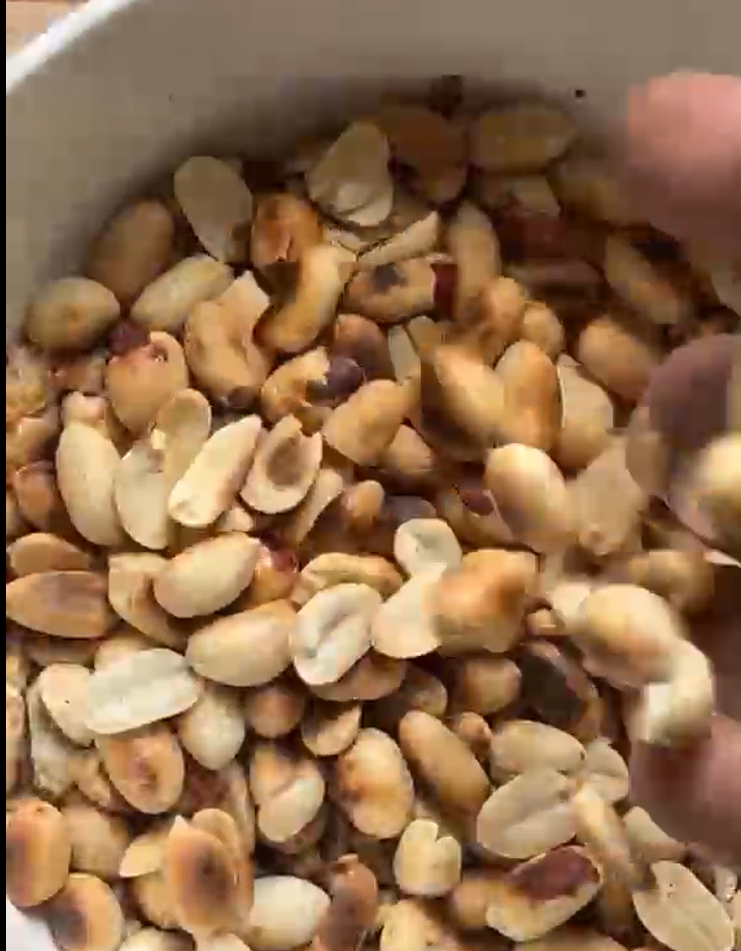
The easy way: after roasting, let the peanuts cool for a couple of minutes, then rub them between your palms or inside a clean kitchen towel. The roasting loosens the skins and they flake straight off. You don’t need to catch every last one-getting most of them is enough.
Pumpkin seeds have no skin to remove. They go in straight after roasting.
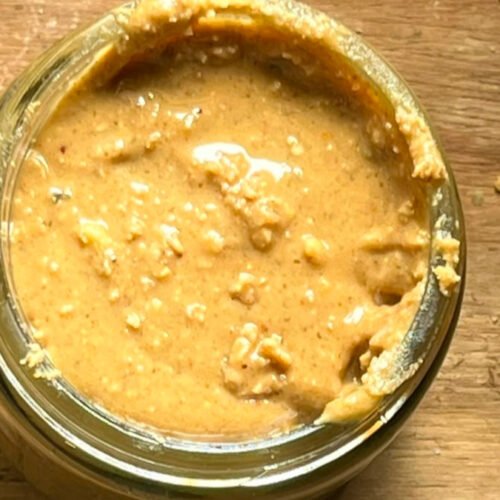
Peanut Pumpkin Seed Butter – No Oil, No Sugar

Equipment
- 1 pan
- 1 Mixer Grinder
- 1 Glass bottle
Ingredients
- 1 cup about 146g / 5.1 oz peanuts (moongphali), raw
- ½ cup about 65g / 2.3 oz pumpkin seeds (kaddoo ke beej), raw
- ¼ –½ tsp salt namak, to taste
- Optional: a small drizzle of honey shahad for a smoother, slightly sweeter butter
Instructions
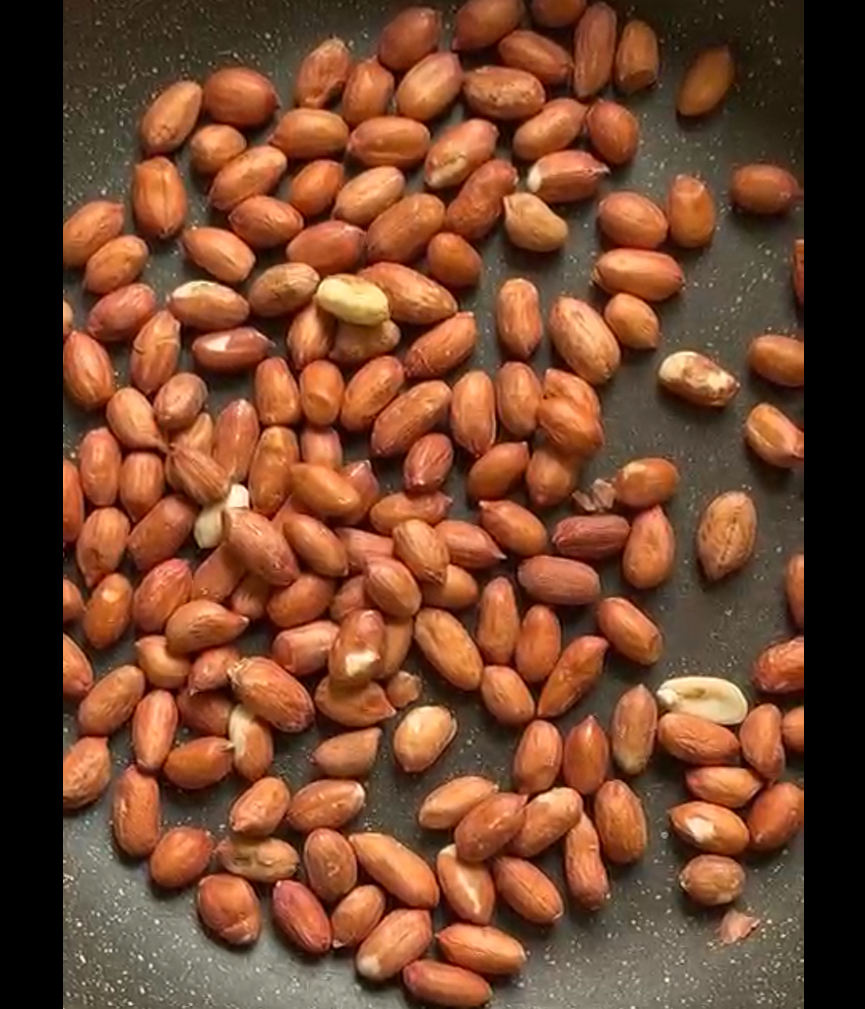
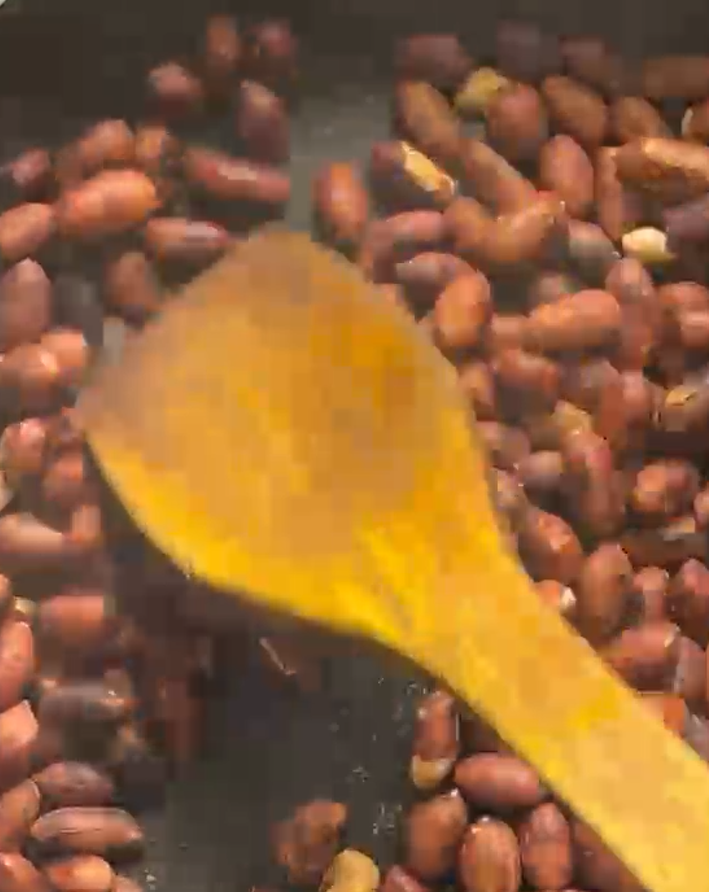
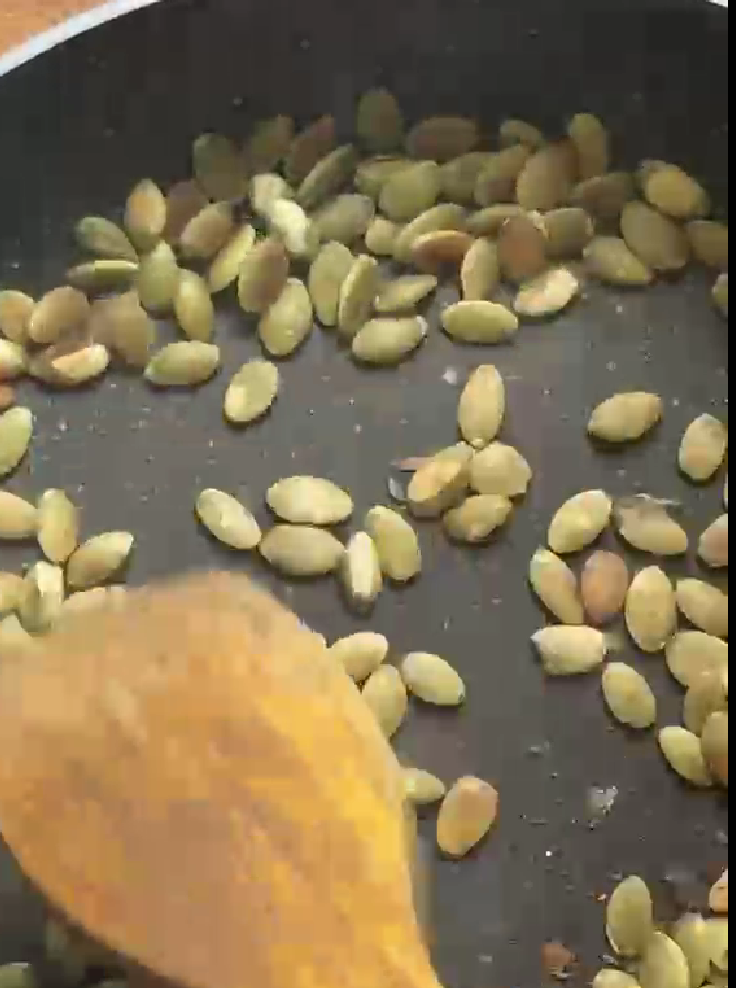
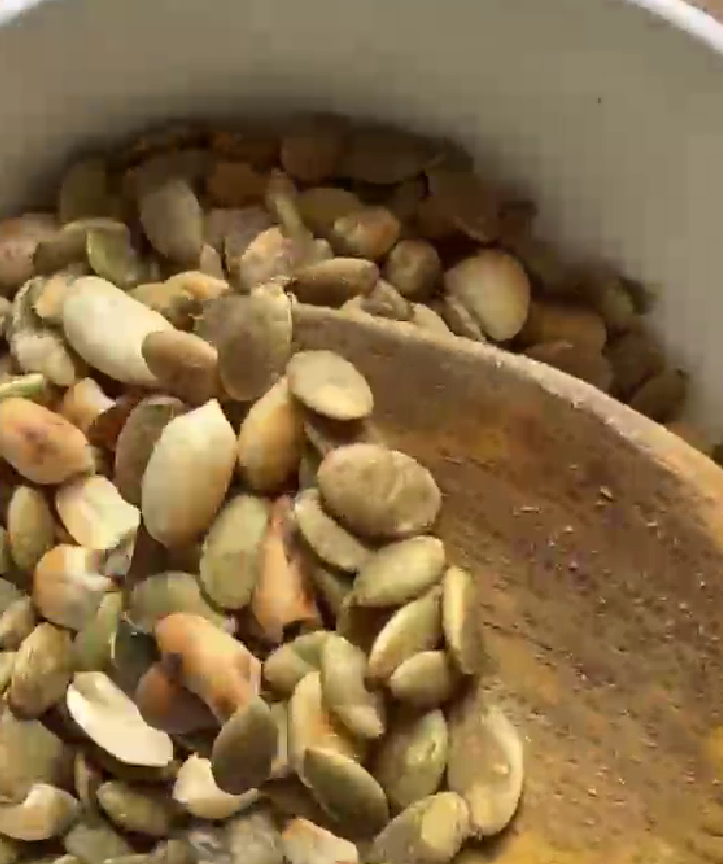
- Roast the peanuts -Dry pan, medium heat, no oil. 5–7 minutes, stirring often, until nutty-smelling and the skins darken and loosen. Remove.
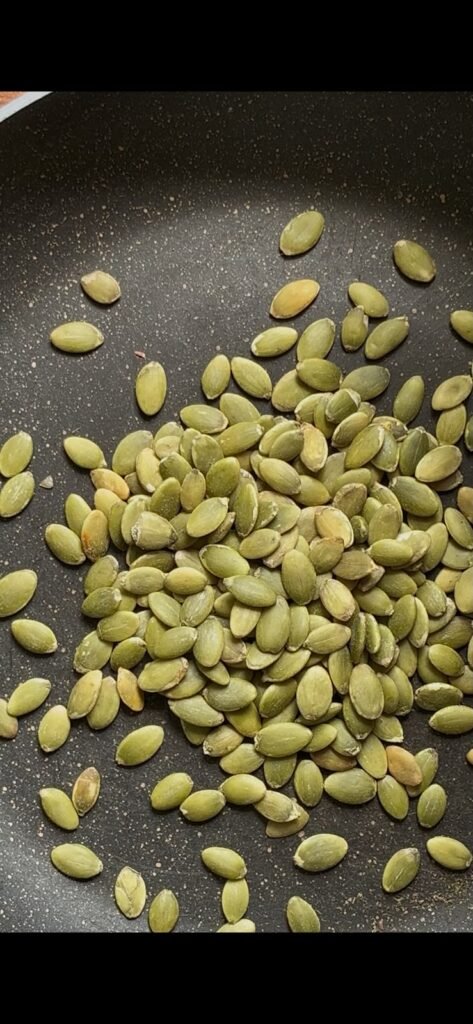
- Roast the pumpkin seeds-Same pan, 3–4 minutes until slightly puffed and a shade darker. Watch closely-they pop and burn fast, and over-toasting damages the fatty acids.
- Remove peanut skins-Cool slightly, rub between palms or in a clean kitchen towel. Discard the skins.
- Cool completely-Blending warm makes the butter greasy instead of smooth.
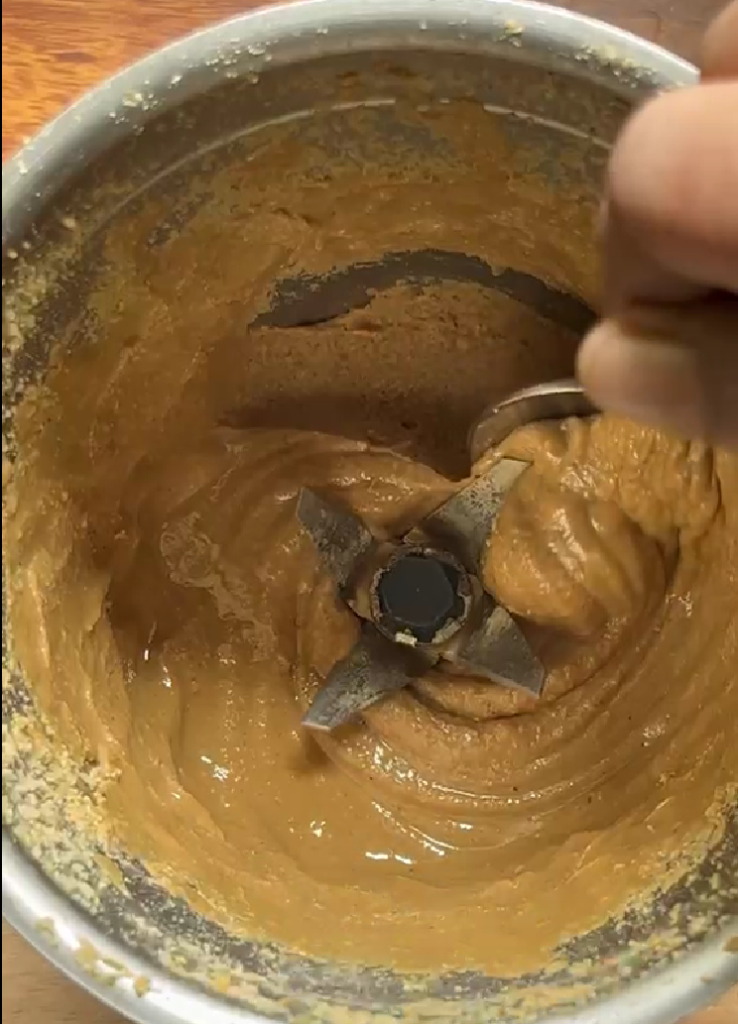
- Blend-Peanuts, pumpkin seeds and salt into a strong blender or food processor. Crumb →clumpy ball → smooth glossy butter. Scrape the sides as needed. Be patient-the smoothness comes from time, not oil.
- Optional honey-Drizzle in a little at the end and blend again for a smoother, sweeter butter. Never add water.
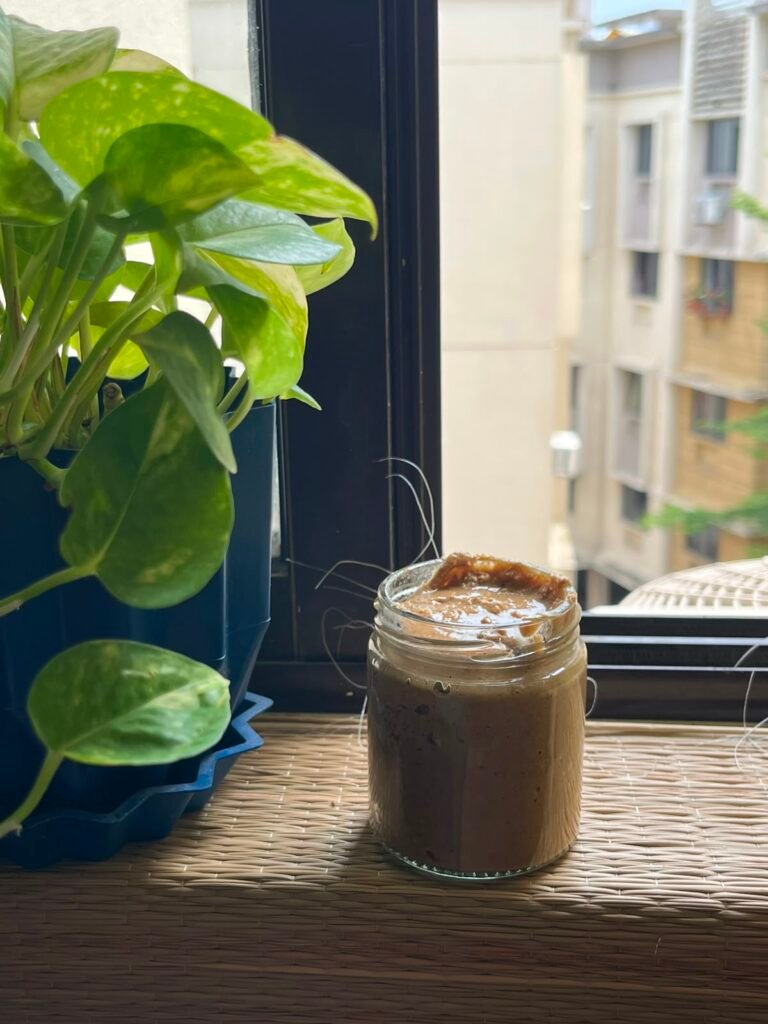
- Store-Clean dry glass jar, fridge, 3–4 weeks. Stir back in if oil rises
Video
Notes
How Do You Make Peanut Pumpkin Seed Butter?
Dry roast the peanuts and pumpkin seeds separately, rub the peanut skins off, cool completely, then blend with salt until the oils release and it turns smooth. The only real skill is patience at the blender.
Roast. Dry pan, medium heat, no oil. Peanuts first-5 to 7 minutes, stirring often, until they smell nutty and the skins darken and loosen. Take them out. Then the pumpkin seeds in the same pan, 3 to 4 minutes until they puff slightly and darken a shade. Watch them; they pop and burn fast. Avoid over-toasting-it helps preserve the fatty acids.
Skins off. Cool the peanuts a couple of minutes, rub them between your palms or in a towel, discard the skins.
Cool completely. Both need to be fully cool before blending. Warm nuts release their oils too fast and you end up with something greasy instead of smooth.
Blend. Peanuts, pumpkin seeds, and a pinch of salt into a strong blender or food processor. It’ll look like dry crumb-keep going. Then it clumps into a ball-keep going. Then the oils release and it turns glossy and smooth. A few minutes, a few stops to scrape the sides. The smoothness comes from time, not from added oil.
Optional honey. Want it smoother and slightly sweet? A small drizzle of honey (shahad) at the end, blend again. Never water, at any stage.
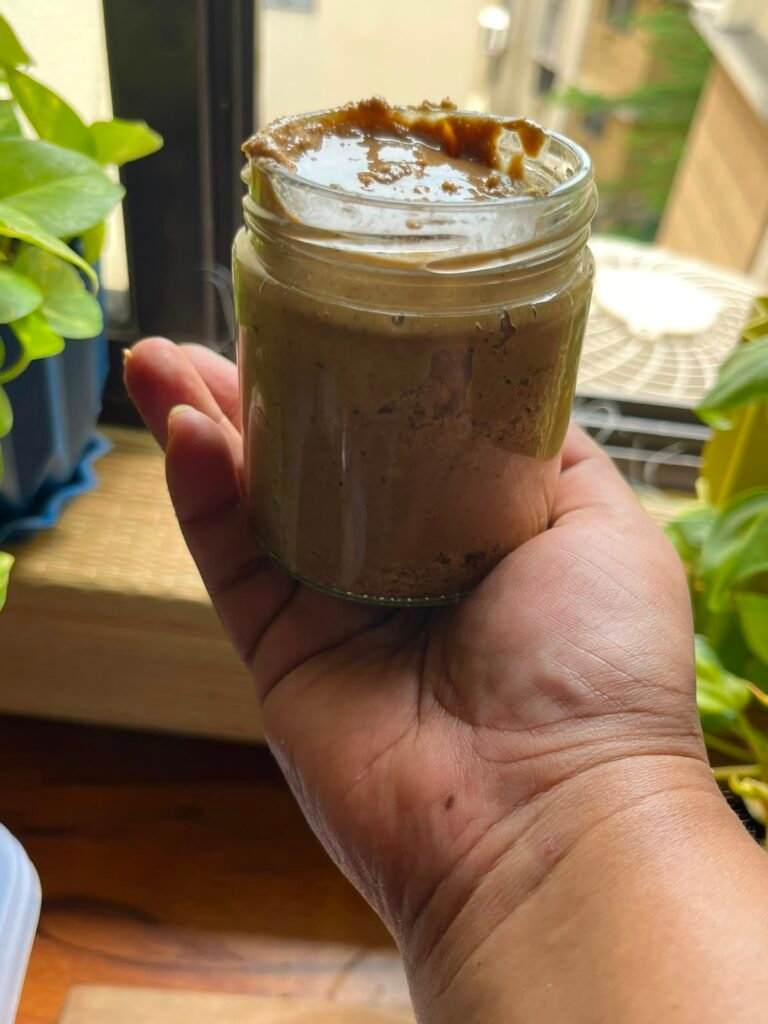
Store. Clean, dry glass jar, in the fridge. 3 to 4 weeks. Oil may rise to the top over time-stir it back in.
How Do You Eat It?
Toast is the obvious one. But it’s more useful than that.
A spoonful stirred into the blueberry chia pudding or into oats. Spread on apple or banana slices for a fast high-protein snack. A spoon in a smoothie. Folded into the quinoa chocolate cookies in place of shop-bought peanut butter-it works beautifully there.
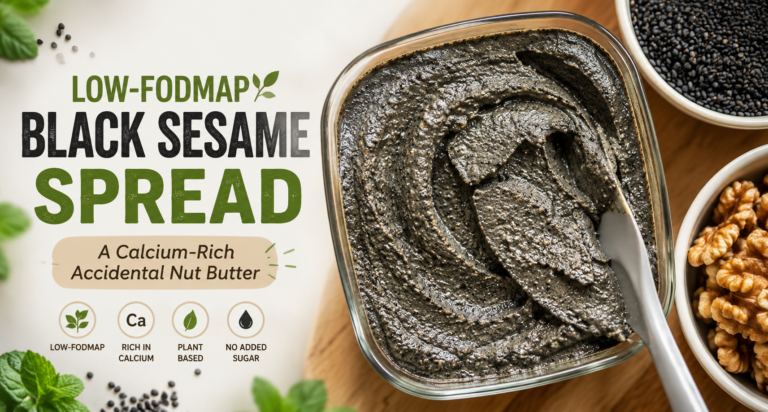
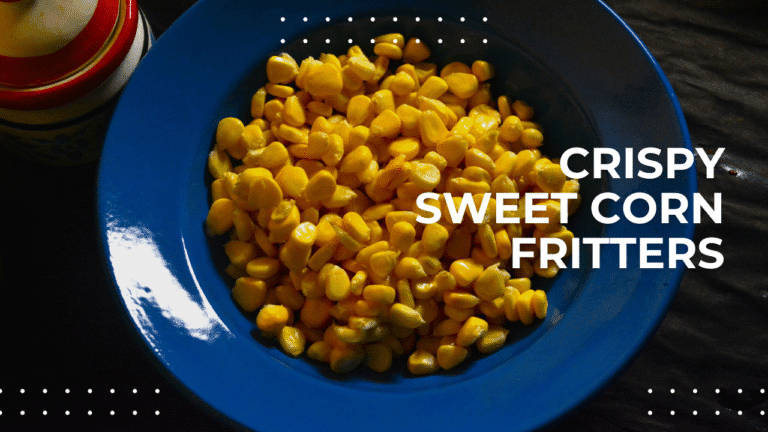
Or straight off the spoon standing at the fridge, which is honestly where a fair amount of mine goes. You can Also Try Low-FODMAP Black Sesame Spread and Sweet Corn Fritters Recipe
Sources
For anyone who wants to read the research directly:
- NIH Office of Dietary Supplements – Magnesium Fact Sheet -the authoritative source on magnesium RDAs, food sources, and function
- Harvard T.H. Chan School of Public Health – Magnesium-RDA figures and the evidence on magnesium and bone health
- MedlinePlus – Magnesium in diet– a plain-language overview from the US National Library of Medicine
Frequently Asked Questions
Why should you mix pumpkin seeds into peanut butter?
Pumpkin seeds add magnesium, zinc and iron — minerals peanuts have very little of. The NIH lists one roasted ounce of pumpkin seeds at 156mg of magnesium — 37% of your daily value, and the highest of any common food. Two tablespoons of peanut butter gives 49mg by comparison. The seeds also add protein and an earthy depth that stops peanut butter tasting one-note.
How much magnesium do women actually need?
The RDA is 320mg a day for women aged 31–50, and 310mg for women aged 19–30. NIH analysis of national survey data found 48% of Americans take in less magnesium from food and drink than they need — close to half. Magnesium is a cofactor in more than 300 enzyme systems, covering muscle and nerve function, blood glucose control and blood pressure. Absorption also drops as we get older.
Is peanut pumpkin seed butter safe for IBS?
Yes for most people, at a serving of around 2 tablespoons — both peanuts and pumpkin seeds are low FODMAP in that portion. Trouble usually comes from eating a large handful of peanuts at once, not a measured spread. Dry roasting also breaks down some harder-to-digest compounds. Start at 1 tablespoon if you’re unsure. Not suitable with a peanut allergy.
Do you really not need to add any oil?
No oil is needed — the peanuts and pumpkin seeds release their own natural oils as they blend, which is what turns dry crumb into smooth butter. Shop brands add palm oil to cut costs and stop separation, not because the butter requires it. The trade-off is patience: blend for several minutes, scraping the sides, until the oils release fully.
How long does homemade peanut pumpkin seed butter last?
3 to 4 weeks in a clean, dry glass jar in the fridge. With no water and no preservatives, keeping moisture out is what protects it — always use a clean, dry spoon. The oils may rise to the top over time, which is normal; just stir back in. Discard if it ever smells sour or rancid rather than nutty.
🌿 Love gut-friendly recipes? Add Caloriematterss as your Google Preferred Source so my low-FODMAP, high-protein recipes show up more often for you. Set Caloriematterss as a preferred source →