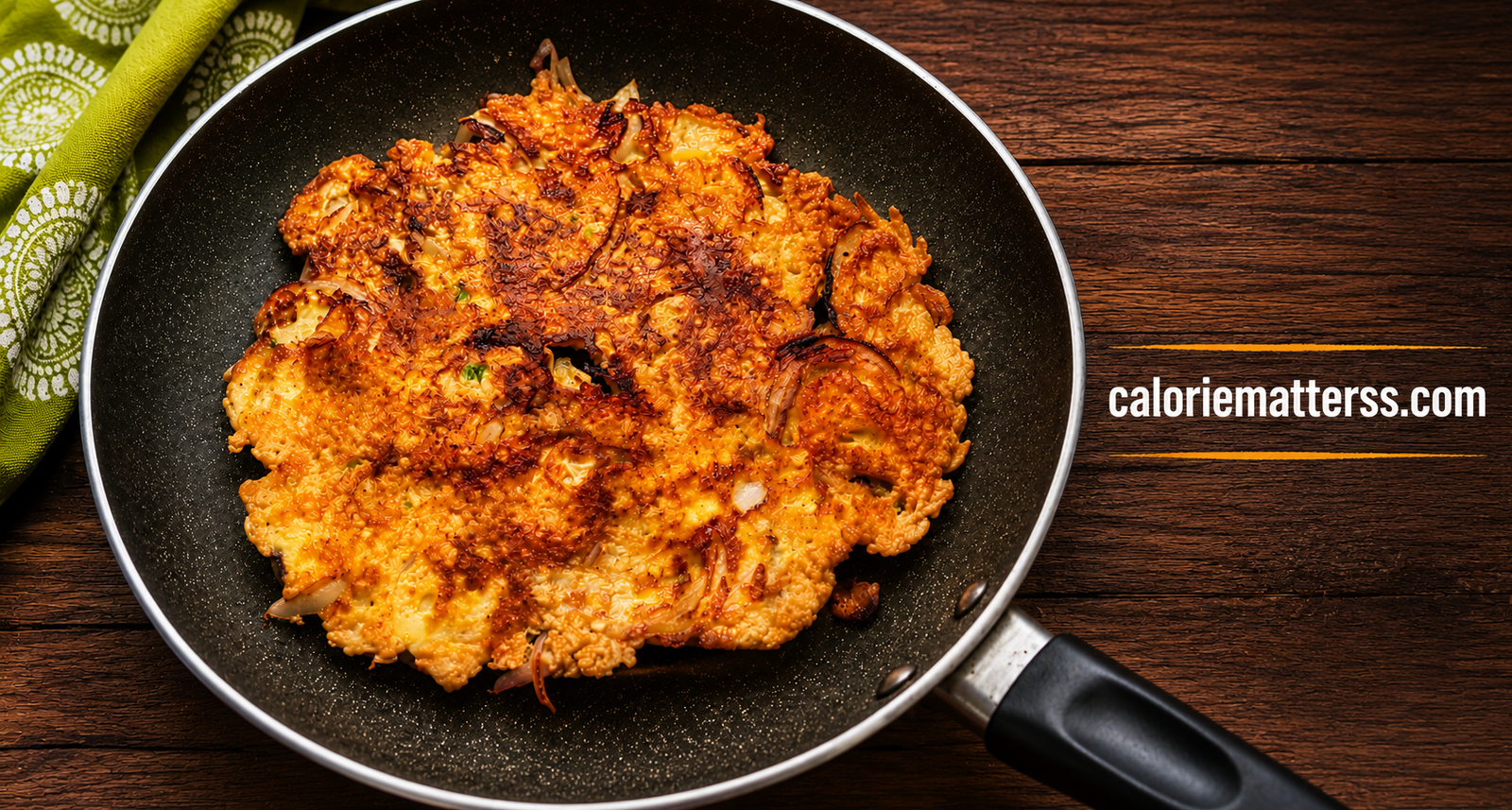
Gluten Free High Protein Oats Chilla Breakfast – 2 Eggs, IBS-Friendly & Ready in 10 Minutes
📌Quick Guide
What it is: Rolled oats and 2 eggs whisked into a batter with half a sliced onion and green chilli — pan-fried on 1 tsp olive oil into a thick, savoury chilla served with hung curd and green chutney
Why it works: Oats bring fibre and slow-release carbohydrates; eggs bring complete protein — together they keep you full for 4 to 5 hours without a blood sugar crash
IBS-friendly: Yes — no maida, no gluten, no refined carbohydrate. Oats are one of the most gut-gentle grains for IBS when used in controlled amounts
Cook time: 10 minutes
Calories: ~327 kcal | Protein: ~18.6g (chilla only) | ~22.4g with hung curd
The mornings I skip breakfast are always the mornings my IBS is worst by noon.
I figured this out slowly after my 2023 diagnosis. My dietitian kept asking what I was eating for breakfast and I kept saying “nothing much” or “just tea” — because before the diagnosis, breakfast felt optional. After it, I understood what skipping breakfast actually does: blood sugar drops, cortisol rises to compensate, the gut gets the cortisol signal and starts overreacting. By 11am I was hungry, irritable, and bloated from nothing.
The problem was I did not want to stand at the stove for 30 minutes making something complicated before 8am. I needed something fast, filling, and genuinely good for the gut — not just technically edible.
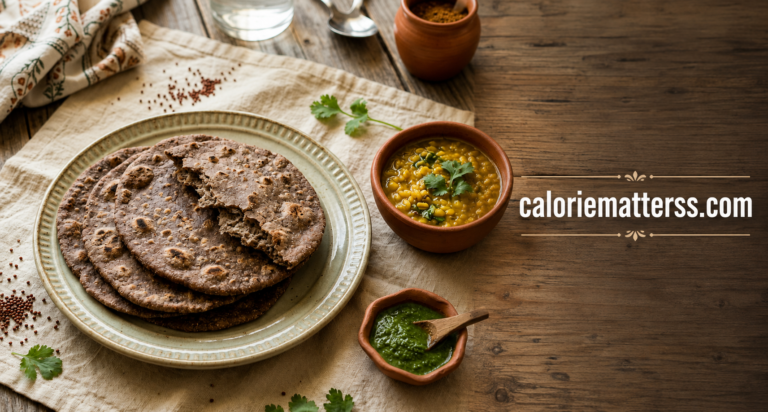
This gluten free high protein oats chilla takes ten minutes from start to plate. Rolled oats (jaie) whisked with two eggs, half a small onion, one green chilli, salt. Cooked on one teaspoon of olive oil in a non-stick pan. Served with hung curd and green chutney — dhania (coriander leaf) and hari mirch paste mixed into curd.
18.6 grams of protein. Nearly 4 grams of fibre. No maida, no gluten, no refined anything. It keeps me full until well past lunch without a single crash in between. This gluten free high protein oats chilla has been my default weekday breakfast for months and I have not looked for anything to replace it.
Table of Contents
Is Oats Chilla Actually Good for IBS?
For most people with IBS, yes — and oats specifically are one of the few grains that nutritionists and gastroenterologists tend to agree on for gut-sensitive individuals.
The reason comes down to the type of fibre oats contain. Rolled oats (jaie) are rich in beta-glucan, a soluble fibre that dissolves in water and forms a gel-like substance in the digestive tract. Soluble fibre does not ferment rapidly the way insoluble fibre does — it moves through the gut slowly, feeds beneficial bacteria gradually, and does not produce the rapid gas and bloating that high-insoluble-fibre foods can cause. For an IBS gut that is reactive to fermentation, soluble fibre from oats is considerably gentler than the insoluble fibre from wheat bran or some vegetables.
The quantity matters. A full bowl of porridge made from two cups of oats is a large fibre load that some IBS stomachs struggle with. One-third of a cup of rolled oats in a chilla is a controlled, modest amount — enough to deliver the satiety and gut benefits of beta-glucan without overwhelming the digestive system.
Eggs add complete protein with all nine essential amino acids and no fibre burden at all — they are one of the most easily digested proteins available. My dietitian specifically recommended eggs as a reliable IBS-safe breakfast protein when I was rebuilding my diet after diagnosis. They cause no fermentation, no gas, and no gut motility spike.
The only ingredient to personalise is the green chilli. Half a chilli or a small one is manageable for most people with IBS. On a bad gut day, skip it entirely — the chilla is complete without it.
Why Is This Oats Chilla Gluten Free?
Traditional chilla (also spelled cheela) is made with besan (chickpea flour) or a combination of flours. This version uses only rolled oats and eggs as the base — no besan, no wheat flour, no maida.
Rolled oats are naturally gluten-free as a grain. The important caveat is cross-contamination: most commercial oats in India are processed in facilities that also handle wheat, which means trace amounts of gluten can be present. If you have coeliac disease or a serious gluten intolerance, look for oats that are specifically labelled certified gluten-free. For people with IBS who are not coeliac but find gluten-containing foods harder to digest, standard rolled oats are typically fine — the gluten in question is from contamination rather than the oat grain itself.
What makes this gluten free high protein oats chilla genuinely easy on the gut is not just the absence of gluten but the absence of refined carbohydrate entirely. Maida-based chillas or parathas cause a rapid blood sugar spike followed by a crash — and blood sugar crashes trigger cortisol, which triggers gut reactivity. Oats release energy slowly. The blood sugar curve after eating this chilla is flat compared to a maida-based breakfast, which means no cortisol spike and no mid-morning gut flare.
What Does Each Ingredient Do in This Oats Chilla?
How Do Rolled Oats (Jaie) Work as a Chilla Base?
Oats replace flour in this recipe completely — and they do it better than most people expect. When rolled oats are soaked briefly in the egg mixture and left to rest for 2 to 3 minutes, the beta-glucan absorbs the liquid and the mixture thickens into a pourable batter. The cooked chilla holds together, has a slightly chewy texture that is more satisfying than a thin crepe, and crisps lightly at the edges in the pan.
Rolled oats work better than instant oats for this recipe. Instant oats are more finely processed and become too mushy in the batter — the chilla turns dense and does not hold its shape as cleanly. Steel-cut oats are too coarse and need significantly more soaking time. Rolled oats sit at the right point between the two: enough texture to give the chilla structure, fine enough to blend into a cohesive batter.
One-third of a cup — approximately 30g — is the right quantity for one chilla made with two eggs. More oats than this makes the batter too thick to spread in the pan and the centre does not cook through properly. Less than this and the chilla loses structure and tears when you try to flip it.
Why Two Eggs Instead of One?
Because one egg and one-third cup of oats does not give you enough batter for a proper chilla — the result is too thin, spreads too far in the pan, and the protein contribution drops to around 9 grams, which is not enough to sustain you through the morning.
Two eggs in this gluten free high protein oats chilla give you 13 grams of protein from the eggs alone, plus the 5 grams from the oats, for a total of 18.6 grams in the chilla itself. Add the hung curd on the side and you are at 22.4 grams of protein from a breakfast that took ten minutes. That is a meaningful protein hit for a morning meal.
Eggs also bind the oat batter — the lecithin in egg yolks acts as an emulsifier that holds the batter together and gives the cooked chilla a slightly custardy interior rather than a dry, crumbly texture. Both yolk and white matter here. Using only egg whites reduces both the binding quality and the nutritional value.
Does Onion Belong in an IBS-Friendly Chilla?
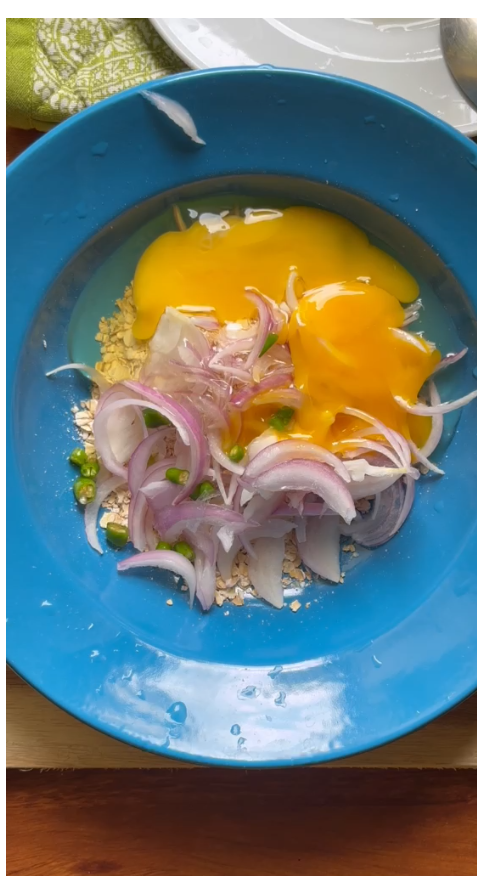
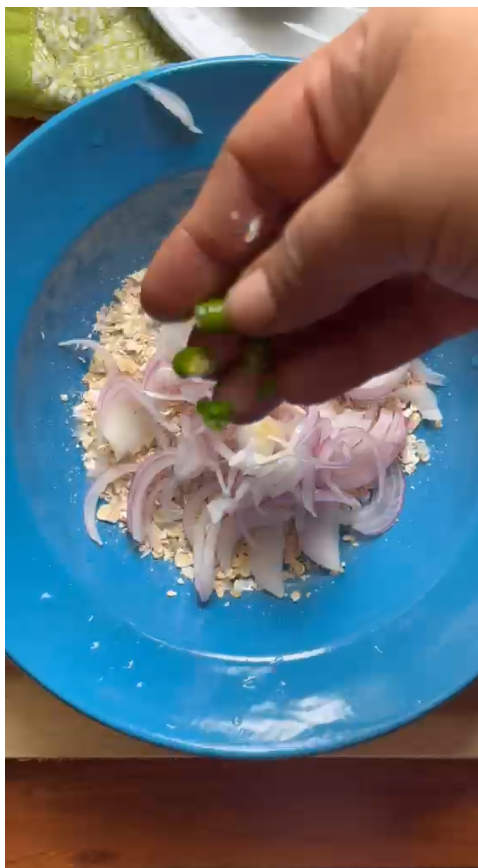
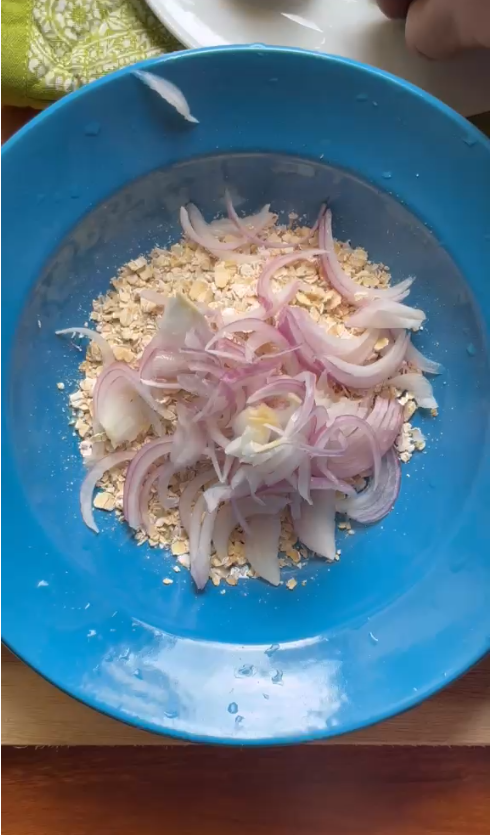
Half a small onion, sliced thin, in one chilla. This is a moderate quantity and it is cooked — both of which matter for IBS.
Raw onion is one of the most consistent IBS triggers because of the fructans it contains. But onion cooked into a batter and then pan-fried for several minutes is considerably gentler. The heat breaks down the cell structure, reduces the fructan concentration, and makes the sugars more digestible. Half a small onion across one chilla — approximately 30g — is a small enough amount that most people with IBS handle it without issue when cooked this way.
If onion is a serious personal trigger for you regardless of whether it is cooked, replace it with spring onion greens (the green part only, which is low-FODMAP) or skip it entirely. The chilla holds together without it — the onion is for flavour, not structure.
What Does Olive Oil Do Here That Ghee Would Not?
Both work. I use 1 teaspoon of olive oil here because olive oil has a neutral flavour that does not compete with the delicate oat-and-egg base. Its monounsaturated fat composition is anti-inflammatory and well-documented for gut health support.
Ghee is also a completely valid choice — and is what I use on days when I want the chilla to taste richer. The cooking method is the same. The gut-health properties of ghee (butyrate content) are actually better studied than those of olive oil for IBS specifically. Either works — use whatever you have.
One teaspoon is genuinely enough for a non-stick pan. The eggs and oats create their own slight surface moisture during cooking that prevents sticking once the chilla begins to set.
How Do You Make This Gluten Free High Protein Oats Chilla?
Make the batter. Add one-third cup of rolled oats to a bowl. Crack in two eggs. Add half a small onion sliced very thin — not diced, thin slices distribute better through a flat chilla. Add one small green chilli finely chopped. Add salt to taste. Mix everything together with a fork. The batter will look loose at first. Wait 2 to 3 minutes — the oats absorb the egg and the mixture thickens into a spreadable batter. If it still looks very thin, add a small handful more oats and wait another minute.
Taste the batter before cooking. This is the one moment you can adjust salt, and it is much easier now than after.
Cook the chilla. Heat a non-stick pan on medium. Add 1 teaspoon of olive oil and let it coat the pan. Pour the entire batter into the centre of the pan. Using the back of a spoon, gently spread it outward into a circle — roughly 18 to 20cm across. You want it thick enough to flip cleanly, not paper-thin. Medium thickness — about the thickness of a chapati — is right.
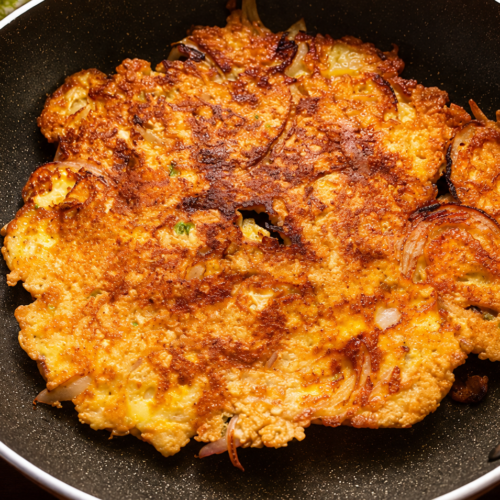
Cook without touching for 3 to 4 minutes. The edges will set and turn slightly golden. The top will look matte rather than wet when the centre is almost cooked through. Slide a spatula fully under the chilla and flip in one confident motion. Another 2 to 3 minutes on the second side until golden. Press gently in the centre — it should feel firm with no give.
Make the green chutney curd. While the second side cooks: in a small bowl, mix 3 tablespoons of hung curd with 1 to 2 tablespoons of green chutney — dhania (coriander leaf) blended with hari mirch (green chilli) and a pinch of salt. Stir until combined. This is the dip and it is not optional — the cool, tangy curd against the hot chilla is the combination that makes this breakfast worth making.
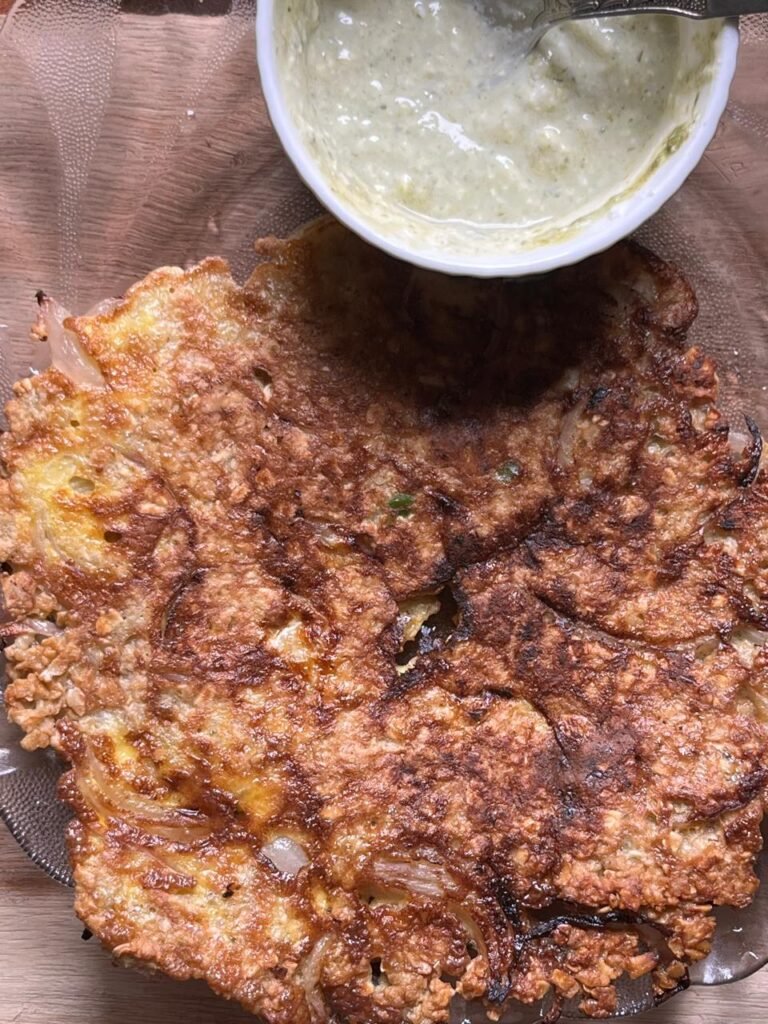
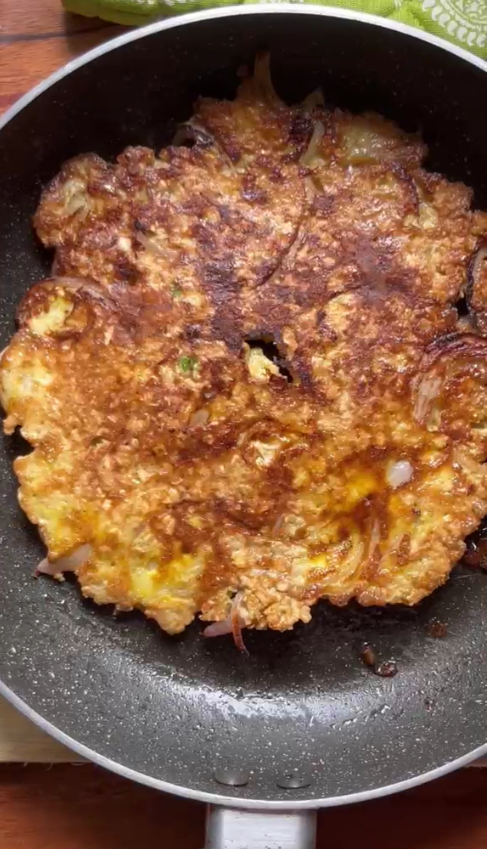
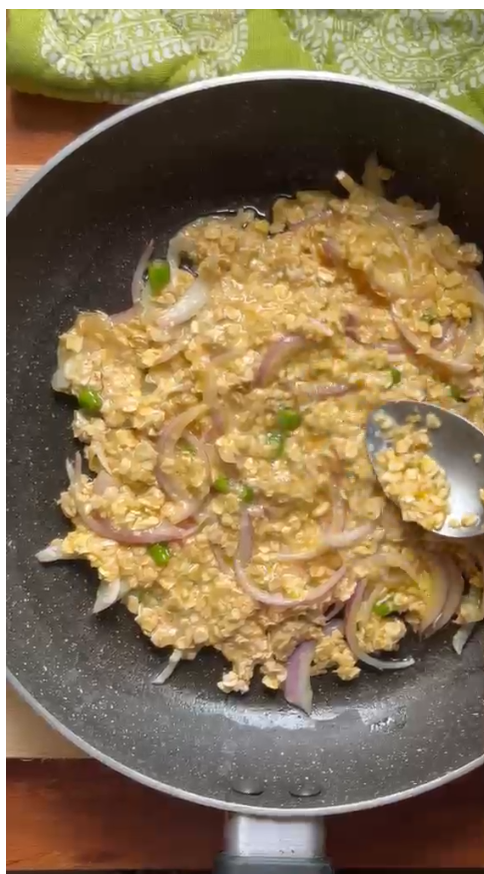
Serve immediately. This gluten free high protein oats chilla does not hold well — oats continue absorbing moisture after cooking and the texture changes within 15 minutes of coming off the pan. Make it, plate it, eat it hot.
Is Oats Chilla Good for Weight Loss?
For a breakfast, the numbers are very good. 327 calories with 18.6 grams of protein and nearly 4 grams of fibre is a meal that genuinely keeps you full — not a snack pretending to be breakfast.
The weight loss mechanism here is not about eating less — it is about eating something that prevents you from eating more later. Beta-glucan from oats and the protein from eggs both slow gastric emptying, which means the food stays in your stomach longer and the hunger signal takes longer to return. Multiple studies on oat beta-glucan have found it reduces appetite significantly more than equivalent calorie amounts of refined carbohydrate.
The absence of refined carbohydrate is the other factor. A maida-based breakfast at the same calorie count would be digested and cleared in 60 to 90 minutes, leaving you hungry and reaching for a snack. The oats and eggs in this chilla are still actively being digested four to five hours later.
For context — before my 2023 diagnosis, my protein intake was 35 to 40 grams per day. Adding a breakfast like this gluten free high protein oats chilla to my morning routine put 18 to 22 grams of that daily target into the first meal of the day. Getting protein in at breakfast makes hitting daily protein targets for the rest of the day significantly easier.
For more on building high-protein gut-friendly meals beyond breakfast, the IBS-friendly Indian dinner guide covers the same approach extended to the rest of the day. And if you are looking for more quick high-protein options that work alongside this chilla in a weekly meal plan, the best dals for IBS is worth reading for the protein-per-serve data on each dal.
How Do You Make the Green Chutney for This Recipe?
The green chutney (hari chutney) mixed into hung curd is what makes this chilla feel like a complete meal rather than just a plain savoury pancake. It takes two minutes if you have the ingredients ready.
Blend a small bunch of fresh dhania (coriander leaves), one green chilli, a pinch of salt, and a squeeze of lemon juice (nimbu) until smooth. A small mixer or hand blender works. The paste should be bright green and thick — add a teaspoon of water only if the blender needs liquid to run.
Mix into hung curd. Start with one tablespoon of chutney per three tablespoons of hung curd. Stir well. Taste — add more chutney if you want more flavour, more curd if you want it milder.
This chutney curd keeps in the fridge for 2 days in a sealed container. I make a larger batch on Sunday — three times the quantities — and use it across the week with this chilla, alongside the high protein chicken skewers, or as a quick dip for any meal that needs something fresh and cooling.
Gluten Free High Protein Oats Chilla Breakfast – 2 Eggs, IBS-Friendly & Ready in 10 Minutes

Equipment
- 1 Non Sticky Pan with Lid
- 1 Spatula
- 1 Mixing bowl
- 1 Serving Plate
Ingredients
For the chilla
- ⅓ cup 30g rolled oats — not instant oats
- 2 large eggs
- ½ small onion sliced very thin
- 1 small green chilli finely chopped — reduce or skip for sensitive IBS
- Salt to taste
- 1 tsp olive oil or ghee for the pan
For the green chutney curd (to serve):
- 3 tbsp hung curd strained full-fat yoghurt
- 1 –2 tbsp green chutney — coriander leaves blended with green chilli salt, and a squeeze of lemon juice
Instructions
- Make the batter — In a bowl, combine rolled oats, eggs, sliced onion, green chilli, and salt. Mix well with a fork. Rest for 2–3 minutes while the oats absorb the egg and the batter thickens. If still very thin after 3 minutes, add a small handful of oats and wait 1 more minute.
- Make the chutney curd — Blend dhania, green chilli, salt, and lemon juice to a smooth paste. Mix 1–2 tablespoons into 3 tablespoons of hung curd. Set aside.
- Heat the pan — Place a non-stick pan on medium heat. Add olive oil and let it coat the pan evenly.
- Cook the chilla — Pour the full batter into the centre of the pan. Spread gently with the back of a spoon into a circle about 18–20cm across, roughly chapati thickness. Cook without touching for 3–4 minutes until edges turn golden and the top looks matte.
- Flip — Slide a spatula fully under the chilla and flip in one confident motion. Cook 2–3 minutes on the second side until golden. Press the centre gently — it should feel firm.
- Serve immediately — With the green chutney curd on the side. Eat hot — oats continue absorbing moisture as the chilla cools and the texture changes.
Video
📺 Watch the recipe video:
View on YouTube
Video Summary: Watch how to make this gluten free high protein oats chilla — mixing the oat and egg batter, pan-frying, serving with green chutney curd.
Notes
Frequently Asked Questions
Is oats chilla good for IBS?
Yes — oats contain beta-glucan, a soluble fibre that moves slowly through the gut without rapid fermentation, making it gentler than the insoluble fibre found in wheat. One-third cup of rolled oats in a single chilla is a moderate portion that many people with IBS tolerate well. Eggs provide complete protein without adding fermentation, and cooking the onion thoroughly helps reduce its fructan content. On sensitive gut days, skip or reduce the green chilli.
Why do you use rolled oats instead of instant oats or oat flour?
Rolled oats absorb the egg mixture after a short 2 to 3 minute rest, creating a batter with good texture and structure. Instant oats become paste-like and produce a dense, mushy chilla, while oat flour makes a thin, smooth crepe without much texture. If instant oats are your only option, use slightly less and cook over lower heat for a little longer.
Can you make this oats chilla without eggs?
Yes, but the protein content drops significantly—from about 18.6g to around 5g. You can replace the eggs with 2 tablespoons of thick hung curd and a pinch of baking soda, or use a flax egg made from 1 tablespoon of ground flaxseed mixed with 3 tablespoons of water. The egg-free version is more delicate, so adding 1 tablespoon of besan helps improve binding while adding extra protein.
How do you stop the oats chilla from sticking to the pan?
Use a good-quality non-stick pan, add the oil once the pan has reached medium heat, and allow the chilla to cook undisturbed before flipping. It will naturally release from the pan once the bottom is fully set. If it resists when lifting with a spatula, wait another 60 seconds. Trying to flip too early is the most common reason chillas tear.
What is the best way to make green chutney for this breakfast?
Blend fresh dhania (coriander leaves), one green chilli, a pinch of salt, a squeeze of nimbu, and a teaspoon of water until smooth. Stir 1 to 2 tablespoons of the chutney into 3 tablespoons of hung curd for a creamy dip. The lemon juice helps keep the chutney bright green in the fridge for up to 2 days, and adding pudina (mint leaves) gives it a cooler, fresher flavour.
🌿 Love gut-friendly recipes? Add Caloriematterss as your Google Preferred Source so my low-FODMAP, high-protein recipes show up more often for you. Set Caloriematterss as a preferred source →
One Comment