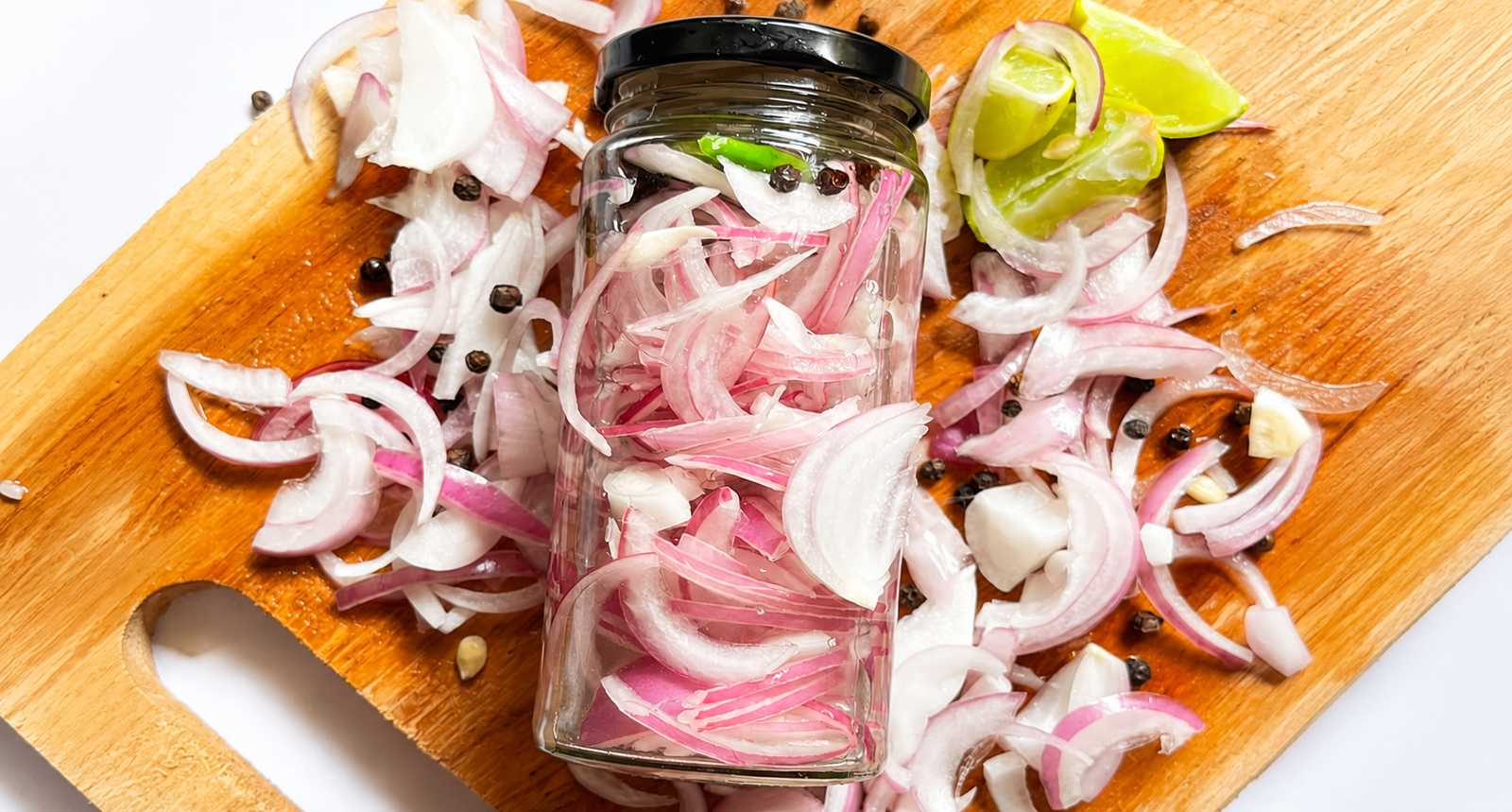
No-Oil Pickled Onion: The Only Way I Can Eat Onion Without IBS Pain
📌 Quick Guide
What it is: A no-oil pickled onion made with sliced onion, vinegar, fresh lemon, black pepper and one slit green chilli. A tangy condiment, not a side you pile on.
Why I make it: Raw onion gives me real IBS pain, but I love onion. Sitting it in vinegar mellows it enough that a small forkful sits gently with me.
Honest low-FODMAP note: Onion is high in fructans and those do not pickle out. This is gentler than raw onion, but it is not a low-FODMAP free food. Start with a tiny portion.
Calories: ~18 kcal per 2 tbsp | Protein: under 1g (it is a condiment, eat it with your protein)
Why raw onion and I had to break up
A no-oil pickled onion I make because raw onion gives me IBS pain. Just onion, vinegar, lemon, black pepper and green chilli. Honest low-FODMAP notes inside.
For a long time onion was a quiet source of pain for me. A few raw slices in a salad, a scatter on top of chaat, a bit of red onion in a sandwich, and an hour later my stomach would be tight and gassy and I would be uncomfortable for the rest of the evening. I did not connect it at first, because onion is in everything and you do not suspect the thing you eat every single day. Once I started paying proper attention to what set my gut off, raw onion was near the top of the list.
So I did what most people with IBS end up doing. I cut it out. No raw onion in salads, none on top of dishes, asking for it to be left off when I ate out. And it worked, my gut was calmer, but I missed it. I genuinely love onion. The sharpness, the crunch, the way a little bite of it lifts a plain plate of dal and rice. Cutting it completely felt like losing a flavour I had grown up with.
This no-oil pickled onion is the compromise I landed on, and it has held up. Instead of giving up onion entirely, I sit it in vinegar and lemon so the harsh raw bite comes off, and I eat it in small amounts. A forkful next to a meal, not a bowl of it. That small change has let me keep onion in my food without the usual fallout, and it is now a permanent fixture in my fridge.
Table of Contents
What makes this different from a normal pickle?
Most Indian pickles I grew up with are heavy on oil and packed with masala. Mango pickle, lemon pickle, mixed achaar, they all swim in mustard oil and a long list of spices. I love the taste, but oil-heavy food is another thing my gut struggles with, so traditional achaar is not something I can eat much of.
This one is stripped right back. No oil at all. No garlic, which is another common trigger I leave out on purpose. No big spice blend. It is onion, vinegar, lemon, black pepper, one green chilli and a pinch of salt. That short list is deliberate, because when something does upset my stomach I want to be able to tell exactly which ingredient did it. The fewer things in the jar, the easier my gut is to read.
It is also a quick pickle, not a long-fermented one. You are not waiting weeks. A few hours on the counter or a night in the fridge and it is ready. The vinegar and lemon do the work fast.
What goes into a no-oil pickled onion?
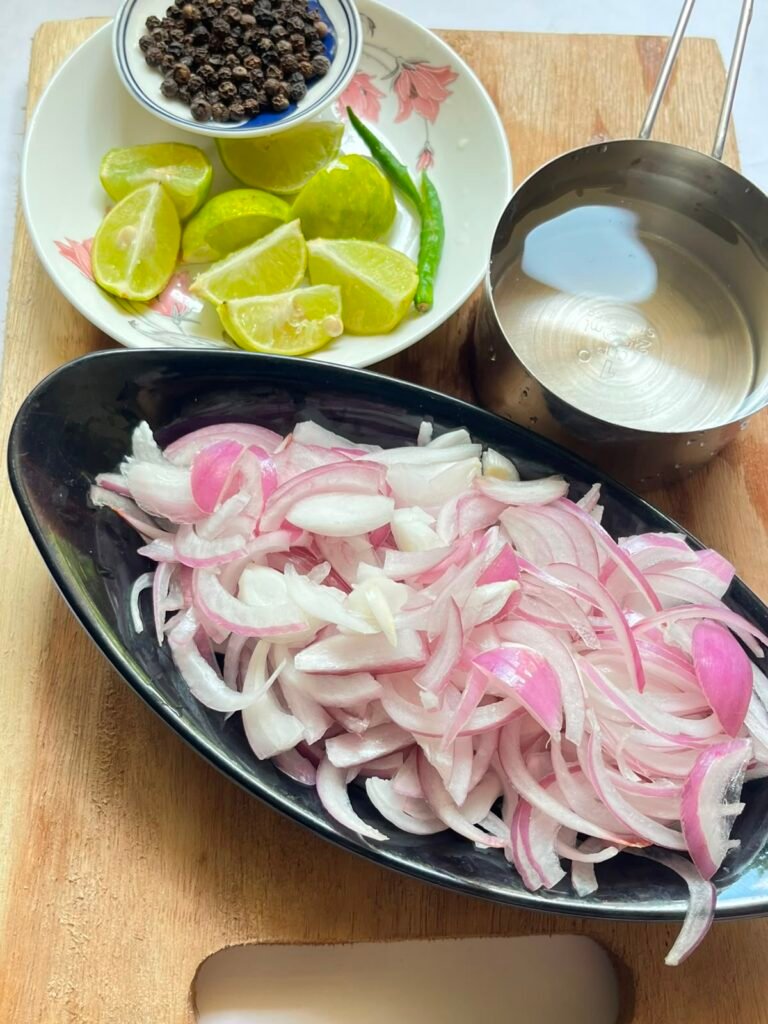
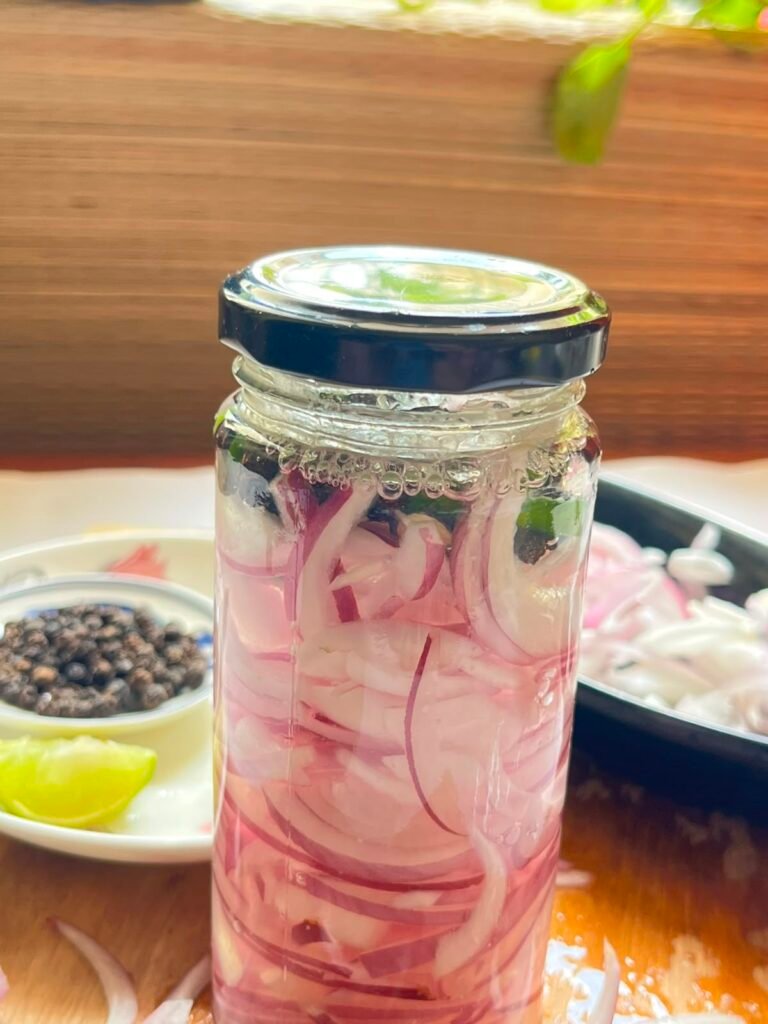
The whole point is that it is short and honest. Here is everything that goes in the bottle.
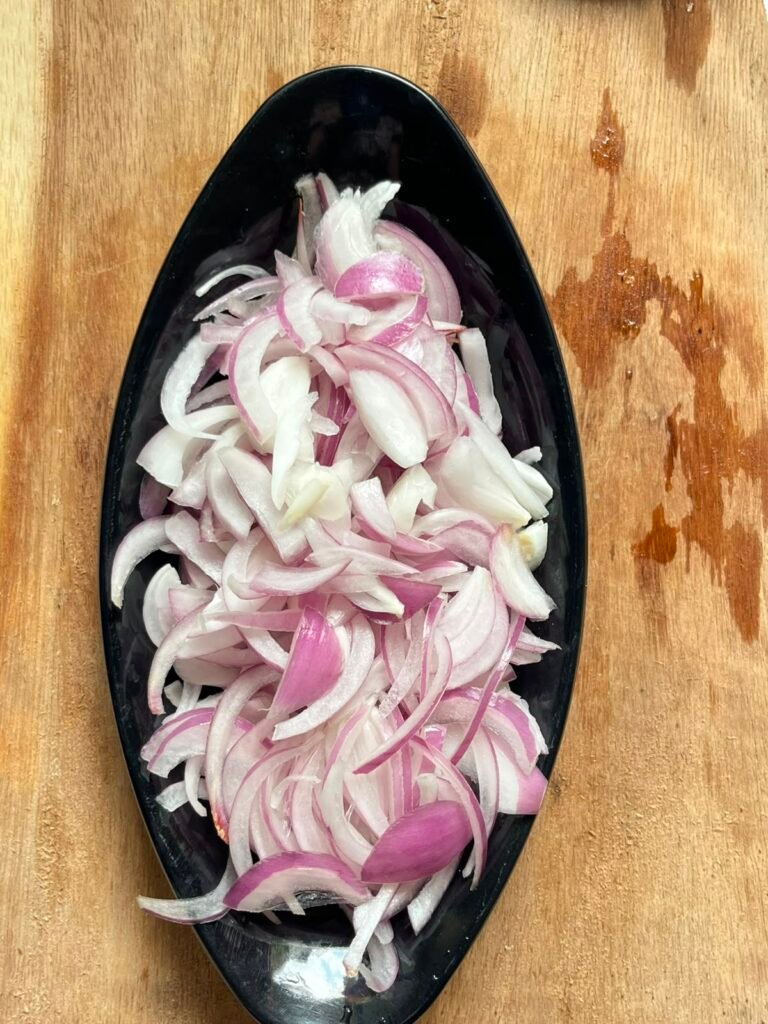
- Onion-2 large, sliced. The star, and also the ingredient to be careful with if your gut is sensitive.
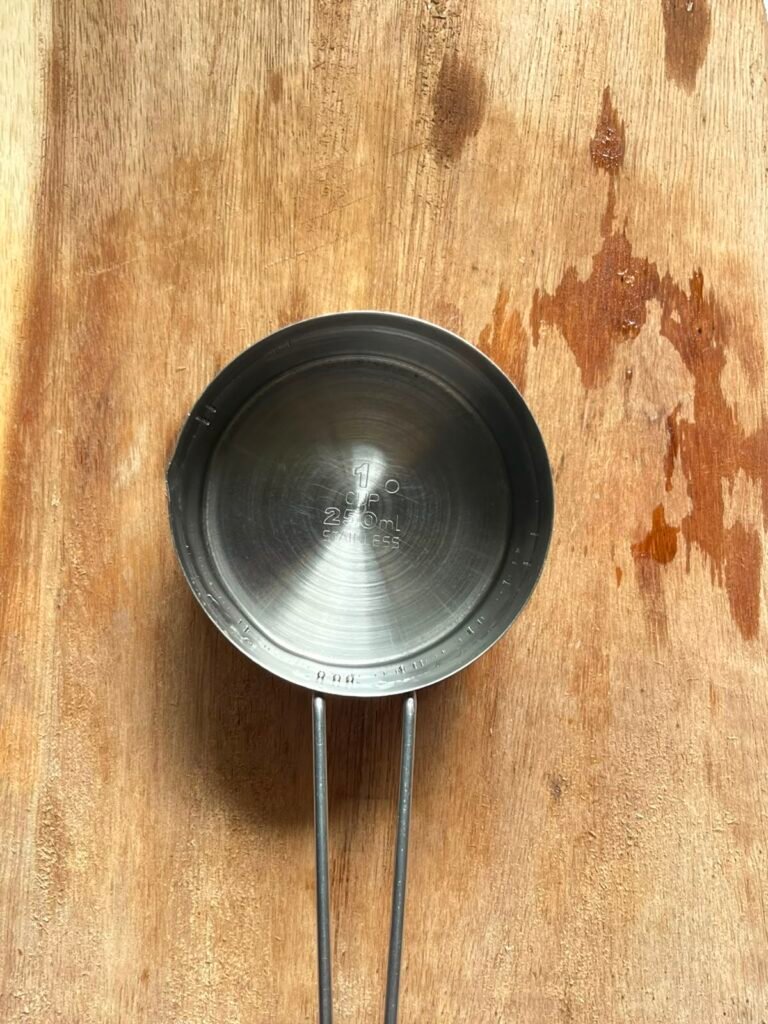
- Vinegar -100ml (about 1/2 cup, just under 4 fl oz). White vinegar or apple cider vinegar both work.
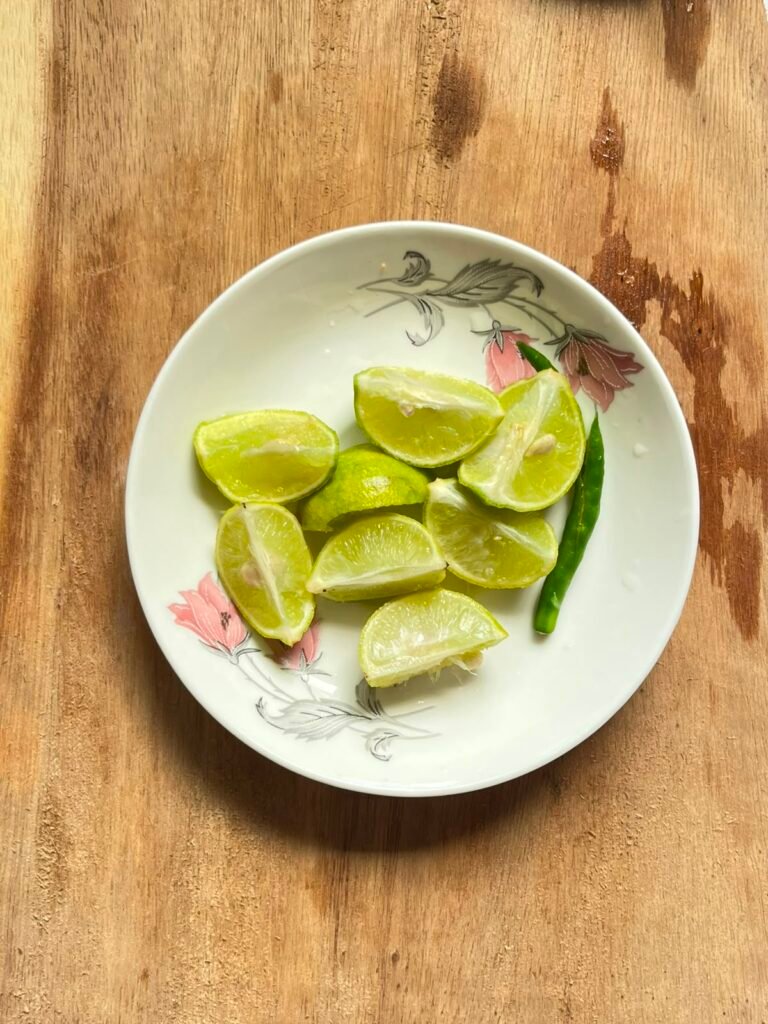
- Lemon juice – from 2 fresh lemons, for brightness and extra acidity.
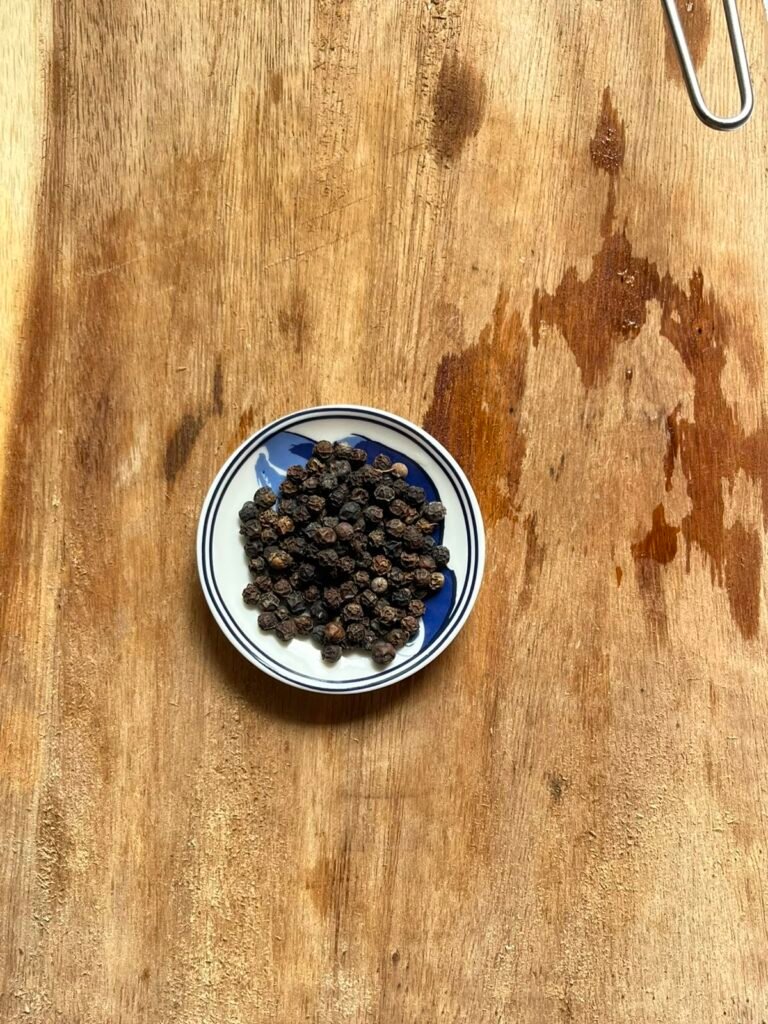
- Black pepper – a generous pinch, whole or cracked.
- Green chilli -1, slit down the middle. One is enough; this is for gentle warmth, not heat.
- Salt -a small pinch, optional.
That is it. No oil, no garlic, no jaggery, no thickening masala.
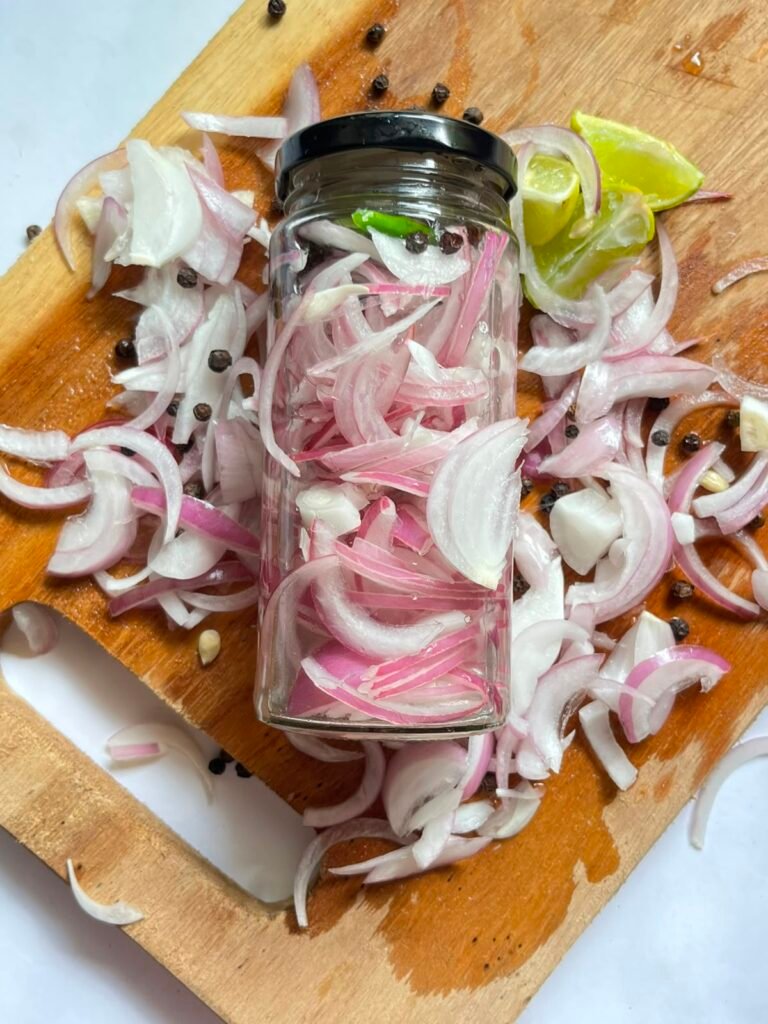
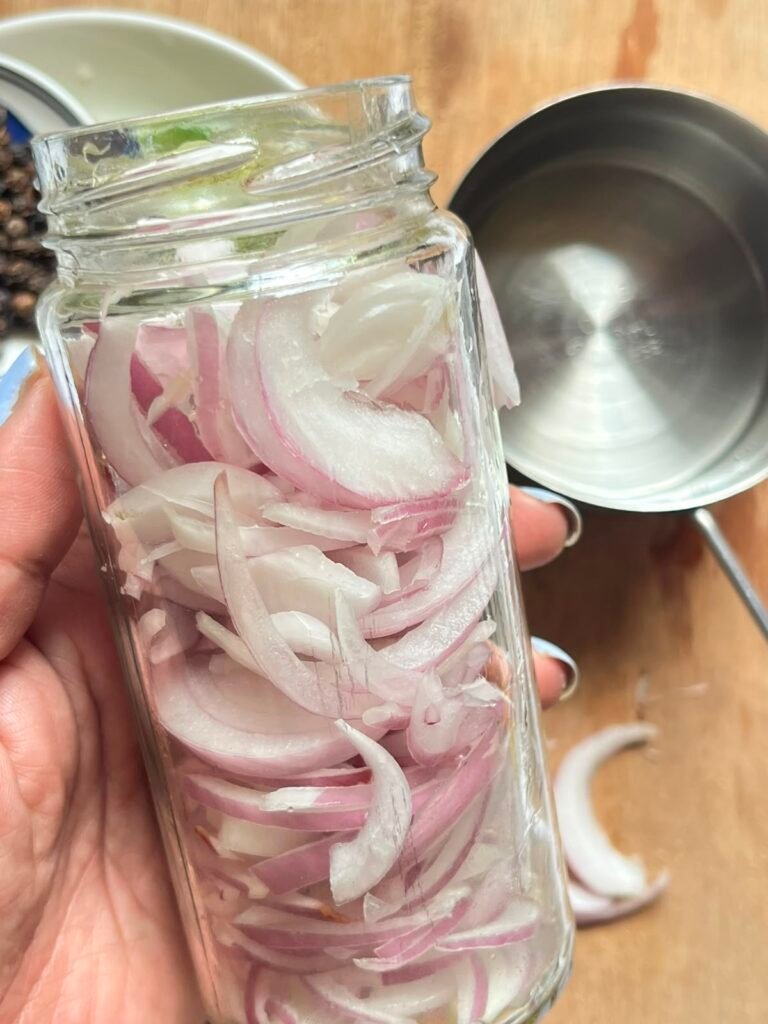
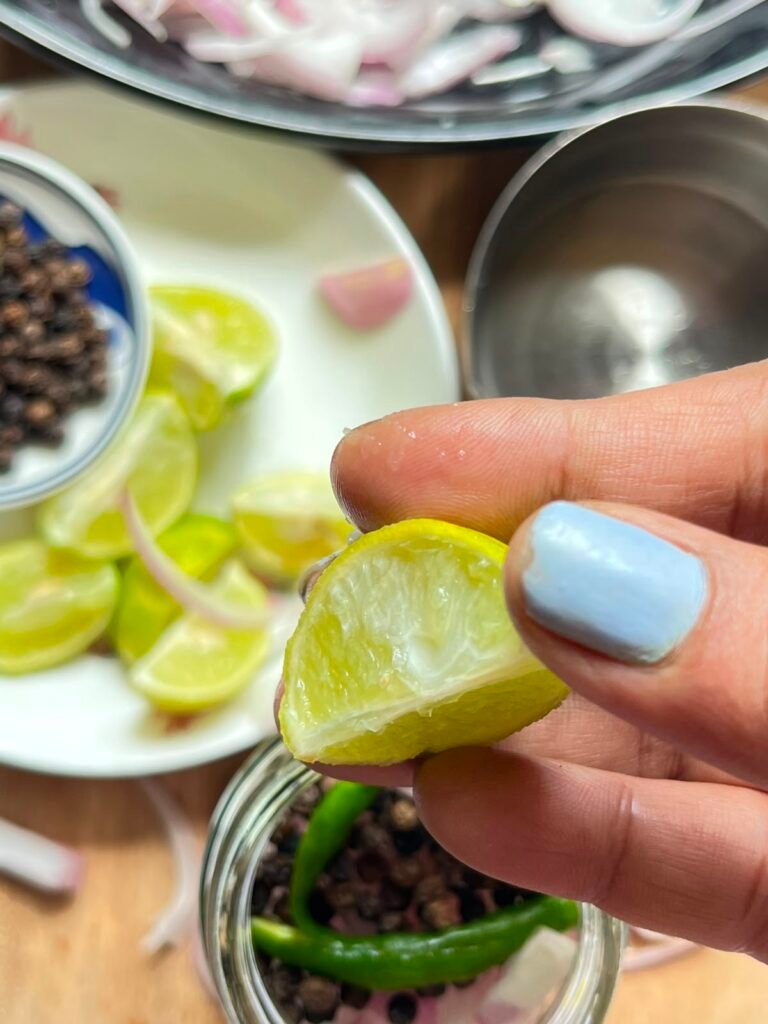
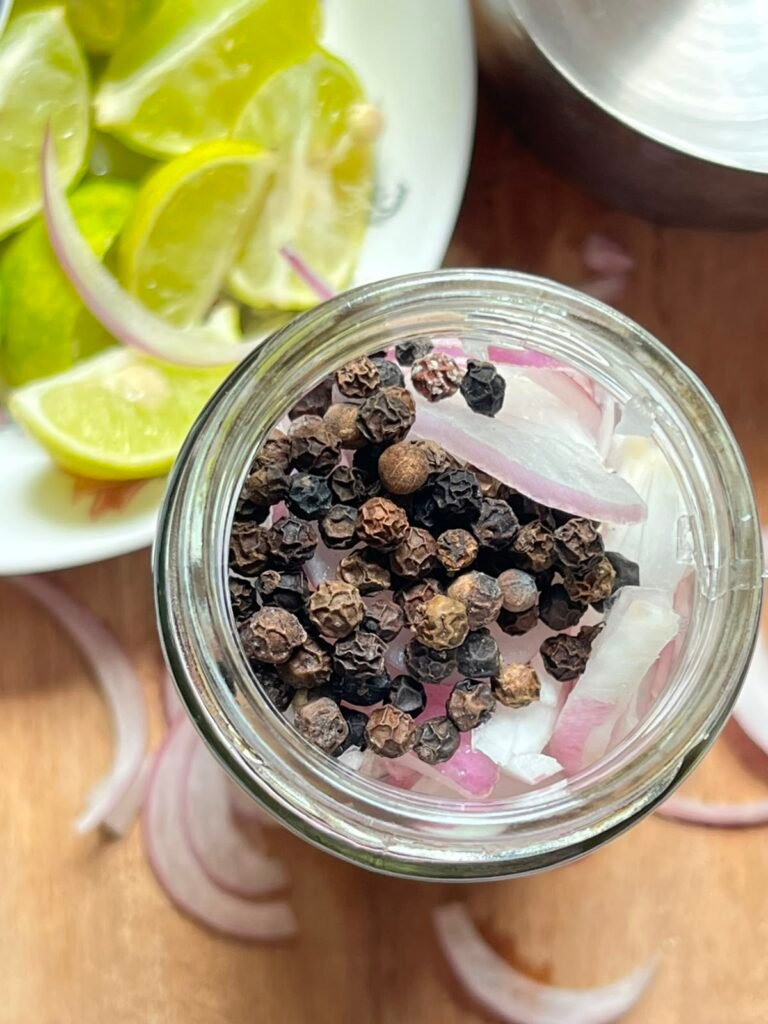
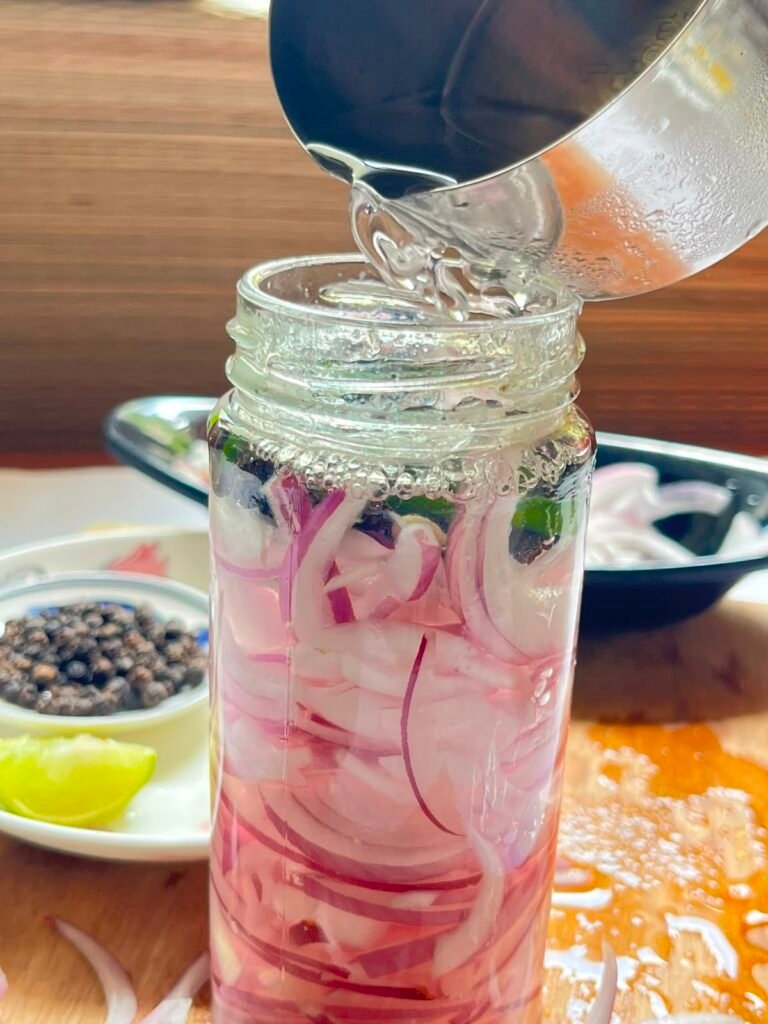
How do you make no-oil pickled onion?
There is barely a method, which is exactly why it has stayed in my routine. On a tired evening I can still manage this.
- Slice the onions however you like to eat them, rings or thin half-moons. Thinner slices soften faster and mellow quicker.
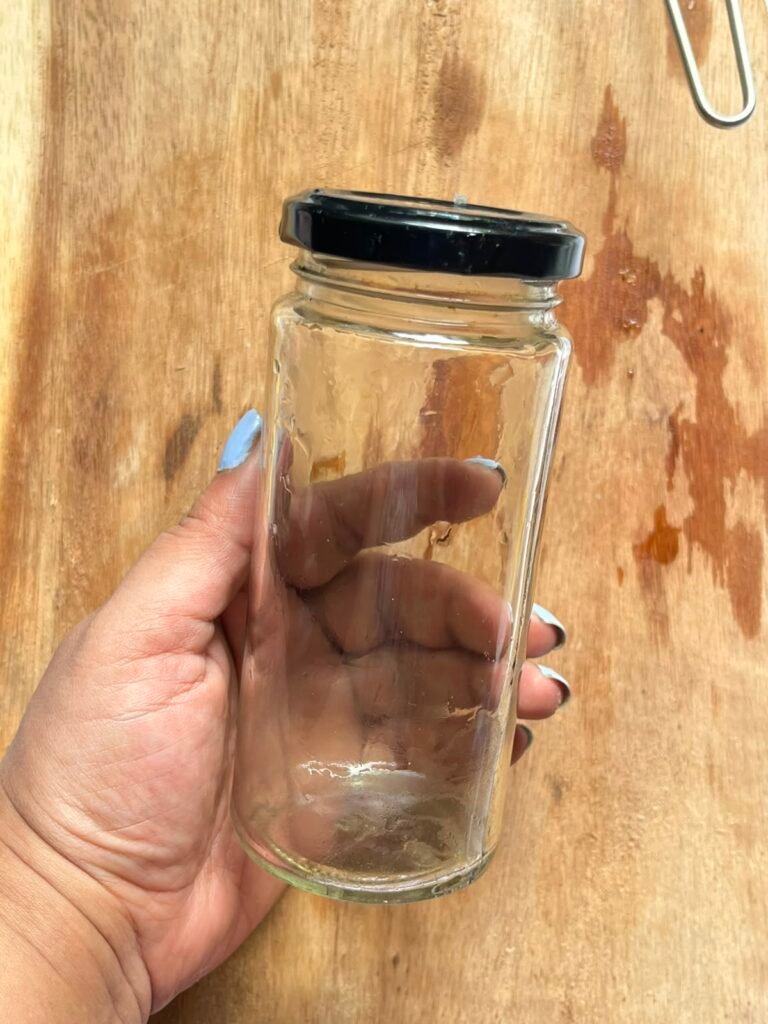
- Pack them into a clean, dry glass bottle or jar.
- Drop in the slit green chilli, the black pepper and a pinch of salt.
- Squeeze in the juice of both lemons.
- Pour the vinegar over the top so the onions are mostly submerged.
- Seal it, give it a gentle shake, and leave it. A few hours on the counter works, but overnight in the fridge is better.
The longer it sits, the softer and milder the onion gets. I usually make a batch and leave it a full day before I touch it. By then the raw sharpness is gone and what is left is tangy, lightly sour and still with a bit of crunch. If I am making a fresh batch, I will often pour the vinegar over and let it go while I get on with something else, then forget about it until the next day.
Why does pickling make onion easier on my gut?
This is worth understanding, because it explains both why it helps and why it is not a magic fix.
Raw onion is harsh. There are sharp, pungent compounds in it that hit a sensitive stomach hard, and the raw texture sits heavy. When you soak onion in an acid like vinegar and lemon, those harsh compounds soften, the texture changes, and the whole thing becomes gentler to eat. For me, that is the difference between “I will regret this in an hour” and “I can have a little of this and be fine.”
But I want to be clear about what pickling does not do, because your trust matters more to me than a clean-sounding claim.
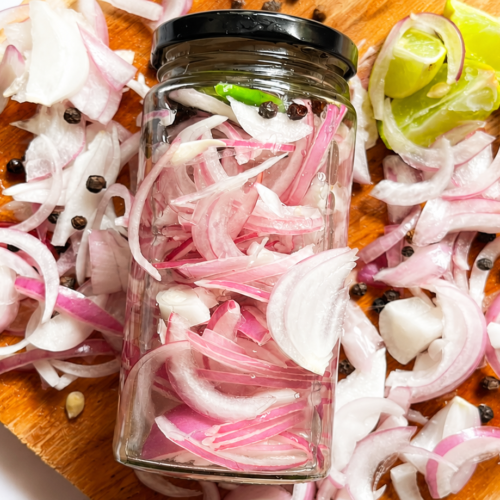
No-Oil Pickled Onion

Equipment
- 1 Glass bottle
- 1 knife
- 1 chopping board
Ingredients
- 2 large onions pyaaz, sliced
- 100 ml vinegar sirka — about 1/2 cup / just under 4 fl oz
- Juice of 2 fresh lemons nimbu
- 1 green chilli hari mirch, slit
- 1/4 tsp black pepper kali mirch, cracked
- A pinch of salt namak, optional
Instructions
- Slice the onions and pack them into a clean, dry glass bottle or jar.
- Add the slit green chilli, black pepper and pinch of salt.
- Squeeze in the juice of both lemons.
- Pour the vinegar over so the onions are mostly covered.
- Seal, shake gently, and rest a few hours or overnight. The longer it sits, the milder the onion.
- Store sealed in the fridge for up to a week to ten days. Use a clean, dry spoon each time.
Video
Notes
Is no-oil pickled onion low-FODMAP?
No, and I am not going to pretend otherwise.
The thing in onion that upsets IBS guts is a group of carbohydrates called fructans. Fructans are what put onion at the top of nearly every high-FODMAP list. The problem is that fructans do not break down with pickling. Vinegar makes onion taste milder and feel gentler, but it does not pull the fructans out. Cooking does not remove them either. So even though this pickle is far easier on my stomach than raw onion, it is still onion, and it still contains the fructans that bother sensitive guts.
That is the honest line. This is a no-oil pickled onion that I, personally, can tolerate in small amounts, and it has let me bring onion back into my food. It is not a certified low-FODMAP food, and I would never tell you it was.
So here is how I actually eat it, and what I would suggest if you want to try. Keep the portion tiny, a forkful, not a serving. Eat it with food rather than on an empty stomach. And pay attention to your own body over the next few hours, because your gut is not my gut. Some people with IBS handle a little pickled onion fine. Some react to onion no matter what form it is in. If you are in that second group, this is not the recipe that changes that, and I would never want you to push through pain because a video made it look nice.
If you want the onion flavour with far less FODMAP risk, the green tops of spring onion are the usual swap, since the green part is much gentler than the bulb. But that is a different recipe and a different taste, and this post is about the onion pickle I actually make.
How long does no-oil pickled onion keep?
Kept sealed in the fridge, mine stays good for about a week to ten days. The vinegar and lemon are doing the preserving, so it lasts well without any oil. A few rules I stick to: always use a clean, dry spoon when you take some out, so you are not introducing anything that will spoil it; keep the lid sealed; and if the smell ever goes off or it looks cloudy in a way it should not, bin it without a second thought. I tend to make small batches on purpose so it never sits around long enough to become a question.
What do you eat pickled onion with?
This earns its place next to protein, which is where it fits my eating anyway. I spoon a little over grilled chicken, fold a small amount into egg bhurji, or put a forkful on the side of a moong dal and rice plate to cut through the richness. It works the way a squeeze of lemon or a bit of chutney does, a sharp, bright hit that lifts the rest of the plate.
Keeping it to a forkful is not just about taste, it is also how I keep the onion quantity per meal low, which matters when onion is a trigger. Treating it as a flavour accent rather than a vegetable serving is the difference between enjoying it and regretting it. A high-protein plate, a small amount of this on the side, and I get the onion I missed without the gut pain that used to come with it.
A few honest tips from making this often
If your first batch still feels a bit sharp, leave it longer. Time in the vinegar is what mellows it, and a rushed batch tastes more raw. Thinner slices help here too.
If white vinegar tastes too aggressive for you, apple cider vinegar gives a softer, slightly fruity result. I switch between the two depending on what is in the cupboard.
And start smaller than you think you need to. The first time you bring a trigger food back, a cautious portion tells you what you need to know without costing you an evening. You can always have a little more next time once you know how you react.
You can add as a side dish of this High Protein Shami Kabab – Chicken, IBS-Friendly
Mishri Badam Drink Powder-Recipe For IBS, Energy And Gut Health Snow Fungus Soup Recipe -5 Powerful Benefits Of
Frequently Asked Questions
Is no-oil pickled onion low-FODMAP?
No. Onion is naturally high in fructans, and pickling it in vinegar does not remove those FODMAPs. Although the pickle tastes much milder than raw onion, people following a strict low-FODMAP diet should avoid it or test only a very small amount to see how their body responds.
Why pickle the onion instead of just eating it raw?
Pickling softens the sharp bite of raw onion. Soaking it in vinegar and lemon creates a milder flavour and texture that some people find easier to tolerate than fresh raw onion. While it doesn’t reduce the FODMAP content, it can feel gentler for those who are sensitive to raw onion.
Can I use apple cider vinegar instead of white vinegar?
Yes. Apple cider vinegar works well and gives the onions a softer, slightly fruity flavour. White vinegar creates a cleaner, sharper taste. Both preserve the onions equally well, so you can use whichever you enjoy most.
How long does no-oil pickled onion last?
Stored in a sealed jar in the refrigerator, no-oil pickled onions keep well for about 7 to 10 days. The vinegar and lemon juice naturally preserve the onions without needing oil. Always use a clean, dry spoon when serving to help keep the pickle fresh.
Do I need to add oil to this pickle?
No. This recipe is designed to be completely oil-free. The vinegar and lemon juice provide both flavour and preservation, making oil unnecessary. For people who find oil-heavy pickles difficult to digest, this lighter version is a great alternative.
🌿 Love gut-friendly recipes? Add Caloriematterss as your Google Preferred Source so my low-FODMAP, high-protein recipes show up more often for you. Set Caloriematterss as a preferred source →