How To Control Cortisol:-Morning and Night Routine, Coffee .
📝 Quick Guide
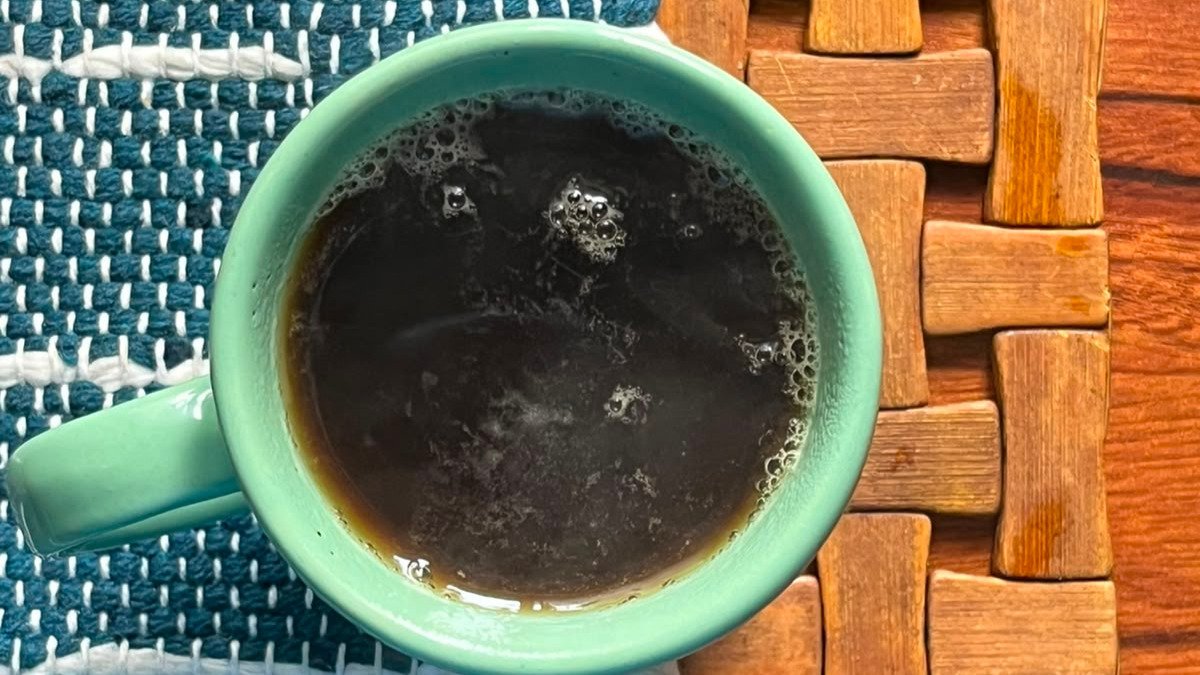
What it is: How to control cortisol and My morning routine for good cortisol-quiet wake-up, meditation, gentle movement, anti-inflammatory tea first, then a cardamom-and-cinnamon spiced black coffee about 90 min or 2 to 3 hours after waking.
Why it works: Cortisol is meant to rise sharply in the morning and fall at night. The problem is not the rise, it is stacking caffeine on top of it before your body has finished its own. Delaying coffee lets both happen in sequence. The night half matters just as much-a clean morning rise depends on cortisol actually coming down the evening before (dark room, no screens, yoga Nidra, some carbs at dinner).
Honest IBS/low-FODMAP note: Black coffee, cinnamon (1 tsp) and cardamom (1 tsp) are all low FODMAP by Monash testing. But coffee is a known non-FODMAP gut trigger-Monash reports 26–40% of people with IBS name it as one. Low FODMAP does not mean symptom-free. Mine settled only after I moved it later.
Calories: ~7 kcal | Protein: ~0.3g
How to control cortisol is a question I got completely wrong for about two years-because I thought I was controlling it by keeping it down . Every time my face looked puffy in the mirror, every time my rings felt tight by 10am, every time my gut cramped before I had even eaten anything, I know it’s my high cortisol and also known that no medication can help nor a routine until I lower stress in Life .
Table of Contents
Here is what finally made me take it seriously instead of guessing. My dietitian suggested I get a blood test called high-sensitivity CRP- HS-CRP-which measures C-reactive protein, a marker your body produces when there is inflammation. It is a simple, widely available test, and it put a number on something I had only been feeling. Mine came back high.
That was the moment the puffiness and the tight rings stopped being “in my head” and became something I could actually see and track. It is also why I started looking into all of this- the light, the coffee timing, the sleep, the food-because I wanted that number to come down, not just to feel a bit less swollen in order to have life that not so stressful.
I am not a doctor and hs-CRP is not a cortisol test; it measures inflammation, not the hormone. And I was trying & trying too hard to manage the stress , that’s going in reverse . Then one day I hard a line, I really don’t remember her name, if I do I will put it here .
A Therapist said ” Accept your current chaos or reality in order to move in next moment of your life you must accept it ” This one line made myself realize so many things . Then I started doing Yoga Nidra , from first morning after waking up. I felt so relaxed ,this I cannot explain you fully you must have to have experienced it
I was testing on myself and IBS made me changes in my food habits or seeing things in a different way , I am still a foodie but I eat what’s my body and mind can take . A warm meal , or my own cooking with rice ,protein and salad . Or just a plate with warm food . At the age of 42 Still so many things to eat or explore .
So back to the topic If you suspect chronic inflammation, that is a conversation to have with your own doctor or dietitian.

I paid attention to what my mornings were actually doing.
Looking back, the honest reason my inflammation was high is that I had been living in fight-or-flight mode for a long time-that low, constant state of alert where your body behaves as if there is always a threat, even when you are just sitting at your desk.
That state keeps cortisol chronically switched on, and off . This did not need a scientist to tell me I was in it; I could feel it in my jaw, my shoulders and my gut. I think these changes happens in my life because not only the routine change or diet change or sleep patterns change .I think I really wanted these to change .
What I want to be clear about is that I had already been doing a lot of the calming things in this post before I understood any of the science behind them. I did them because my body was asking for them. Learning later that they genuinely lower cortisol was less a discovery and more a confirmation of what I had been reaching for instinctively.
The one thing I never, ever compromised on-even in my worst stretches-was sleep. I protected it fiercely. When I struggled to fall asleep, I used melatonin to help me get there rather than lying awake letting my stress build.
I am not giving melatonin advice here, because dosing and whether it suits you is a question for your own doctor, but I mention it because protecting sleep was the non-negotiable I held onto long before I could explain why it mattered. As it turns out, sleep is one of the biggest levers there is for a healthy cortisol curve, so the instinct was right.
And Also it that podcast Dr. Andrwe Huberman said He is using these sleep contributing factors
Here is what I used to do. Alarm, wake up water , Lactose free Milk tea with coffee(yeas hard it right and stevia ) with Digestive biscuits or cookies as a breakfast . Never stepped out from my room in morning because working from home and of course I was too lazy
By mid-morning I was wired but not alert, my hands were slightly swollen, my stomach was gripping, and I felt like I had already run out of something. And with followed by afternoon rice my sugar was spikes and cortisol in my lowest and highest. So these factor made me change. I felt cannot live like this .I must ask for help, I m not a expert .And every problem has a solution .
Another thing I did that .
I never push to anything, what I am doing is if any day I felt I cannot do only protein & fiber diet I simple switch to home’s war rice, dal, Veggies, and whatever fish or eggs or chicken is available at home ( This is an advantage of Bengali Household ) .
And same as Yoga Nidra or singing bowl, I Stop if feel discomfort of doing it and just fall asleep in silence, Also, I didn’t completely stop taking melatonin . Once month, or in random day I took those after dinner before 9 pm . So point is In order to do whatever You want to or achieve in Sleep or in cortisol or in life prospective don’t force .
And also when I went looking for why, the research surprised me, and it did not confirm everything I assumed. I want to walk you through both what I found and where my own routine and the science do not line up neatly, because I would rather give you the honest version than the tidy one.
And I want to cover the whole day, not just the morning-because the thing that finally made this click for me is that my night routine matters just as much, and it is the part that ties straight into my dinner and the slow weight loss I am seeing.
What is cortisol actually for?
Cortisol has a bad reputation it only half deserves. It is made by your adrenal glands and it does a lot of unglamorous work: it mobilizes energy, it regulates immune function, it manages blood sugar, and it is one of the main signals that tells your body the day has started.
The part people miss is that cortisol is supposed to spike in the morning. This is a named, well-studied phenomenon called the cortisol awakening response, or CAR. Research describes it as a sharp rise in cortisol across roughly the first 30 to 45 minutes after you wake, on the order of 50 to 80% above your waking level, before it tapers off across the day.
That morning surge is the good cortisol. It is what gets you out of bed with something in the tank. When it is blunted-flat, weak, mistimed-that is associated with fatigue, low mood and poor stress resilience. So the goal was never “less cortisol.” The goal is a sharp rise in the morning and a clean fall through the evening. A curve with a proper shape.
This reframe is what Dr Andrew Huberman discusses in the episode I have linked below, and it is the thing that reorganized how I think about my mornings. Cortisol is not a villain. A flat or scrambled cortisol curve is the problem.
📺 The podcast episode that changed how I understood this: Dr Andrew Huberman on reclaiming your brain
Why does morning coffee backfire for so many of us?
This is the part with a real study behind it, and it is the single most useful thing I learned.
The study is Lovallo and colleagues, published in Psychosomatic Medicine in 2005, titled “Caffeine Stimulation of Cortisol Secretion Across the Waking Hours in Relation to Caffeine Intake Levels.” You can read it here: Lovallo et al., 2005
What they found: caffeine stimulates cortisol secretion. It works partly through ACTH at the pituitary, which then signals the adrenals to release more cortisol. Habitual coffee drinkers do build partial tolerance, so the response gets blunted, but it is not eliminated. Regular daily intake still elevated cortisol, and the effect persisted for hours.
Now put that next to the cortisol awakening response. Your body is already doing a large, deliberate cortisol surge in that first 30 to 45 minutes. If you add coffee into that same window, you are not creating energy. You are stacking a chemical spike on top of a spike your body was already producing for free.
That is what I was doing every morning for two years. And a related finding makes it worse: some research indicates habitual caffeine users can show a heightened cortisol response to psychological stress compared with non-users. So the coffee was not just adding to my morning peak, it was possibly making my reaction to a stressful day sharper too.
Waiting is not about giving up coffee. It is about letting your own cortisol rise finish its job, then using caffeine afterwards, when it has something to do rather than something to pile onto.
How to control cortisol without giving up your coffee
So when I ask how to control cortisol, I now mean something quite specific. Not suppress it. Shape it. Sharp in the morning, low at night, and do not scramble the signal in between. Controlling a cortisol spike is about timing it right, not erasing it.
Here is what the evidence points to, and what I have actually built into my mornings.
Keep your wake time consistent. This is the least glamorous item on the list and probably the most important one. Your cortisol awakening response is anchored to a predictable wake time. Waking at wildly different hours across the week gives the system nothing to anchor to. On this I had to change my habits more than my diet.
Get light into your eyes early-and yes, this contradicts what I do. I will be straight with you about this because it matters. I assumed my dark-room, candle-lit start was lowering my cortisol and that this was why I felt better. When I checked the research, it pointed the other way.
Multiple studies found bright morning light increases the cortisol awakening response: one found roughly a 35% increase in cortisol from an hour of bright white light versus dim light, another found around a 50% increase with morning bright light exposure. And an enhanced CAR is generally considered the desirable outcome.
So my dark morning is likely not helping my cortisol curve in the way I thought. I go into why I think it still helps me further down, and what I have changed. I am leaving this here rather than quietly editing it out, because I would rather you have the real picture than my flattering version of it.
Eat protein in the morning. This is the food-blog part and it is genuinely relevant. When you have been fasting all night and your blood sugar drops, cortisol rises to compensate. A protein-containing breakfast gives you steady energy and reduces the need for that emergency spike.
There is also research showing that glucose infusion overnight reduced ACTH and cortisol in the second half of the night, which supports the general link between overnight energy availability and morning HPA activity. Anchoring the morning with protein instead of caffeine alone made a noticeable difference to how steady I felt by 11am.
Move gently, especially first thing. A network meta-analysis on exercise and cortisol found that mind–body practices, yoga and qigong in particular, reduced cortisol in people with psychological distress, with the yoga comparisons carrying the strongest evidence.
Notably, high-intensity interval training tended to increase cortisol. The same analysis found a non-linear dose response, with optimal effect at around 530 MET-minutes per week-meaning more is not automatically better. If your cortisol curve is already dysregulated, a hard morning HIIT session may not be the fix you think it is.
Meditate, but expect a modest effect. A meta-analysis of meditation interventions found a significant, medium-sized reduction in cortisol for at-risk populations, with the largest benefit for people with a physical illness or living under sustained stress.
A separate meta-analysis of yoga and MBSR found reduced waking and evening cortisol, but noted most studies were of poor quality and effects shrank substantially against active controls. So: real, worth doing, not magic. I sit for fifteen minutes because it changes how my day feels, not because I think it is rewriting my endocrine system.
Protect your sleep. Sleep loss raises cortisol on the following day-one set of findings reported increases of around 37% with partial sleep deprivation and 45% with total deprivation, showing up during hours when the HPA axis should be quiet.
You cannot out-routine a chronically bad night. This is the one I guarded hardest through my fight-or-flight years, even when everything else slipped, and I am convinced it kept things from getting worse.
Delay caffeine. Covered above, and it is the lever I found easiest to pull.
Where my routine and the research disagree, and what I did about it
I want to be careful here because this is exactly the kind of thing food blogs get wrong.
My dark, candle-lit, quiet start makes me feel dramatically better. That is real and I am not giving it up. But the mechanism I assumed -“I am avoiding a cortisol spike”-is probably not what is happening, and it may be somewhat backwards. The light research suggests I might be blunting a morning rise that I would benefit from having.
So here is my honest reading of my own experience. What likely changed for me was not the light. It was everything I removed alongside it: the phone in my face, the immediate rush, the caffeine on an empty stomach, the sense of being launched into the day. The calm is doing the work. The darkness was just the container I happened to put it in.
That distinction matters, because there is a version of this where I tell you to sit in the dark and you follow it and it does not work, and neither of us understands why.
What I have changed since reading all this: I keep the quiet, phone-free, meditative start, and I have started opening the curtains and getting proper daylight in during that window instead of only candlelight. Same calm, better light signal. I am still testing it. When I have a clearer sense of it I will update this post.
Two studies I read did report reduced cortisol from bright light exposure, and one review described the overall picture as mixed. So this is not settled science either. Treat my routine as one person’s experiment, not a protocol.
What about the night? The other half nobody talks about
Here is something I only understood recently: you cannot fix your morning cortisol if your night is a mess. The curve is one continuous line. A sharp, clean morning rise depends on cortisol actually coming down the evening before. If it is still elevated at bedtime-from caffeine, from screens, from stress-your whole next day starts crooked.
And this is the part that surprised me most when I sat down to write it: I had already been doing almost all the right things at night, for years, without knowing why. I did them because they felt good and helped me sleep.
Then I went through Dr. AndrewHuberman’s discussion of sleep and realized most of what I do quietly by instinct is exactly what the research points to for bringing cortisol down at night. That was a strange, lovely thing to discover about my own habits.
So here is my actual evening, and what I have since learned is going on underneath it.
No strong coffee at night, or at least 8 hours before sleep ( Of course as per Dr. Huberman ). This one is obvious in hindsight but worth stating plainly. Caffeine has a long half-life, and given what the
Lovallo study showed about caffeine stimulating cortisol, an evening coffee is the last thing you want when you are trying to let cortisol fall. I do not do it, and I never did. No doom-scrolling with a drink in hand. I used to see people wind down with a coffee and their phone at night and think it looked relaxing. It is the opposite.
Bright screen light suppresses melatonin, and the endless scroll keeps your nervous system in a low, alert hum. My phone now goes on its switch-off / do-not-disturb mode at night. That single boundary changed my nights more than I expected.
No lights, and sometimes an eye mask. I keep my room dark and often cover my eyes. There is a real mechanism here: bright and blue-white light at night suppresses melatonin, and dim, warm, or absent light lets your brain produce it naturally. This is the one place where darkness genuinely is the right call-the exact opposite of the morning.
Dark morning, questionable. Dark night, correct. That contrast is worth sitting with, because it is the whole logic of the cortisol curve in one image: light when you want to be up, darkness when you want to come down.
Yoga Nidra, then a singing bowl. I lie down and listen to yoga Nidra-what Dr Huberman calls NSDR, non-sleep deep rest-followed by a singing bowl. This turned out to be the most evidence-backed thing I do all day.
Research on NSDR and yoga Nidra links the practice to reduced cortisol and lowered heart rate, and studies of regular yoga Nidra practice (published in yoga and sleep research journals) have found measurably lower baseline cortisol after several weeks, with the effect building over time.
Dr Huberman-a neuroscientist at Stanford-has been open that he did not invent this; yoga Nidra is a centuries-old practice, and NSDR is simply his term for the secular, guided version. The mechanism fits everything else in this post: the hormone follows your nervous system’s read on safety. You calm the system, and the number follows. You do not chase the number directly.
White noise instead of silence. I used to fall asleep to rain sounds; now it is plain white noise. Nothing dramatic here-it is just a steady, featureless sound that gives my brain nothing to latch onto, which for me means fewer 3am wake-ups.
And Also You are the guided force in you life ,You must do what you have to do to You to survive ,this is core believe I truly Trust and The high Divine power That guides me and You always .
Dr Huberman also mentioned a couple of sleep-onset tools I had not tried, which I am passing along because they cost nothing. One is a slow eye-movement or blink-based technique to bring on sleepiness.
Another, which made me laugh because it is so ordinary, is watching or listening to something you already know and love-something familiar and undemanding-until you drift off. The logic is the same: give the alert, seeking part of your brain nothing new to chase.
A little carbohydrate at night-on purpose. This is where it loops back to being a food blog, and it is the part I want to be most careful about.
Dr Huberman suggests eating some starchy carbohydrate in the evening because carbs can raise serotonin and tryptophan, which support sleep, and because keeping carbs out of the morning and into the night suits the cortisol curve for some people.
I want to be honest about the evidence level: the sleep-supporting side of evening carbs is reasonable and is how he frames it, but the stronger “carbs at dinner lower cortisol” version you sometimes see stated flatly is not as settled as it sounds. So I will say it the careful way-some evening carbohydrate appears to help sleep for some people, and it does for me.
Here is what my dinner actually looks like, and why it works on more than one front at once. I eat carbohydrate, protein and fiber together at night. The carbohydrate is the sleep-and-serotonin piece.
The protein and fiber are the weight piece-that combination is one of the most consistently supported tools for satiety there is, because protein blunts hunger hormones and fiber adds fullness and slows how fast sugar hits your blood. Research on high-protein, higher-fiber eating links it to more weight and fat loss and steadier blood sugar than lower-protein patterns.
So my evening plate is doing two jobs. The carbs help me fall asleep and let cortisol come down, and the protein and fiber keep me full through the night and support the slow, steady weight loss I am actually seeing. Slow is the word I want to stress. I am not dropping weight fast and I am not trying to. Steady loss that does not spike my stress or wreck my gut is the entire point, and a calm cortisol curve is part of why it is sustainable rather than a crash.
I am not giving you macros or a number to hit, because that is not what my gut or my nervous system responds well to, and it is not what yours needs from a blog post either. The shape is what matters: some carbohydrate for sleep, protein and fiber for fullness, all of it early enough in the evening that you are not digesting a heavy meal as you try to sleep.
Why does any of this matter more if you have IBS?
This is where it stopped being an abstract wellness topic for me and became something I actually needed to understand.
The gut–brain axis is a two-way connection, and cortisol sits right in the middle of it. Research on IBS shows that chronic HPA axis activation raises cortisol and CRH, which can alter intestinal permeability and trigger mast cell activation. Elevated cortisol has been shown to increase gut permeability by reducing tight junction protein expression, letting inflammatory molecules into circulation.
There is also a subtype pattern worth knowing: research describes IBS-D as often involving HPA hyperactivity with elevated cortisol, contributing to increased permeability and visceral hypersensitivity, while IBS-C often shows a blunted HPA response with lower cortisol and sluggish motility.
One study found IBS patients showed a sustained HPA response to acute psychosocial stress, with greater total cortisol output than controls.
And this is the part that reframed everything for me. Serotonin-around 95% of which is produced in the gut-is directly affected by these stress pathways, influencing motility, mood, appetite and sleep.
So when I say my food habits are built around mind, hormones and cortisol, I mean it structurally, not poetically. For someone with IBS, a scrambled cortisol curve is not just a wellness inconvenience. It plugs straight into gut permeability, gut pain sensitivity and gut motility.
Monash themselves note that for some people, IBS is more sensitive to non-dietary factors like stress and anxiety than to FODMAPs. I spent a long time optimizing only what was on my plate. The timing and the nervous system state around the plate turned out to matter just as much.
I am not a doctor and I cannot tell you what your cortisol is doing. If your symptoms are significant, that is a conversation for a gastroenterologist or a FODMAP-trained dietitian.
Why cardamom and cinnamon in black coffee?
Now the actual recipe, which is the thing I get asked about most after posting it.
I did not build this drink to lower cortisol. I want to say that plainly because that is how this kind of recipe usually gets sold. I built it because when I moved my coffee to mid-morning, I wanted it to feel like something rather than a punishment, and because these two spices are ones my gut has consistently tolerated.
Both are properly low FODMAP by Monash testing: cinnamon is low FODMAP at 1 teaspoon (2g), and cardamom at 1 teaspoon (2g). Both appear on Monash-tested safe spice lists. In my recipe the amounts are well under those limits.
Cinnamon has early evidence suggesting it may help with blood sugar regulation, which is relevant here given the blood sugar and cortisol link described earlier. I would call that a reasonable bonus, not the point. The honest reason these spices are in my cup is that they make a delayed, unsweetened black coffee something I look forward to.
One more thing about the spices: some people find warming spices stimulating to their digestion. FODMAP Everyday flags this directly in their masala chai guidance. Test yours.
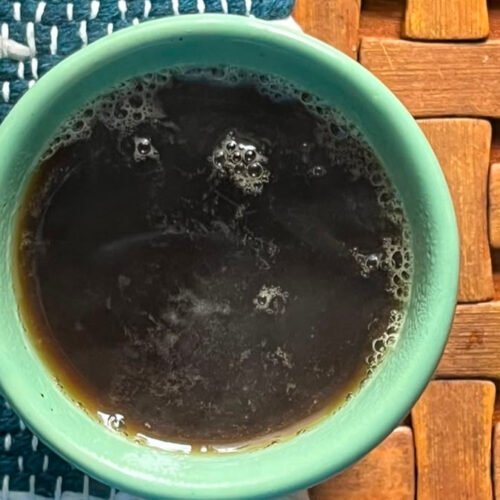
Spiced Black Coffee – How to control Cortisol ?

Equipment
- 1 Pot
- 1 cup
Ingredients
- Water 200 ml / 3/4 cup + 1 tbsp
- Green cardamom pods 2 pods, lightly crushed
- Cinnamon stick 1 small stick (about 2 cm), or 1/2 tsp ground cinnamon
- Instant coffee coffee powder — 1 tsp / 2 g
Instructions
- Lightly crush the cardamom pods with the back of a spoon so the seeds are exposed.
- Bring the water to a boil with the crushed cardamom and cinnamon stick in it.
- Once boiling, lower the heat and let it simmer for 3–4 minutes so the spices infuse properly. The water will turn a pale amber.
- Take it off the heat. Add the instant coffee directly to the hot spiced water and stir until fully dissolved.
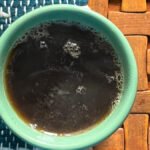
- Strain into your cup. Drink black, no sugar, no milk.
Video
Notes
- I drink this 2–3 hours after waking, not first thing. That timing is the entire point of the recipe.
- Cinnamon and cardamom are both low FODMAP at 1 tsp (2g) per Monash testing. This recipe uses well under that.
- Black coffee is low FODMAP, but it is a recognized non-FODMAP IBS trigger for a significant minority of people. Start with less if you are unsure.
- Ground cinnamon works if you have no sticks — use 1/2 tsp and strain well.
- Some people find warming spices stimulating to digestion. Test your own tolerance.
- Calories: ~7 kcal
- Protein: ~0.3 g
- Carbohydrates: ~1.5 g
- Fat: ~0.1 g
- Fiber: ~0.9 g
- Sugar: 0 g
- Caffeine: approximately 60–80 mg (varies by brand of instant coffee)
Is black coffee actually okay for IBS?
This is where I have to be careful, because there is a genuinely misleading version of this answer floating around.
Black coffee is low FODMAP. Monash has tested espresso-both single (30ml) and double (60ml) shots-and instant coffee (1 teaspoon in 230ml water), and both are low FODMAP. Pure coffee beans contain no fermentable carbohydrates.
And that is where a lot of blogs stop, which is not good enough.
Coffee is one of the most commonly reported non-FODMAP IBS triggers. Monash’s own data: studies looking at how many people with IBS implicate coffee in their symptoms found 26–40% identify it as a trigger.
Other studies found up to a third of people with IBS experienced symptom recurrence, commonly diarrhea, when caffeine was reintroduced after an elimination diet. Monash notes these come mostly from observational studies, so cause and effect cannot be firmly established.
The mechanism is separate from FODMAPs entirely. Research found both caffeinated and decaffeinated coffee increased colonic motor activity, with caffeinated slightly higher-suggesting it is the wider combination of compounds in coffee, not caffeine alone, acting on the bowel muscles.
So: low FODMAP, yes. IBS-safe, not necessarily, and not for everyone. Clinical guidelines generally recommend restricting caffeine rather than removing it, if it is suspected as a trigger.
For me, the timing was the whole thing. Same coffee, same amount, moved from twenty minutes after waking to two-and-a-half hours after waking, taken after tea and some food rather than on an empty stomach-and my gut stopped objecting. That is one person’s n=1. Keep a symptom diary and find your own answer.
How do you actually build this into a full day?
Roughly how mine runs, morning and night, so you can see the shape rather than copy the clock:
Morning. On waking, I stay off my phone and out of harsh overhead light. I now open the curtains for daylight-that is the recent change I mentioned. Ten to fifteen minutes of sitting quietly. Then my anti-inflammatory tea, usually ginger or fennel.
Then some slow movement, stretching or gentle yoga, nothing that leaves me breathless. Then breakfast with real protein in it. And somewhere between the two and three hour mark, the spiced black coffee.
Night. No coffee. Phone on switch-off mode, no scrolling. Room dark, eyes sometimes covered. Dinner with carbohydrate, protein and fiber together-carbs for sleep, protein and fiber for fullness. Then yoga Nidra and a singing bowl, white noise on, and I let myself drift.
The order matters more than the exact minutes. Calm before stimulation in the morning. Light when you want to be up, darkness when you want to come down. Your own cortisol rise before an added one, and a proper fall before you sleep.
If you take only one thing from this: try moving your coffee ninety minutes later for a week. It is the smallest change here and it was easily the most noticeable one for me. If you have room for a second: put the phone away at night and lie down to yoga Nidra instead. Those two bookends did more for me than anything in between.
On yoga nidra / NSDR and cortisol
- Huberman Lab. Non-Sleep Deep Rest (NSDR) — overview and science: https://www.hubermanlab.com/nsdr
- Research on yoga nidra reducing cortisol and improving sleep onset and quality (multiple studies in International Journal of Yoga and related journals). NSDR is Dr Andrew Huberman’s term for these practices.
On the gut–brain axis, cortisol and IBS
- Reviews on HPA axis activity, cortisol, intestinal permeability and visceral hypersensitivity in IBS (gut–brain axis literature). Monash University FODMAP resources on coffee as a non-FODMAP IBS trigger and on IBS being sensitive to stress as well as diet.
On low FODMAP spices and coffee
- Monash University FODMAP Diet resources: cinnamon and cardamom tested low FODMAP at 1 tsp (2g); black coffee (espresso and instant) tested low FODMAP; coffee noted as a common non-FODMAP trigger. https://www.monashfodmap.com/
On protein, fiber and satiety for weight management
- Reviews and trials on high-protein, higher-fiber eating and satiety (protein suppressing ghrelin; fiber slowing gastric emptying and blunting blood-sugar rise), including POUNDS LOST trial analyses on macronutrients, fiber and weight loss.
About Dr Andrew Huberman
- Dr Andrew Huberman (he/him) is a neuroscientist and tenured professor of neurobiology at Stanford School of Medicine, and host of the Huberman Lab podcast: https://www.hubermanlab.com/
A note on how I use these: the podcast episodes are what pointed me toward these ideas, but where I make a specific claim above I have leaned on the underlying research and named institutions, not the videos alone. If a point is just my own experience, I have said so.
Frequently Asked Questions
What is good cortisol and how is it different from bad cortisol ?
There is no separate hormone. “Good cortisol” describes cortisol arriving with the right shape and timing-a sharp rise in the first 30 to 45 minutes after waking, then a steady fall through the day. “Bad cortisol” is what people mean when that pattern goes wrong: chronically elevated, flat, or spiking at the wrong times. So how to control cortisol is really about shaping that curve — timing the spike, not suppressing the hormone.
Should I stop drinking coffee to lower my cortisol ?
Not necessarily. Research by Lovallo and colleagues found caffeine stimulates cortisol secretion and that habitual drinkers develop only partial tolerance. But the practical issue is timing, not existence. Drinking coffee inside your natural cortisol awakening window stacks a caffeine spike on top of a rise your body is already producing. Moving coffee to 2–3 hours after waking was the change that worked for me.
Does sitting in a dark room in the morning lower cortisol?
This is where I have to correct my own assumption. Research on morning light points the other way: studies found bright morning light increased the cortisol awakening response by roughly 35% to 50% compared to dim light, and an enhanced awakening response is generally considered desirable. My dark, candle-lit start still makes me feel better, but the likely reason is the calm and the absence of my phone, not the darkness itself. I have since started getting daylight during that window while keeping everything else.
Is spiced black coffee low FODMAP and safe for IBS ?
Black coffee is low FODMAP by Monash testing, as are cinnamon and cardamom at 1 teaspoon (2g) each. But low FODMAP does not mean IBS-safe. Monash reports that 26–40% of people with IBS identify coffee as a symptom trigger, through a mechanism unrelated to FODMAPs-coffee increases colonic motor activity. Test it on yourself, ideally with a symptom diary.
Does yoga or meditation actually help cortisol?
Modestly, and the evidence quality varies. A network meta-analysis found mind–body practices like yoga and qigong reduced cortisol in people with psychological distress, with yoga carrying the strongest evidence, while high-intensity interval training tended to raise it. A meditation meta-analysis found a medium-sized cortisol reduction in at-risk groups. However, a yoga and MBSR meta-analysis noted most included studies were of poor quality with effects shrinking against active controls. Worth doing, not a cure.
What should my night routine look like to keep cortisol low?
The evening is half the picture, because a clean morning cortisol rise depends on cortisol falling the night before. What works for me and is supported by the research: no caffeine at night, a dark room, no bright screens before bed (screen light suppresses melatonin), and yoga nidra or NSDR, which research links to reduced cortisol and heart rate. Dr Huberman also suggests some starchy carbohydrate in the evening, since carbs support serotonin and sleep. Darkness is right at night-the exact opposite of the morning.
Can fixing my cortisol help with weight loss ?
Indirectly, and only as one piece. A dysregulated cortisol curve disrupts sleep, appetite and blood sugar, all of which make weight loss harder. Fixing the curve removes those obstacles rather than melting fat directly. What actually drives steady weight loss on my plate is protein and fiber together-one of the most consistently supported satiety tools, since protein blunts hunger hormones and fiber adds fullness and slows sugar absorption. I pair that with some evening carbohydrate for sleep. The result is slow, steady loss, which is the goal, not a fast crash.
🌿 Love gut-friendly recipes? Add Caloriematterss as your Google Preferred Source so my low-FODMAP, high-protein recipes show up more often for you. Set Caloriematterss as a preferred source →