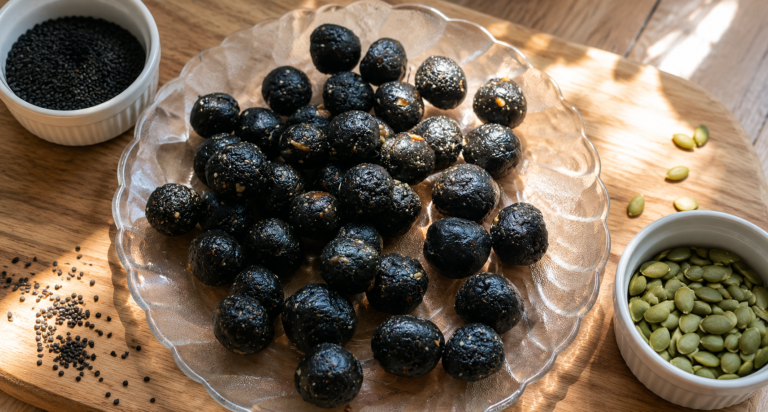
Low FODMAP Green Tea with Ginger, Cardamom and Lemon: The Gentle Cup My 70+ Parents Now Ask For
📝 Quick Guide
What it is: Low FODMAP green tea simmered with grated ginger and two cardamom pods, finished with fresh lemon juice.
Why it works: Green tea, ginger, cardamom and lemon juice have all been lab tested by Monash University and listed as low FODMAP at normal serving sizes.
Honest IBS/low-FODMAP note: Green tea still has caffeine, and caffeine can bother some IBS guts. Keep it to one or two cups and brew it light if you are sensitive.
Calories: ~4 kcal per cup | Protein: ~0g (this is a drink, not a protein source)
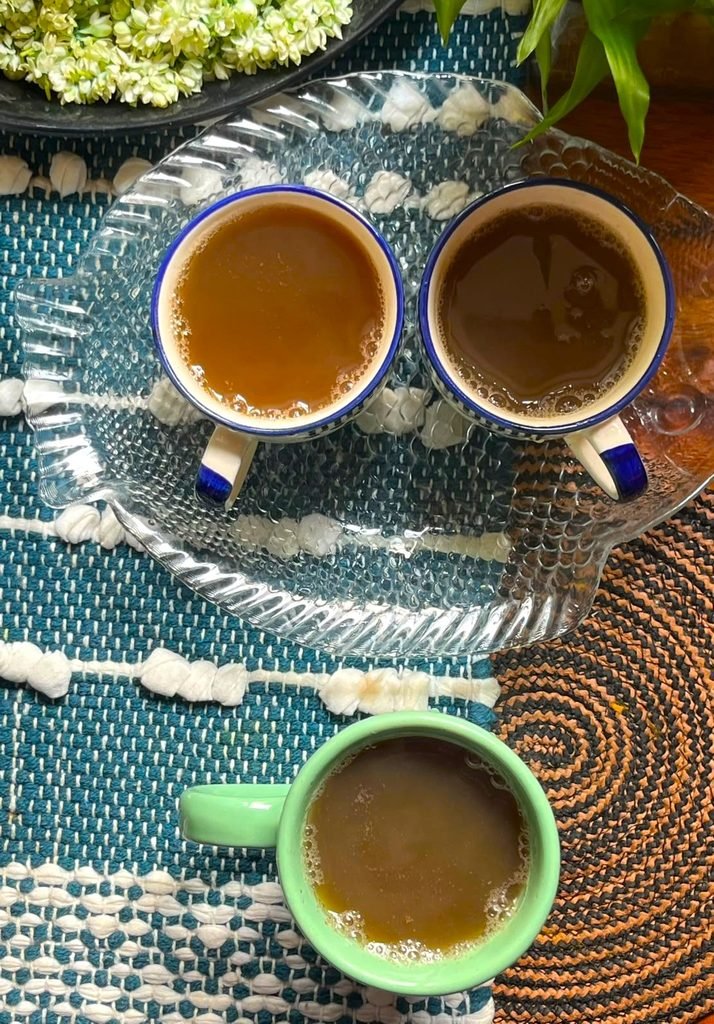
Low FODMAP green tea is the one drink in my kitchen that everyone at home agrees on. I make it with grated ginger, two green cardamom pods and a spoon of green tea leaves, then squeeze lemon in at the end. Last week I made a pot for my parents, both in their seventies, and expected the usual “too bland” verdict. Instead my father asked for a second cup and my mother wanted to know how I made it. That was enough for me to write it down properly.
This post covers how I make it, why each ingredient is in the cup, what the research actually says about green tea, ginger, cardamom and lemon, and how to drink it if you have IBS. I am not a nutritionist, so every health point below links to the source I read it in. You will find the full list at the end.
Table of Contents
What is low FODMAP green tea with ginger, cardamom, cinnamon sticks and lemon?
It is plain green tea simmered briefly with fresh ginger, crushed green cardamom and a small cinnamon stick, strained, then finished with lemon juice. Every ingredient in it has been tested by Monash University, the team behind the low FODMAP diet, and listed as low FODMAP at normal portions. No milk, no honey, no tea bags with mystery “natural flavors.”
I started making it because I missed the comfort of a hot spiced drink. Masala chai with milk did not always sit well with me, and plain green tea on its own felt thin. Ginger, cardamom and cinnamon gave it the warmth of chai without the milk, and lemon cut through the grassy taste of the tea leaves.

Is green tea low FODMAP?
Yes. Monash University lab tested green tea and lists it as low FODMAP. According to the Monash data reported by FODMAP Everyday, a green-light portion is 250 ml (about 1 cup) brewed dark from one teabag. Monash’s own research update on hot drinks placed green tea in the low FODMAP group, while strong black tea, strong chai, chamomile and fennel tea landed in the high group.
That surprised me when I first read it. I had assumed all tea was the same. It isn’t. Green tea and white tea were low, oolong was high, and black tea depended on how dark you brewed it. So if regular doodh-cha has been bothering you, it may be worth checking whether it is the tea strength, the milk, or both.
One caution: Monash tested an infusion of about one teabag in 250 ml. My recipe uses one tablespoon of loose leaves for two cups. Loose leaves vary a lot in size, so I keep my pot light rather than dark, and I split it between two cups.

Low FODMAP Green Tea

Ingredients
- 500 ml 2 cups / 17 fl oz water (pani / jol)
- 1 tablespoon loose green tea leaves hari chai patti / sobuj cha pata, about 3 g (0.1 oz)
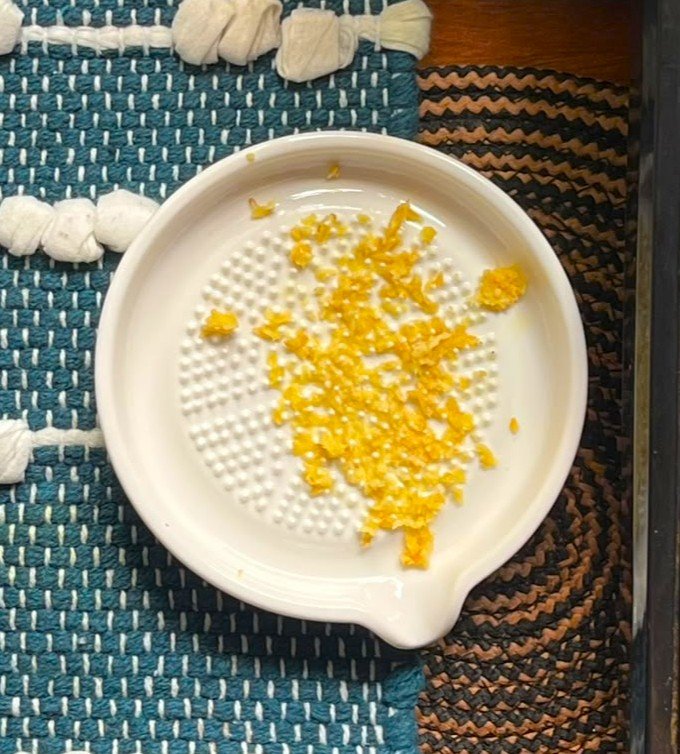
- 1 teaspoon fresh ginger grated (adrak / ada), about 5 g (0.18 oz)
- 2 green cardamom pods lightly crushed (hari elaichi / choto elach)
- 1 small cinnamon stick about 2.5 cm (1 inch), broken in half (dalchini / daruchini), Ceylon preferred
- 2 tablespoons fresh lemon juice about 30 ml (1 fl oz), 1 tablespoon per cup
Instructions
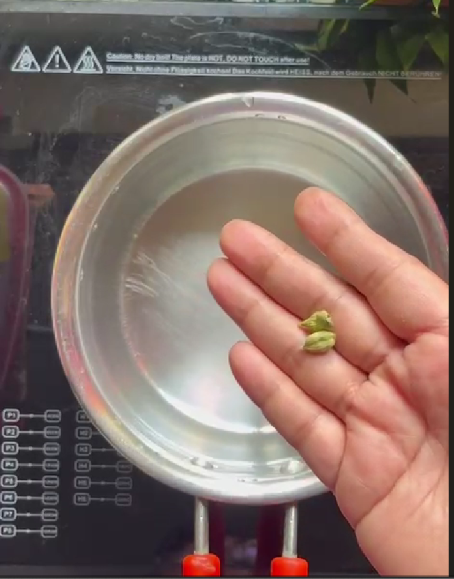
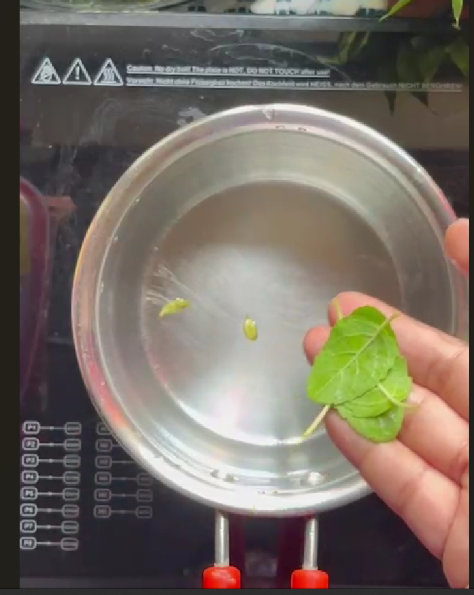
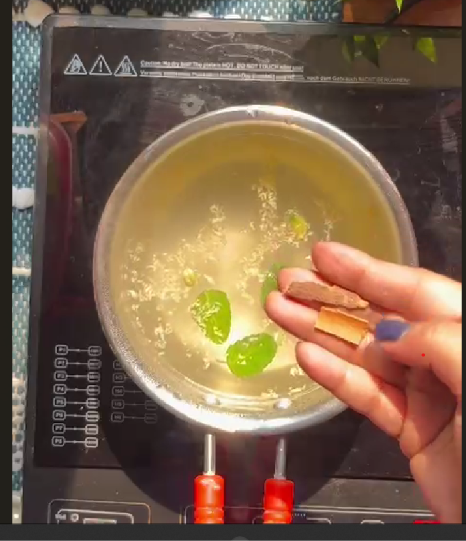
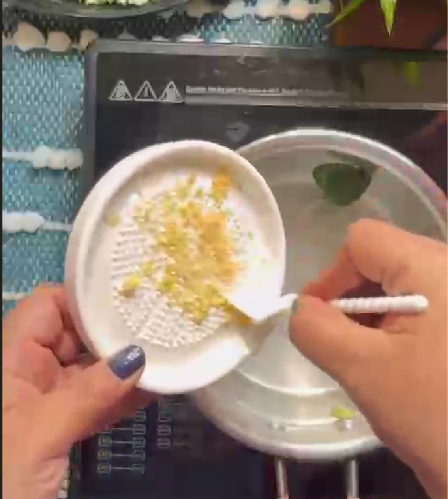
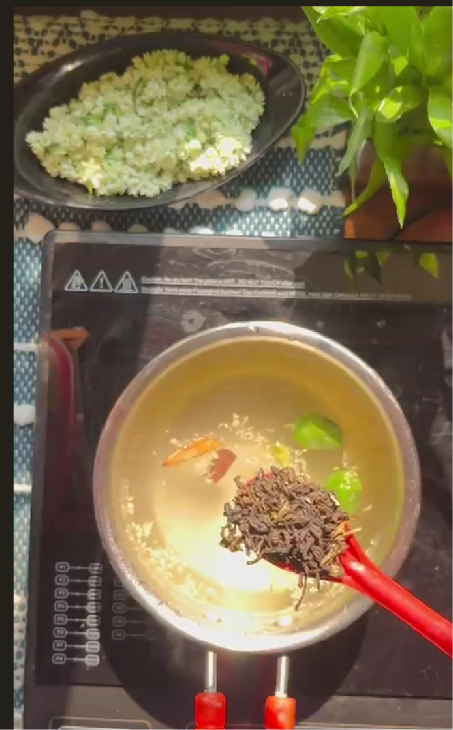
- Pour the water into a small saucepan. Add the grated ginger, crushed cardamom pods, cinnamon stick and green tea leaves.
- Bring to a boil over medium heat, then simmer for about 1 minute. Don’t boil longer or the tea turns bitter.
- Switch off the heat and strain into two cups.
- Let it cool for a minute, then stir 1 tablespoon lemon juice into each cup. Serve warm.
Video
Notes
- For a lighter, lower-caffeine cup, use ½ tablespoon tea leaves, or swap in decaf green tea.
- Ceylon cinnamon has much less coumarin than cassia. Use one small piece per pot, and pick Ceylon if anyone drinking it has a liver condition.
- Skip honey on a low FODMAP diet. A little white sugar is fine if you want it sweeter.
- Monash tested green tea at 250 ml brewed from one teabag. Loose leaves vary in size, so keep the brew light.
Are ginger, cardamom, cinnamon and lemon juice low FODMAP too?
Yes. Monash lists ginger, cardamom and cinnamon among its low FODMAP spices, and lemon juice is listed as low FODMAP in the Monash app. Monash’s own blog post on herbs and spices names cardamom, cinnamon and ginger in its Indian low FODMAP spice list, alongside cumin, turmeric and curry leaves. Monash suggests checking its app for exact serving sizes.
For fresh ginger, the Monash app currently lists a low FODMAP serve of 5 g, roughly one teaspoon grated, according to Georgeats. That is exactly what I use for a two-cup pot, and because you strain it out, you are drinking the flavor, not the ginger itself.
Lemon juice shows up on low FODMAP lists built from Monash app data, including Emily Stewart’s list updated in January 2026. A tablespoon per cup is plenty.
How do I make it at home?
I do it the way my mother taught me to make chai: everything goes in the pan together, it comes to a boil, and then it gets strained.
Grate the ginger fresh. The pre-made ginger paste in jars often has garlic or other things added, so read the label if you use one. Crush the cardamom pods lightly with the back of a spoon so the seeds can open up. Break the cinnamon stick in half so it gives up its flavor faster. Add all three to the water with the tea leaves and bring it to a boil.
Here is the part I learned the hard way. If you let green tea leaves boil for five minutes like chai, it turns bitter and dark. Now I let it come up to a boil, simmer for about one minute, and switch it off. Lab work on brewed teas published in the Journal of Analytical Toxicology found that steeping time changed how much caffeine ended up in the cup, so a shorter brew is also the gentler option if caffeine is a worry for you.
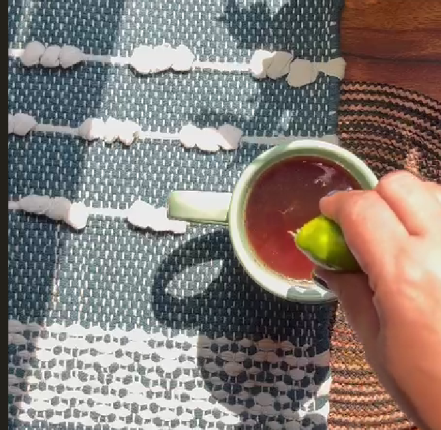
Strain it, let it cool for a minute, then squeeze in the lemon. I add lemon at the end because it tastes fresher that way. If you add it into the boiling pan, it goes flat.
The full recipe with quantities is in the recipe card below.
What does the research say about green tea?
The US National Center for Complementary and Integrative Health (NCCIH) says no safety concerns have been reported for green tea as a drink in adults, but it does contain caffeine. That is the most honest one-line summary I found.
Green tea has a big reputation. You have probably seen it linked with weight loss, heart health, cancer prevention and more. When I went looking for proper sources, the picture was more modest. NCCIH explains that many of the studies on cholesterol used green tea extract supplements, not green tea as a drink. The Merck Manual, a medical reference, says that few of the claimed benefits are backed by firm evidence and that any benefit is likely small, while still calling green tea generally safe.
I find that reassuring rather than disappointing. I don’t drink green tea expecting a miracle. I drink it because it is a warm, low-calorie cup that doesn’t upset my gut, and it gives me a lighter caffeine lift than coffee. On caffeine, the Mayo Clinic lists brewed green tea at about 29 mg per 8 oz cup, compared with roughly 96 mg for brewed coffee and 48 mg for black tea. The real number in your cup depends on how much leaf you use and how long you brew it.
Two safety points I want you to know, especially if you are making this for older family members:
- NCCIH notes that rare liver injury reports have mostly involved green tea extract pills and capsules, not the drink. A cup of home-brewed tea is not the same as a concentrated supplement.
- Green tea can interact with some medicines. NCCIH mentions that green tea extract can lower blood levels of atorvastatin, a cholesterol drug. The Merck Manual adds that vitamin K in green tea may reduce the effect of warfarin, and that green tea may reduce how well iron and folic acid are absorbed.
What does the research say about ginger?
Ginger has the best research of the four ingredients, mostly for nausea. A 2020 systematic review in the journal Nutrients looked at 109 randomized controlled trials on ginger. It found consistent support for ginger in pregnancy nausea, inflammation, metabolic markers and digestive function, while other claimed benefits were mixed. The same review pointed out that fewer than half of those trials were rated high quality.
A 2019 overview of systematic reviews in Complementary Therapies in Medicine came to a similar view. Nausea and vomiting was the most-studied area, and the authors called ginger promising but said better-designed studies are still needed.
A third review, published in Food Science & Nutrition in 2018, focused only on gut-related clinical trials. It noted that the US FDA classes ginger as “generally recognized as safe” and that around 1,500 mg a day in divided doses was the amount that helped with nausea in the studies they looked at.
What does this mean for one cup of tea? One teaspoon of grated ginger steeped and strained is far less than the doses in those trials. So I won’t tell you this tea treats nausea. What I can say is that ginger is a well-studied, low FODMAP spice, and a warm ginger drink is something I personally reach for when my stomach feels unsettled.
What does the research say about cinnamon?
The US National Center for Complementary and Integrative Health (NCCIH) says research doesn’t clearly support using cinnamon for any health condition, but cinnamon is likely safe in the amounts used in food. That surprised me, because cinnamon is everywhere online as a blood sugar fix.
NCCIH explains that many cinnamon and diabetes studies are hard to read, because they often don’t say which type of cinnamon or which part of the plant was tested. Its conclusion is that it is unclear whether cinnamon supplements help with diabetes or weight loss. So I’m not adding it for that.
What I did learn is that there are two main types, and the difference matters:
- Ceylon cinnamon (Cinnamomum verum) is often called “true” cinnamon. It grows mainly in Sri Lanka and has the thin, papery, layered quills.
- Cassia cinnamon (Cinnamomum aromaticum) has thicker, harder bark and is the most common type sold in North America, according to NCCIH.
What does the research say about cardamom?
Cardamom research is early, and mostly small human trials or animal studies. This is the ingredient where I had to be most careful, because many websites list “proven benefits” that are really lab or rat studies.
The most balanced source I found was a 2022 review by Keith Singletary in Nutrition Today. He went through human studies on cardamom for blood sugar, cholesterol, inflammation, blood pressure and digestive discomfort in pregnancy. His conclusion was that the results so far are too limited and inconsistent to support recommending cardamom for any of these.
A 2022 narrative review on cardamom and metabolic syndrome, available on PubMed Central, summarized studies on diabetes, cholesterol, weight and blood pressure. Some of the clinical trials it covered used around 3 g of cardamom powder a day for ten weeks. Two cardamom pods in a pot of tea is nowhere near that.
So why is it in my cup? Flavor, mainly. Cardamom is what makes this taste like something my parents recognize. It is the smell of every Bengali kitchen during Pujo. And Monash lists it as low FODMAP, so I can use it without worrying.
Cassia contains much more of a natural compound called coumarin. NCCIH notes that coumarin and liver interactions have been reported, and that long-term use of cassia could be an issue for sensitive people, such as those with liver disease. Germany’s Federal Institute for Risk Assessment (BfR) sets the tolerable daily intake of coumarin at 0.1 mg per kg of body weight. By its estimate, a 60 kg adult would reach that limit with about 2 g of cassia cinnamon powder a day.
One small stick simmered for a minute and then strained out is a very different thing from eating spoonfuls of powder. I haven’t found a reliable figure for how much coumarin a short simmer pulls out of a stick, so I won’t guess. What I do at home is simple: one small piece per pot, and I buy Ceylon when I can find it, especially for my parents. If the pack doesn’t say which type it is, the thin, layered quills are usually Ceylon and the thick, rolled bark is usually cassia.
What does the research say about lemon juice?
Lemon juice adds a small amount of vitamin C and almost no calories. Based on USDA data for raw lemon juice (about 94 mg vitamin C and 54 kcal per 244 g cup), one tablespoon works out to roughly 6 mg of vitamin C and about 3 kcal.
That is a small amount of vitamin C, not a dose that will fix anything on its own. I add lemon for taste. It lifts the tea, softens the slightly grassy edge of green tea leaves, and it means I don’t feel the need for sugar or honey. That last part matters on a low FODMAP diet, because honey is high in fructose and isn’t a good choice for many of us during the elimination phase.
Can people with IBS drink this low FODMAP green tea?
Most people with IBS can try it, because all four ingredients are low FODMAP, but caffeine is the part to watch. The British Dietetic Association’s IBS food fact sheet recommends limiting caffeine from tea, coffee and soft drinks to three drinks a day. One NHS IBS leaflet I read specifically counts green tea in that limit.
Here is how I drink it with IBS:
- One or two cups a day, counted together with any other tea or coffee I have.
- Brewed light. If my gut is having a bad week, I use half the leaves.
- Not on an empty stomach first thing. I have it mid-morning or after lunch. The Merck Manual also suggests avoiding green tea on an empty stomach.
- Not late in the evening, so it doesn’t mess with my sleep.
- No honey. If I want it sweeter, a little plain sugar is low FODMAP in normal amounts.
If caffeine is a clear trigger for you, especially with diarrhea-type IBS, try a decaf green tea with the same ginger, cardamom and lemon. You keep most of the flavor and drop most of the caffeine. And as always, your own gut is the final test. What works for me might not work the same way for you.
Is it safe to give to older parents?
Green tea as a drink is generally considered safe for adults, but check with their doctor if they take regular medicines. This was the question I asked myself before I handed my parents a second cup.
Older adults are often on blood thinners, cholesterol tablets or iron supplements. Those are exactly the medicines that sources like NCCIH and the Merck Manual flag for green tea interactions. That doesn’t mean they can’t have it. It means a quick word with their doctor or pharmacist is sensible, and it is a good idea to keep the tea away from the time they take iron tablets.
Caffeine is the other thing. A lot of older people find sleep harder to come by, so I serve this before 4 pm at home. My parents have their cup in the late morning with a few roasted makhana, and that has become a small routine for the three of us.
Why do I keep making this low FODMAP green tea?
Because it is the one warm drink I can offer everyone, including myself, without a second thought about my gut. That is the whole reason.
I don’t drink it to lose weight or to “detox.” I drink it because it is calm, warm, and it smells like home. For years I avoided anything with “tea” in it during bad IBS weeks because I didn’t know which teas were the problem. Learning that green tea is low FODMAP, and that ginger and cardamom are too, gave me back something small but comforting.
If you try it, start with a light brew, see how your gut feels over a couple of days, and adjust. And if your parents end up asking for a second cup like mine did, I’d love to hear about it. Anti Inflammatory Drink
Sources :-
Low FODMAP status
- Monash University, Research diet updates: FODMAP content of hot beverages — https://www.monash.edu/medicine/ccs/gastroenterology/research/updates
- Monash University FODMAP blog, Using herbs and spices on a low FODMAP diet — https://monashfodmap.com/blog/using-herbs-spices-low-fodmap-diet/
- FODMAP Everyday, Low FODMAP Iced Green Tea (Monash green tea serving size) — https://www.fodmapeveryday.com/recipes/low-fodmap-iced-green-tea-with-passionfruit/
- Georgeats, Is ginger low FODMAP? (Monash app ginger serve) — https://georgeats.com/posts/resources/is-ginger-low-fodmap/
- Emily Stewart RD, 70+ Low FODMAP Spices, Herbs and Flavor Enhancers (Monash app, January 2026) — https://www.eastewart.com/digestive-health/70-low-fodmap-spices-herbs-flavor-enhancers/
Green tea
- NCCIH (US National Institutes of Health), Green Tea: Usefulness and Safety — https://www.nccih.nih.gov/health/green-tea
- Merck Manual Consumer Version, Green Tea — https://www.merckmanuals.com/home/special-subjects/dietary-supplements-and-vitamins/green-tea
- Mayo Clinic, Caffeine content for coffee, tea, soda and more — https://www.mayoclinic.org/healthy-lifestyle/nutrition-and-healthy-eating/in-depth/caffeine/art-20049372
- Chin JM et al., Caffeine content of brewed teas, Journal of Analytical Toxicology, 2008 — https://pubmed.ncbi.nlm.nih.gov/19007524/
Ginger
- Anh NH et al., Ginger on Human Health: A Comprehensive Systematic Review of 109 Randomized Controlled Trials, Nutrients, 2020 — https://pubmed.ncbi.nlm.nih.gov/31935866/
- Li H et al., Ginger for health care: An overview of systematic reviews, Complementary Therapies in Medicine, 2019 — https://pubmed.ncbi.nlm.nih.gov/31331547/
- Nikkhah Bodagh M et al., Ginger in gastrointestinal disorders: A systematic review of clinical trials, Food Science & Nutrition, 2018 — https://www.ncbi.nlm.nih.gov/pmc/articles/PMC6341159/
Cardamom
- Singletary K., Cardamom: Potential Health Benefits, Nutrition Today, 2022 (summary via McCormick Science Institute) — https://www.mccormickscienceinstitute.com/our-research/scientific-overviews/cardamom-potential-health-benefits
- The effect of Elettaria cardamomum (cardamom) on the metabolic syndrome: Narrative review, PubMed Central — https://pmc.ncbi.nlm.nih.gov/articles/8917848/
Lemon juice
- USDA nutrient data for raw lemon juice (NDB 9152), via ReciPal — https://www.recipal.com/ingredients/2348-nutrition-facts-calories-protein-carbs-fat-lemon-juice-raw
- NCCIH (US National Institutes of Health), Cinnamon: Usefulness and Safety — https://www.nccih.nih.gov/health/cinnamon
- German Federal Institute for Risk Assessment (BfR), FAQ on coumarin in cinnamon and other foods — https://www.bfr.bund.de/en/service/frequently-asked-questions/topic/faq-on-coumarin-in-cinnamon-and-other-foods/
IBS and caffeine
- British Dietetic Association, IBS and Diet Food Fact Sheet — https://www.bda.uk.com/foodfacts/irritable_bowel_syndrome
- West Suffolk NHS Foundation Trust, Dietary advice for patients with IBS (counts green tea in the caffeine limit) — https://www.wsh.nhs.uk/CMS-Documents/Patient-leaflets/NutritionandDieteticService/Dietary-advice-for-patients-with-Irritable-Bowel-Syndrome-IBS.pdf
Frequently Asked Questions
Is green tea low FODMAP?
Yes. Monash University lists green tea as low FODMAP. The green-light portion is 250 ml (about 1 cup) brewed dark from one teabag. Green tea and white tea tested low, while oolong and strong black tea tested high.
Can I drink green tea with ginger every day if I have IBS?
Many people with IBS can, because green tea, ginger, cardamom, cinnamon and lemon juice are all low FODMAP. The thing to watch is caffeine. The British Dietetic Association suggests limiting caffeinated drinks, including tea, to three a day. Start with one light cup and see how your gut responds.
Is green tea safe for elderly parents?
NCCIH says no safety concerns have been reported for green tea as a drink in adults, but it contains caffeine and can interact with some medicines, such as warfarin and atorvastatin. If your parents take regular medicines, check with their doctor first and serve it earlier in the day.
How much caffeine is in this green tea?
Mayo Clinic lists brewed green tea at about 29 mg of caffeine per 8 oz cup, compared with about 96 mg for brewed coffee. Your cup may be higher or lower depending on how much leaf you use and how long you simmer it.
Does this tea have protein or many calories?
No. One cup is roughly 4 kcal with close to zero protein. Most of the calories come from the tablespoon of lemon juice. It is a gentle warm drink to have alongside high protein meals, not a protein source itself.
🌿 Love gut-friendly recipes? Add Caloriematterss as your Google Preferred Source so my low-FODMAP, high-protein recipes show up more often for you. Set Caloriematterss as a preferred source →