High Protein Chicken Skewers – No Oil, IBS-Friendly & Guilt-Free
📌 Quick Guide
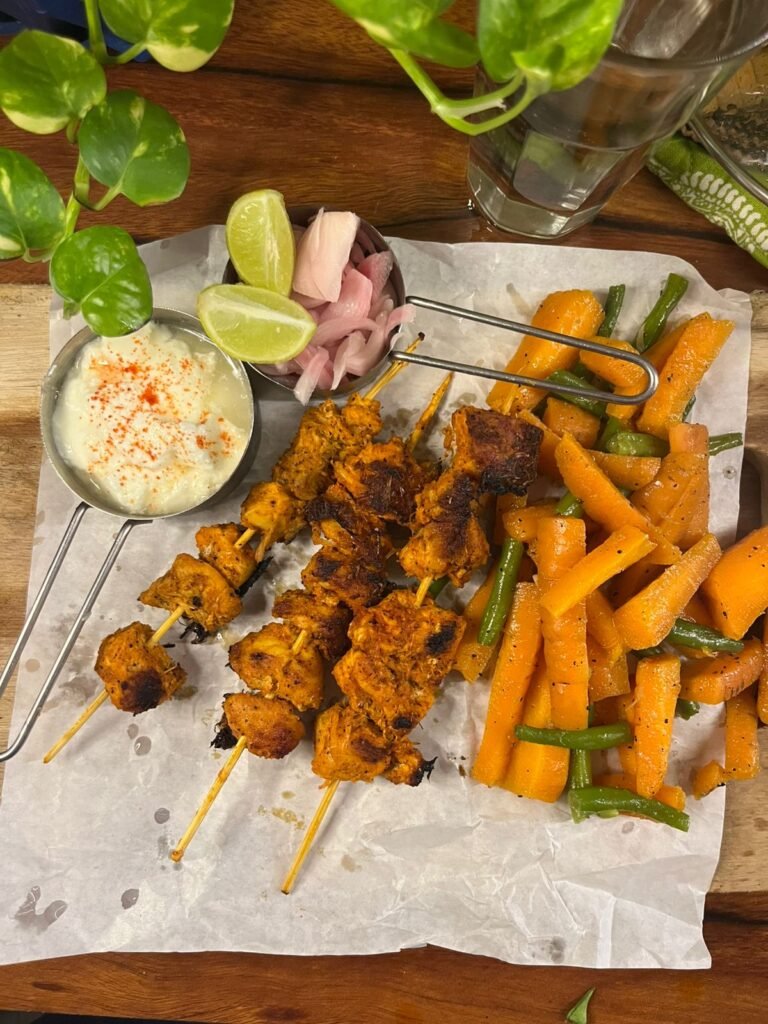
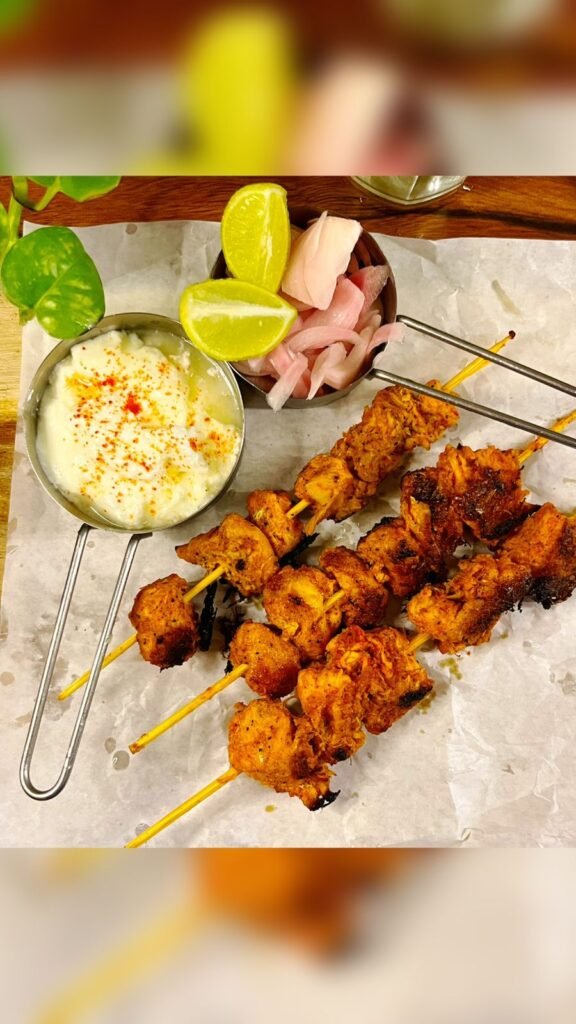
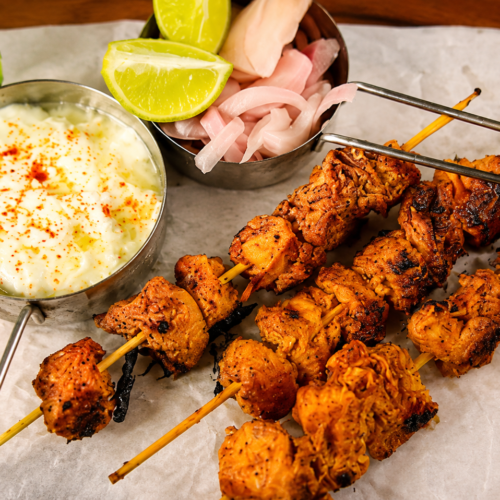
What it is: Lemon-marinated chicken threaded on bamboo skewers and pan-fried in the tiniest amount of ghee — served with hung curd, pickled onions, and lemon slices
Why it works: No oil, no batter, no coating — just clean protein with a curd marinade your gut can handle
IBS-friendly: Yes — no raw onion in the marinade, no deep frying, no maida, digests cleanly
Cook time: 25 minutes (plus 30 min marination)
Calories: ~210 kcal | Protein: ~36g
I have one rule when my IBS is playing up: I am not eating something sad.
No plain boiled chicken. No flavourless steamed meal that makes me feel like I am punishing myself. If I am already dealing with a bad gut day, I am not adding a miserable dinner to it.
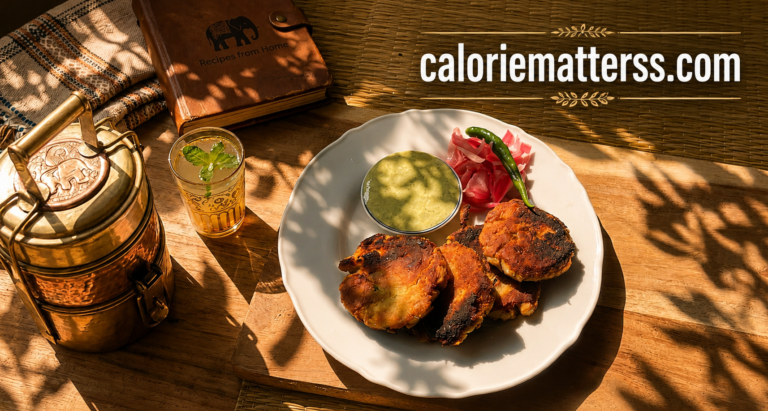
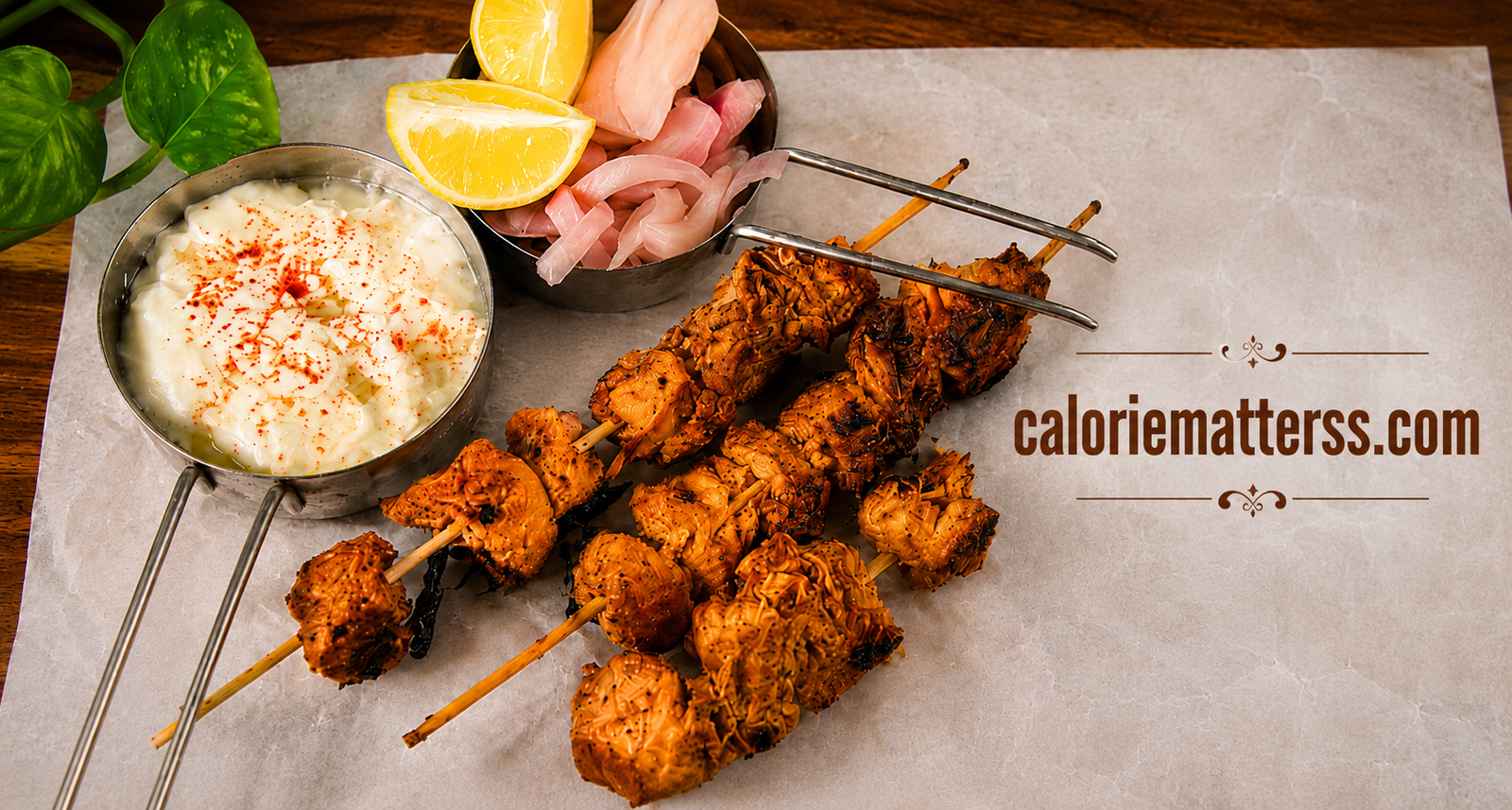
These high protein chicken skewers are what I make instead. Lemon zest, red chilli powder, black pepper, a squeeze of lemon juice — all rubbed into chicken pieces and threaded onto bamboo skewers. Pan-fried on low heat with the absolute minimum amount of ghee. Served with hung curd, pickled onions, and lemon slices on the side.
It looks like a restaurant plate. It feels like a cheat meal. It is neither. It is 36 grams of protein in a bowl that my gut handles completely fine.
My dietitian has said this repeatedly since my 2023 IBS diagnosis — the method of cooking matters as much as the ingredients. Deep frying, refined oil, heavy batters — those are what cause the flare, not chicken itself. Remove them, keep the spice lean, and chicken is one of the safest high-protein options you have. These skewers prove exactly that.
Table of Contents
Are High Protein Chicken Skewers Actually IBS-Friendly?
The short answer is yes — when you make them the right way.
The typical reason chicken dishes cause trouble with IBS is not the chicken. It is everything around it: refined oil, heavy marinades with raw garlic in large amounts, maida-based coatings, deep frying. Any one of those can set off symptoms.
These high protein chicken skewers avoid all of it. No oil other than a scraping of ghee for the pan. No maida, no coating. The marinade is lemon juice, lemon zest, red chilli powder, black pepper, and salt — all used in small, controlled amounts that most people with IBS tolerate well.
Ghee specifically is something my dietitian was clear about: in small quantities, ghee is easier to digest than refined vegetable oil. The fat content is similar, but ghee contains butyrate, a short-chain fatty acid that actually supports gut lining integrity. A teaspoon spread across a full pan session is very different from a deep-frying scenario.
One thing I will say — chilli powder is an individual trigger. I keep mine at half a teaspoon for 200g of chicken. If you are very sensitive, start with a quarter teaspoon. The lemon zest does a lot of the flavour work anyway.
What Cut of Chicken Works Best for High Protein Chicken Skewers?
Boneless chicken breast is what I use. It is the leanest option, threads onto skewers cleanly, and cooks quickly on a pan without drying out when the heat is low enough.
Chicken thigh works too. It has slightly more fat, but it is also more forgiving — it stays juicy even if your timing is off by a couple of minutes. If you have a particularly bad gut day and want something gentler, thigh is actually a fine choice. The fat difference is small enough that it does not matter clinically, according to my dietitian.
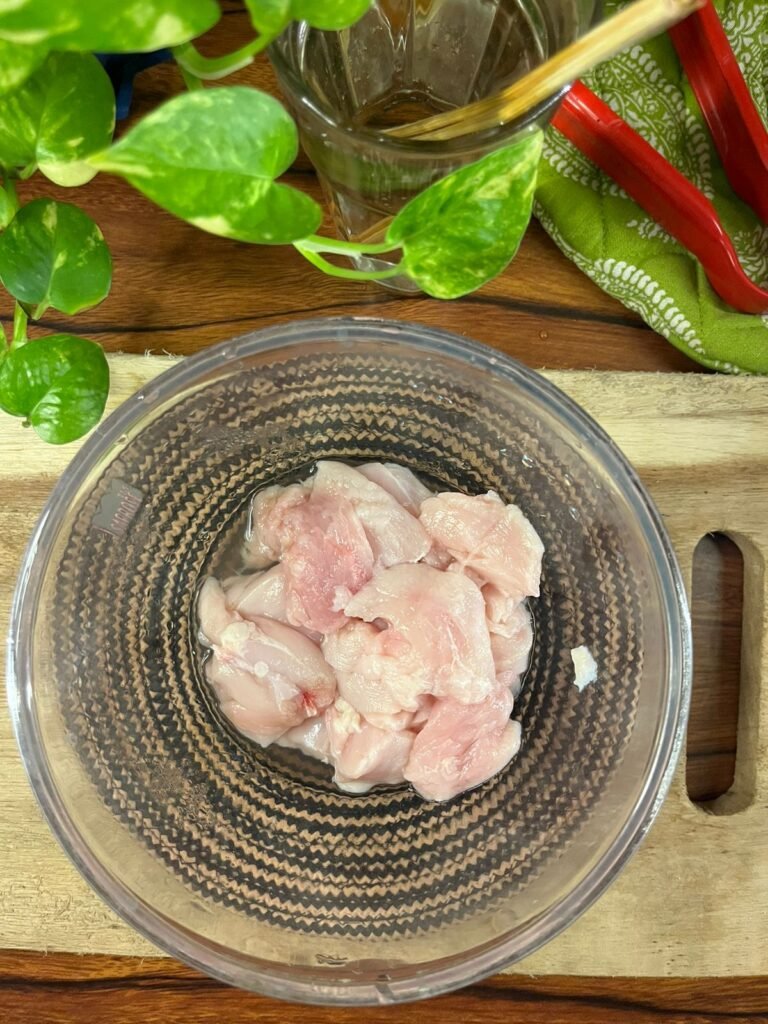
Cut the chicken into pieces roughly 3cm × 3cm. Too small and they dry out fast. Too large and the outside chars before the inside cooks through. Even-sized pieces matter more than precise cutting — just try to keep them consistent.
Soak your bamboo skewers in water for at least 20 minutes before using them on a hot pan. Dry bamboo burns and splinters at high heat, which is a texture nobody wants in their food.
What Goes Into the Marinade for These Skewers?
This marinade has five ingredients and zero fuss. Here is what each one does:
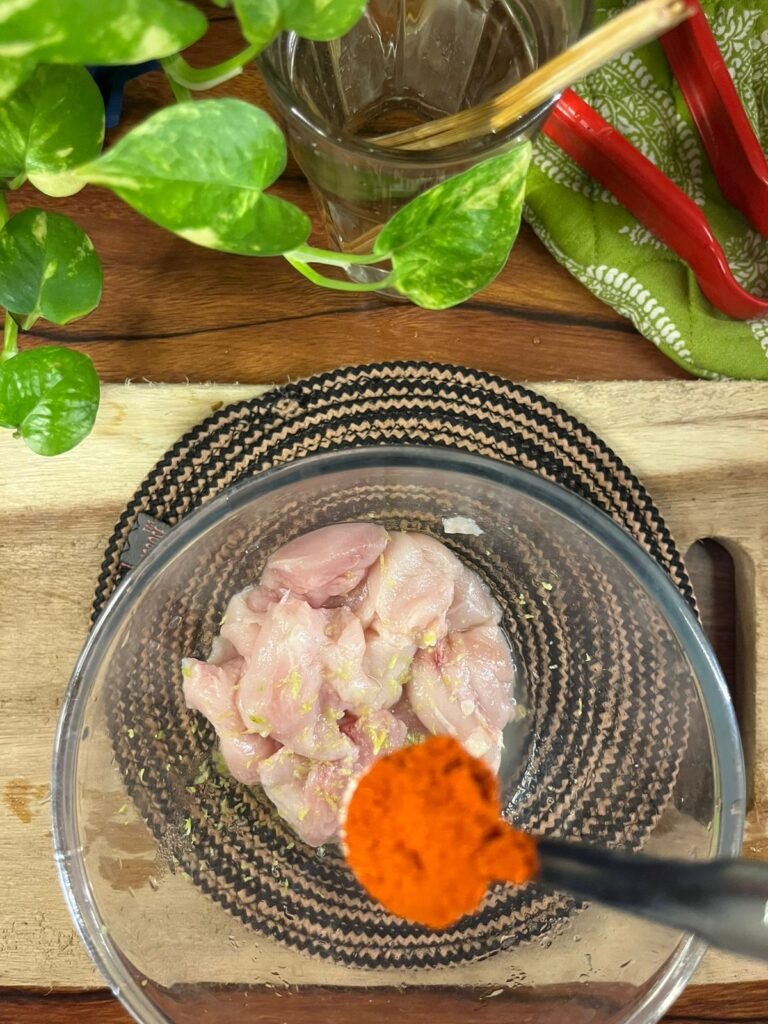
Lemon zest — This is the ingredient people skip and it is the one that makes the biggest difference. The zest carries the essential oils from the skin. It is more concentrated and fragrant than the juice. It also does not add moisture, so your chicken sears rather than steams.
Lemon juice — Slightly tenderises the chicken and balances the heat from the chilli. I use about half a lemon for 200g.
Red chilli powder (lal mirch) — For heat and colour. The char you see on the chicken in the pan comes partly from this. Keep the quantity conservative if your IBS is particularly reactive to spice.
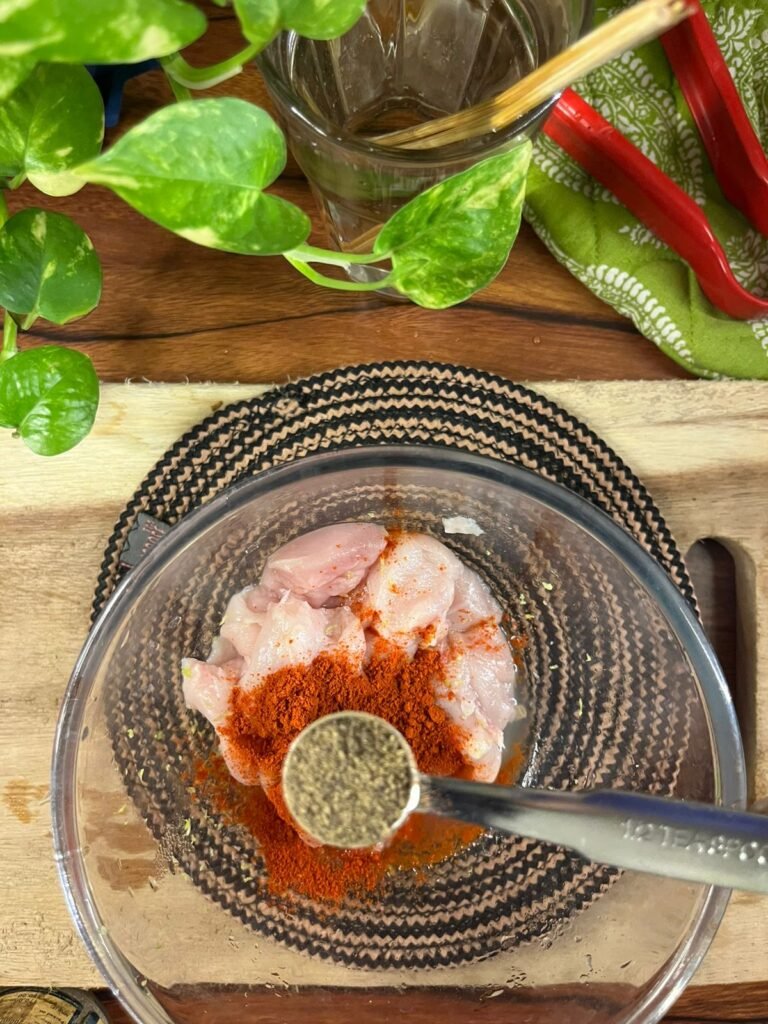
Black pepper (kali mirch) — Adds a different kind of heat — sharper and cleaner than chilli. One or two good pinches is enough.
Salt — Draws out a small amount of moisture from the chicken surface, which helps the marinade absorb rather than just sitting on top.
Let it sit for a minimum of 30 minutes. An hour is better. Overnight in the fridge is the best if you are planning ahead. I have made these high protein chicken skewers at 6pm for dinner by marinating them at 5pm — it still works.
How Do You Cook Chicken Skewers Without Oil?
Low heat and a drop of ghee. That is the whole technique.
Heat a non-stick pan on medium-low. Add ghee — not a pool of it, just enough to coat the pan lightly. In practice, this is about half a teaspoon. If your pan is non-stick and in good condition, it needs even less.
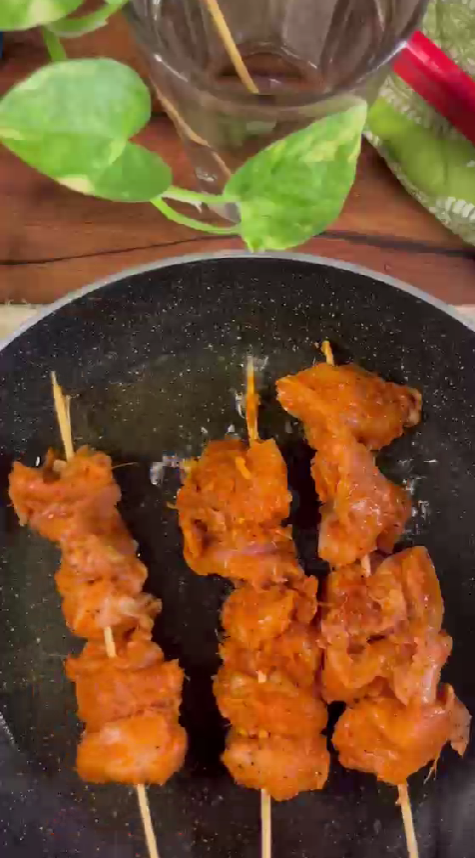
Place the skewers in the pan and do not touch them for 3 to 4 minutes. This is the step most people rush and it is the reason their chicken sticks. Let it sit undisturbed until it releases naturally. You will feel the resistance when you try to turn it — if it pulls, give it another minute.
Turn once. Same thing on the other side — 3 to 4 minutes on medium-low. The inside of the chicken should reach 75°C. If you do not have a thermometer, cut the thickest piece at the end: no pink, clear juices running.
The char develops because of the lemon zest and chilli powder reacting to heat — not because of high flame. Keep the heat low and patient and you will get that restaurant-style colour without any oil damage to the chicken.
These high protein chicken skewers also work on a grill pan if you have one. The ridges give you char lines which look great in photos. A flat non-stick pan works equally well if you do not.
What Do You Serve With IBS-Friendly Chicken Skewers?
Three things that I always serve together:
Hung curd (chakka dahi) — Make this by straining full-fat curd through a muslin cloth or clean kitchen towel for 20 to 30 minutes. You are removing the whey so the curd becomes thick. Hung curd is cooler on the stomach than raw yoghurt because the straining process removes some of the lactose. Season it with a small pinch of salt and a pinch of jeera (cumin) powder if you like.
For those managing IBS who also follow a low FODMAP approach, keep the curd portion small — around 2 to 3 tablespoons is enough as a dip rather than a main component.
Pickled onions — I know. Onion is a common IBS trigger for many people, especially raw onion. The pickling process changes this somewhat. When onion is submerged in vinegar or lemon juice for an hour or more, some of the fructans that cause bloating are broken down by the acid. I use a small amount — 4 to 5 thin rings per serving — and I have no issues. If raw onion or even pickled onion is a personal trigger for you, skip it. The skewers are complete without it.
Lemon slices — These are not decoration. A squeeze of fresh lemon over the skewers right before eating lifts the whole plate. The brightness of the zest bakes in during cooking; the fresh juice adds a different, sharper note at the end.
This also pairs nicely alongside a simple bowl of moong dal if you want to add carbohydrates without anything heavy.
Is This a Good High Protein Meal for IBS?
Per serving of 3 skewers (approximately 200g cooked chicken), you are looking at around 36 grams of protein and 210 calories. That comes almost entirely from the chicken itself — there is nothing else in this recipe contributing calories in any meaningful way.
For context: the average sedentary adult needs roughly 0.8g of protein per kilogram of body weight. Someone who is actively trying to build muscle or recover from weight loss typically needs 1.2g to 1.6g. When I was eating 35 to 40 grams of protein per day total (which is what I was consuming before my 2023 diagnosis changed how I ate), I was chronically under-fuelled. One plate of these high protein chicken skewers delivers nearly what I used to eat in an entire day.
Chicken breast specifically has one of the highest protein-to-calorie ratios of any animal protein. 100g of cooked chicken breast contains approximately 31g of protein at around 165 calories. The lemon marinade and dry heat cooking method add nothing significant to either number.
My dietitian put it clearly: if you have IBS and you are also trying to eat more protein, chicken cooked without heavy fat or coating is one of the safest places to start. These skewers are exactly that formula.
High Protein Chicken Skewers – No Oil, IBS-Friendly

Equipment
- 1 Non Sticky Pan with Lid
- 1 Spatula
- 3 Bamboo skewers
- 1 Serving Plate
Ingredients
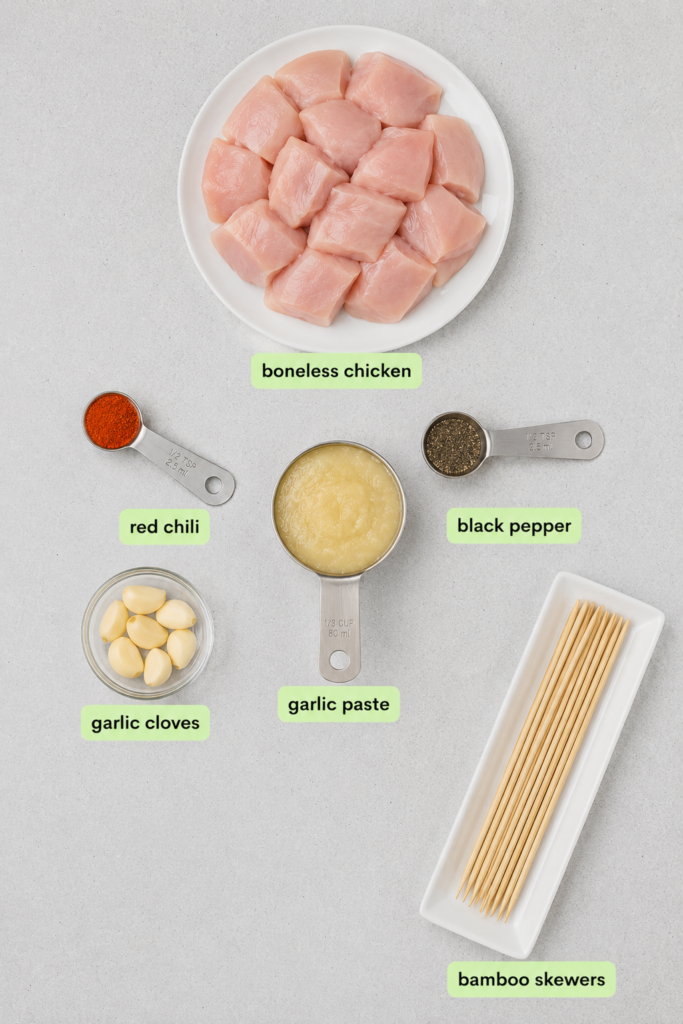
- 200 g boneless chicken breast cut into 3cm cubes
- Zest of 1 lemon nimbu ka chilka
- Juice of ½ lemon nimbu ka ras
- ½ tsp red chilli powder lal mirch — reduce to ¼ tsp for sensitive IBS
- ¼ tsp black pepper powder kali mirch
- ½ tsp salt namak
- ½ tsp ghee for the pan
- 4 –5 bamboo skewers soaked in water for 20 minutes
To serve:
- 3 4 tbsp hung curd
- Small handful pickled onions optional — skip if onion is a trigger
- 2 lemon slices
Instructions
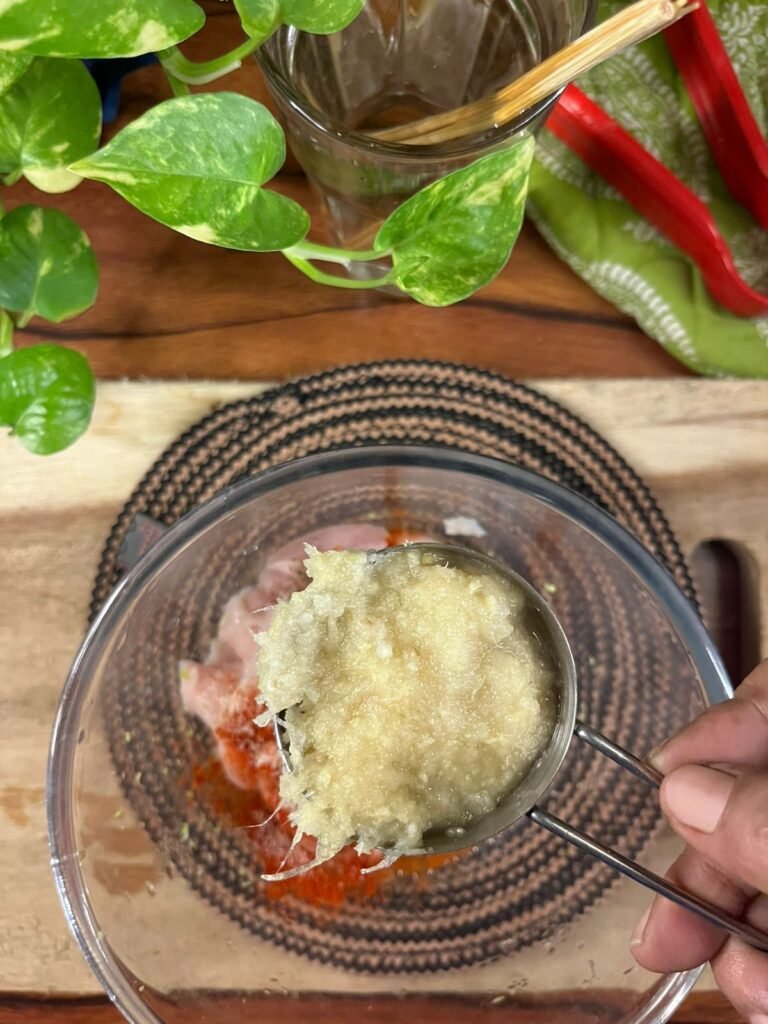
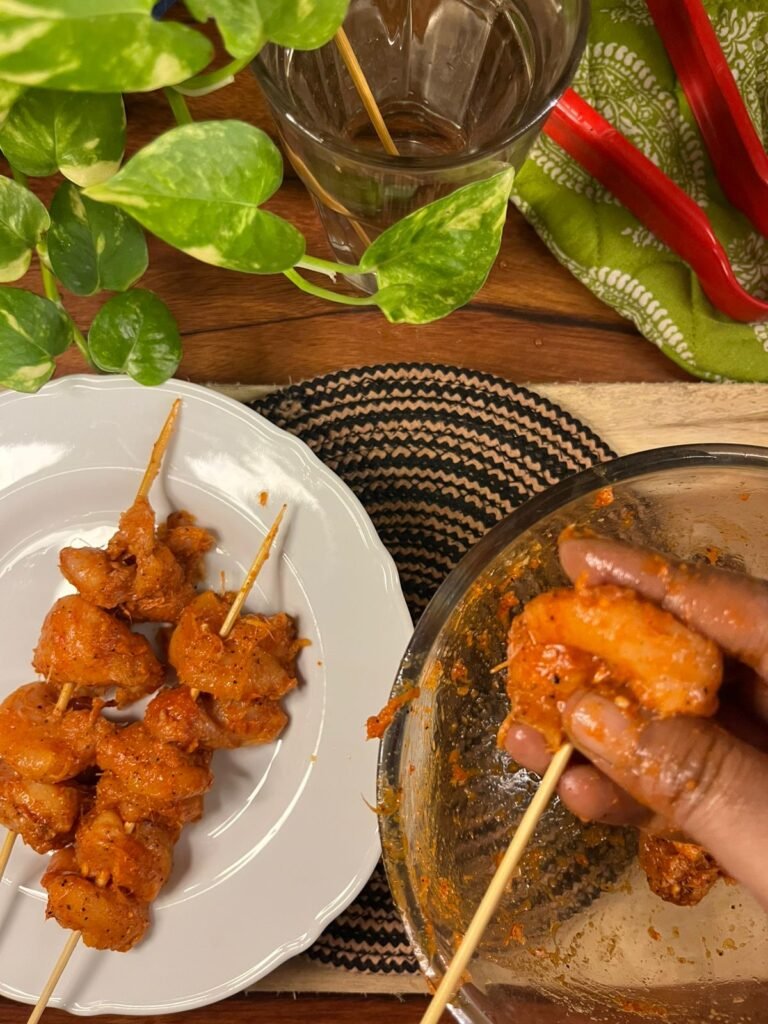
- Marinate the chicken — In a bowl, combine chicken pieces with lemon zest, lemon juice, red chilli powder, black pepper, and salt. Mix well so every piece is coated. Cover and rest for minimum 30 minutes (1 hour preferred).
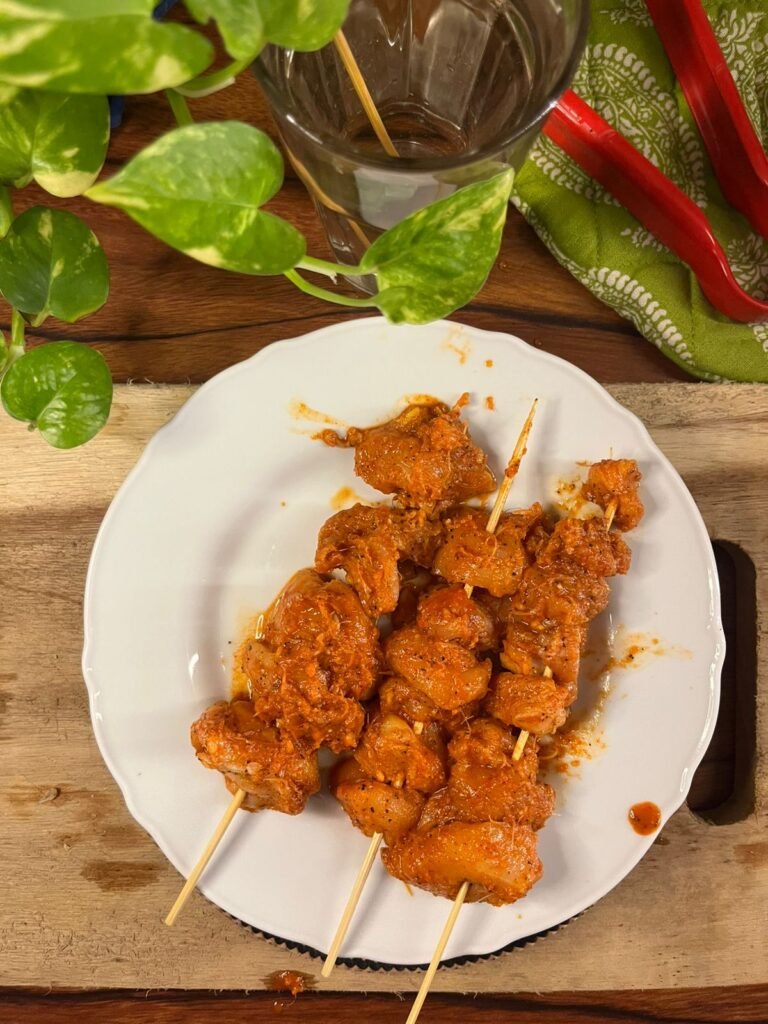
- Thread the skewers — Divide marinated chicken evenly across the soaked bamboo skewers. Do not overcrowd — leave a small gap between pieces.
- Heat the pan — Place a non-stick pan on medium-low heat. Add ghee and let it coat the pan. It should shimmer, not smoke.
- Cook the skewers — Place skewers in the pan. Do not move them for 3–4 minutes. Turn once when the chicken releases naturally. Cook another 3–4 minutes on the other side until golden and slightly charred.
- Check doneness — Cut the thickest piece — no pink inside, juices run clear.
- Serve immediately — With hung curd, pickled onions, and lemon slices on the side. Squeeze fresh lemon over the skewers just before eating.
Video
Notes
Frequently Asked Questions
Are high protein chicken skewers safe to eat with IBS?
Yes. This recipe uses no deep frying, no refined oil, no heavy batter, and no raw garlic in large amounts. The lemon and spice marinade is tolerated well by most people with IBS in moderate quantities. Reduce the chili powder to ¼ tsp if you are heat-sensitive. The cooking method—pan-fried in a drop of ghee on low heat—is gentler on the gut than standard oil frying.
Can I make these chicken skewers without any ghee at all?
Yes, a dry non-stick pan will work, but you’ll lose some surface caramelization. Half a teaspoon of ghee across a full pan adds very few calories while creating a better sear than a completely dry pan. If ghee isn’t an option, a light spray of unflavoured coconut oil is the closest alternative.
How do I know when the chicken skewers are fully cooked?
The chicken should release from the pan on its own when it’s ready—if it resists when you try to turn it, wait another 60 to 90 seconds. Cut into the thickest piece: the inside should be completely white with clear juices. The internal temperature should reach 75°C. On medium-low heat, this usually takes about 7 to 8 minutes.
Why is lemon zest used instead of just lemon juice?
Lemon zest contains the fragrant essential oils from the peel, giving a deeper citrus flavour than juice alone. It also adds no extra moisture, allowing the chicken to sear properly instead of steaming. The juice tenderises the chicken, while the zest adds aromatic freshness, creating a more balanced lemon flavour.
What is the best way to store and reheat leftover chicken skewers?
Store the cooked chicken in an airtight container in the refrigerator for up to 2 days, removing the bamboo skewers first. Reheat gently in a covered non-stick pan over low heat with a tiny splash of water for 2 to 3 minutes. Avoid microwaving on high, as it can make the chicken rubbery. You can also marinate the uncooked chicken a day ahead—overnight marination enhances the flavour.
🌿 Love gut-friendly recipes? Add Caloriematterss as your Google Preferred Source so my low-FODMAP, high-protein recipes show up more often for you. Set Caloriematterss as a preferred source →